Biography
Antoninus of Sorrento
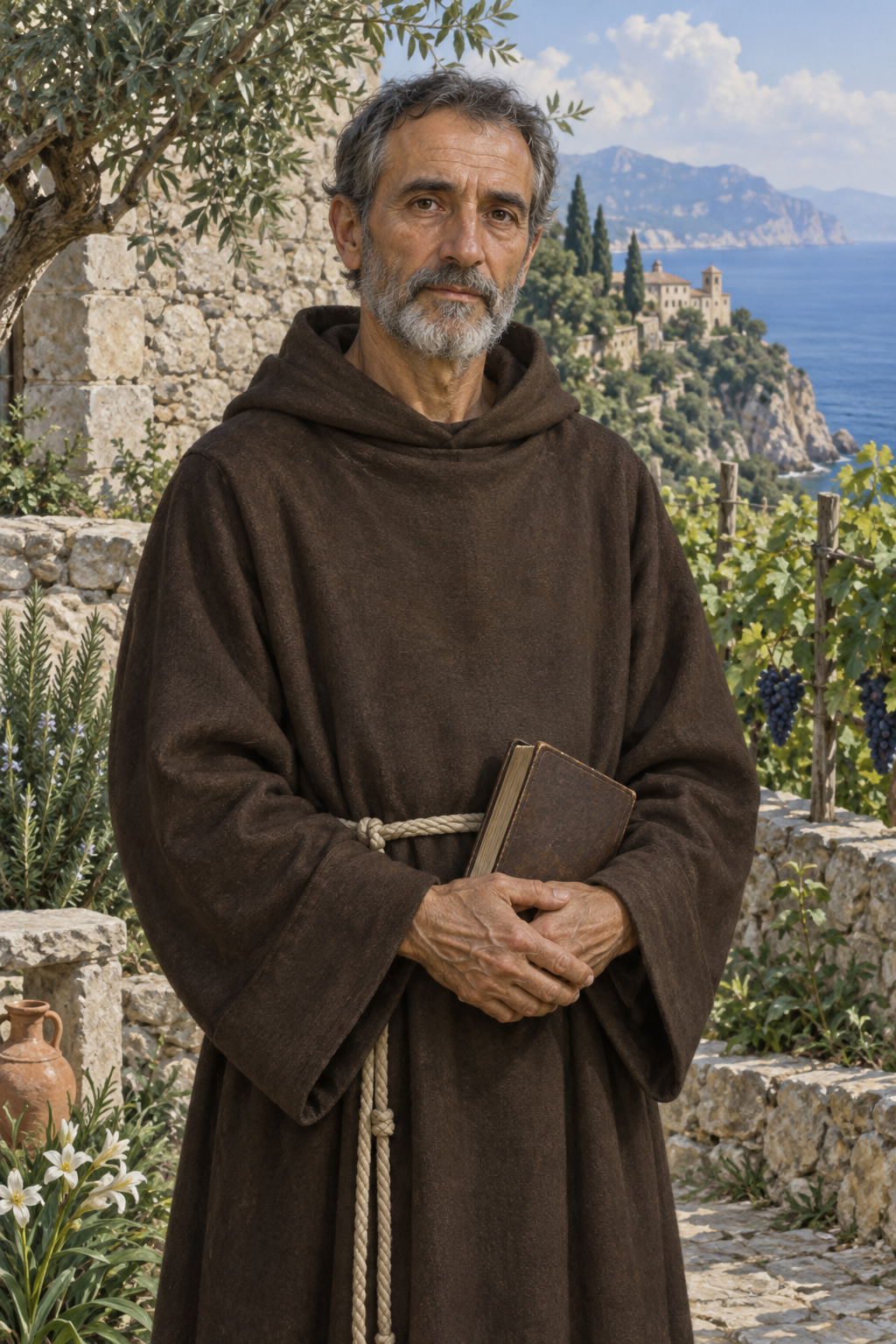
About Antoninus of Sorrento
Antoninus is remembered as a monastic abbot at Sorrento. His anonymous biographer describes a life combining prayer, practical work and leadership.
According to that life, he came to Stabia during warfare and became a trusted companion of Bishop Catello. They shared a period of solitude before Antoninus joined the monastery of Saint Agrippinus at Sorrento.
The monks chose him to succeed Abbot Boniface. The account describes him providing necessities, encouraging patience during shortages, cultivating a vineyard and making carved doors for an oratory dedicated to Saint Martin. It presents his work as service to the community.
The earliest biographer explicitly leaves his birthplace and family unknown. Later tradition identifies Campagna. His burial within Sorrento’s city wall is also part of the received account.
The chronology remains disputed. Tommaso Leccisotti’s critical biography places him in the early ninth century and rejects the story that he fled Montecassino’s destruction in the sixth century. The older Acta Sanctorum commentary likewise argues for a death around 830. The local church follows a different chronology, commemorating his death in 625. These are competing interpretations, rather than an agreed historical date.
Antoninus remains the patron of Sorrento, where the basilica preserves an extensive record of devotion. Its paintings portray stories about him and later appeals for his protection. The diocesan guide describes a silver statue replacing one lost during the attack of 1558, alongside a tradition that Antoninus himself paid the craftsman. The story records devotion to the patron; it does not establish a historical appearance after his death.
In the crypt, paintings of maritime rescues and silver offerings preserve the gratitude and hopes of worshippers. The guide also describes the custom of prayer and touching an oil-associated silver plate behind the altar. It connects the practice with a healing story about a bishop. These objects and customs are evidence of continuing religious remembrance, while the miraculous accounts remain matters of tradition.
His remembrance also survives in local music. In February 2026, Candida Guida described a planned concert closing the Antoninian jubilee. Its program brought together hymns associated with communities across the diocese. The organizers presented their work as a way to preserve compositions that had become unfamiliar or fallen out of use. This contemporary account documents preparation and intentions, without proving that every announced performance took place.
The same account identifies a surviving 1925 hymn text whose music had been lost, and another hymn for which Andrea Massa supplied a four-part arrangement. Antoninus’s place in this shared musical heritage extends beyond a single church: different communities express their attachment through songs, processions and the work of recovering earlier compositions.
Wondering how to weigh the stories and sources? Learn how to read a saint biography.