Biography
Antonio Maria Pucci
About Antonio Maria Pucci
Antonio Maria Pucci was born Eustachio Pucci at Poggiole di Vernio on April 16, 1819. The existing catalog preserves that full birth date and Tuscan birthplace, and this draft keeps both fields.
He entered the Order of the Servants of Mary and received the religious name Antonio Maria. The catalog stores both `Priest / Deacon` and `Monk / Nun`, and this draft preserves that shape for a Servite priest and religious.
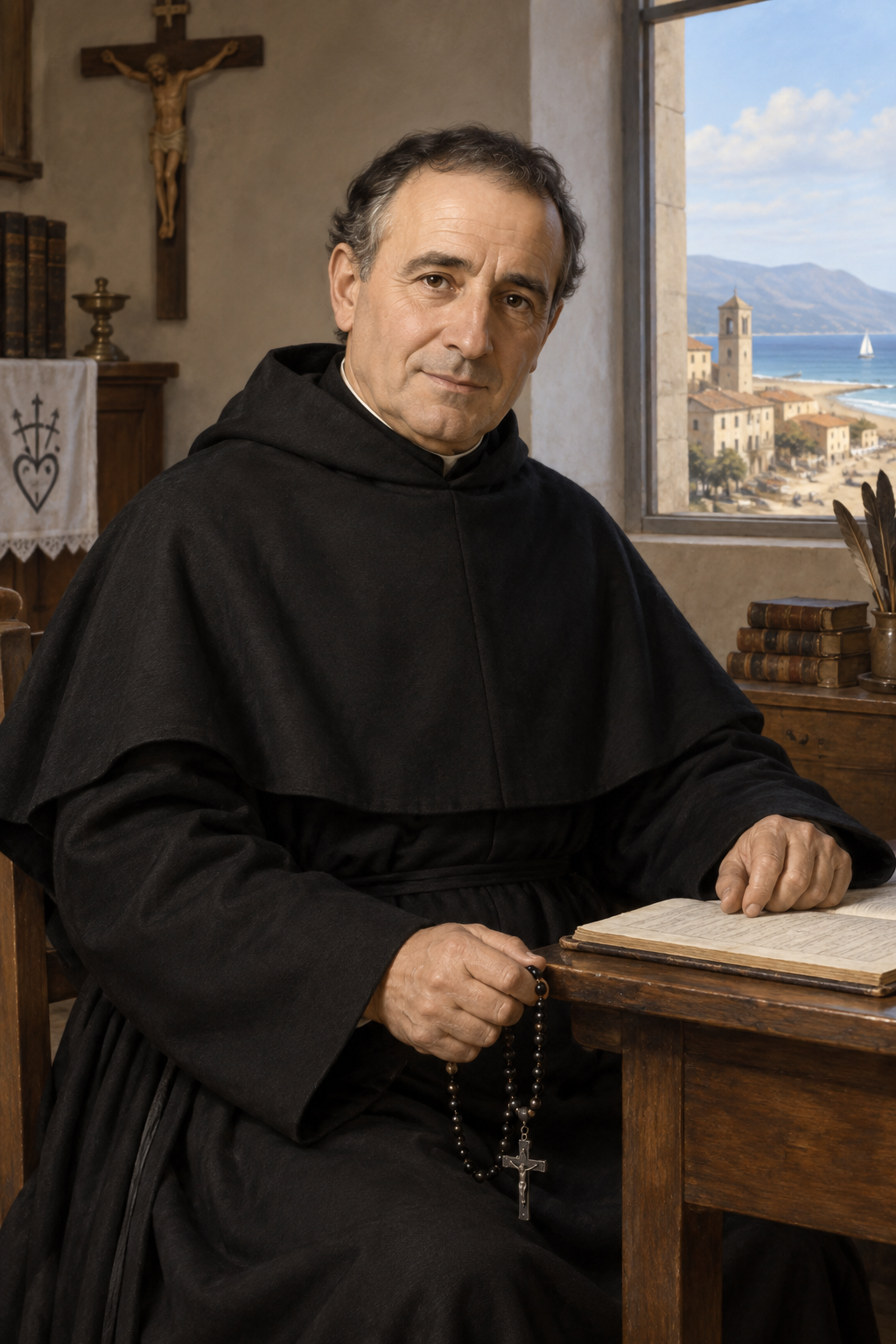
The Servite identity should be visible without becoming costume-heavy. A simple black habit, rosary, crucifix, and parish room can communicate the vocation better than theatrical signs or ornate church luxury.
This visual restraint is also historically safer. The page needs to identify him as a Servite priest, not to reconstruct every garment detail or make the habit do more work than the sources require.
Pucci was sent to Viareggio after ordination and became deeply identified with parish life there. The page should make Viareggio a pastoral setting, not merely a scenic coastal background.
His ministry at Sant'Andrea was long and ordinary in the strongest sense: preaching, hearing needs, organizing parish groups, visiting the sick, helping families, and serving people whose lives were marked by poverty and risk.
Sources remember him as the "little parish priest" of Viareggio. This draft does not quote that title in the public prose unless later source budgeting allows it, but the affectionate memory can guide the tone.
Pucci's charity was concrete. He cared for poor people, sailors, children, the sick, and families; he organized associations and works that helped the parish serve more than momentary needs.
The associations matter because they show pastoral charity becoming shared labor. Pucci was not simply kind as an individual; he helped a parish become more capable of responding to need.
This makes his life especially useful for readers who know ordinary parish work. His holiness was repeated and local: prayers, visits, records, meetings, instructions, and help offered again and again.
The page should avoid sentimental crowd scenes. The people he served deserve dignity, and Pucci's own responsibility can be shown through parish records, bread, blanket, rosary, and the open door of pastoral care.
The Vatican State profile also remembers service during illness and hardship. The page can mention epidemic or sickness context without turning the article into a medical drama.
This matters for the artwork. A quiet parish office with a window toward the sea honors Viareggio and his service without showing distressing hospital imagery or making illness the visual focus.
The Dicastery profile supports his identity as a Servite religious, priest, and canonized saint. It also supports the liturgical memory on January 12.
The catalog currently stores his death date only as `+1892`, even though current sources support January 12, 1892. This draft deliberately preserves the year only until the final packet can decide whether to update precision.
The catalog also leaves death place blank. Viareggio is strongly supported by the sources, but the structured death place remains blank in this draft for the same reason: final review should make the explicit database decision.
The final packet can decide whether to store the exact death date and Viareggio death place together. Until then, the draft can tell the life story without turning a review note into a database mutation.
That restraint should be explained rather than hidden. A reader-facing biography can discuss Viareggio as the place of ministry, while structured fields wait for approved normalization.
Pucci was beatified in 1952 and canonized in 1962. Those recognitions belong in the page, but they should not overshadow the life itself: a Servite priest spending decades in parish care.
The Servite order source can help frame his memory within the Order of Servants of Mary. It should be used without importing long liturgical texts or prayers that have not been separately reviewed.
His relevance is clear for parish life. Pucci shows that holiness can be built from repeated acts of care: the visit made, the register kept, the association organized, the sick person helped, the poor family noticed.
He also shows that religious life and parish ministry can reinforce each other. Servite devotion did not pull him away from local people; it gave shape to humble, steady service among them.
The final page should leave readers with a pastor whose greatness was local and steady. He did not need spectacle; his sanctity took the shape of fidelity to a coastal parish and its people.
Artwork should show a nineteenth-century Servite priest in black habit or cassock, with rosary, book or parish register, crucifix, and a modest Viareggio parish room with coastal light. Avoid hospital scenes, bishop vestments, national flags, modern objects, rendered text, halos, and exact-likeness claims.
The badge crop should keep his face, black habit, rosary, and parish desk visible. It should read as humble Servite parish charity before it reads as a generic religious portrait.
Wondering how to weigh the stories and sources? Learn how to read a saint biography.