Biography
Athanasios Hamakiotis
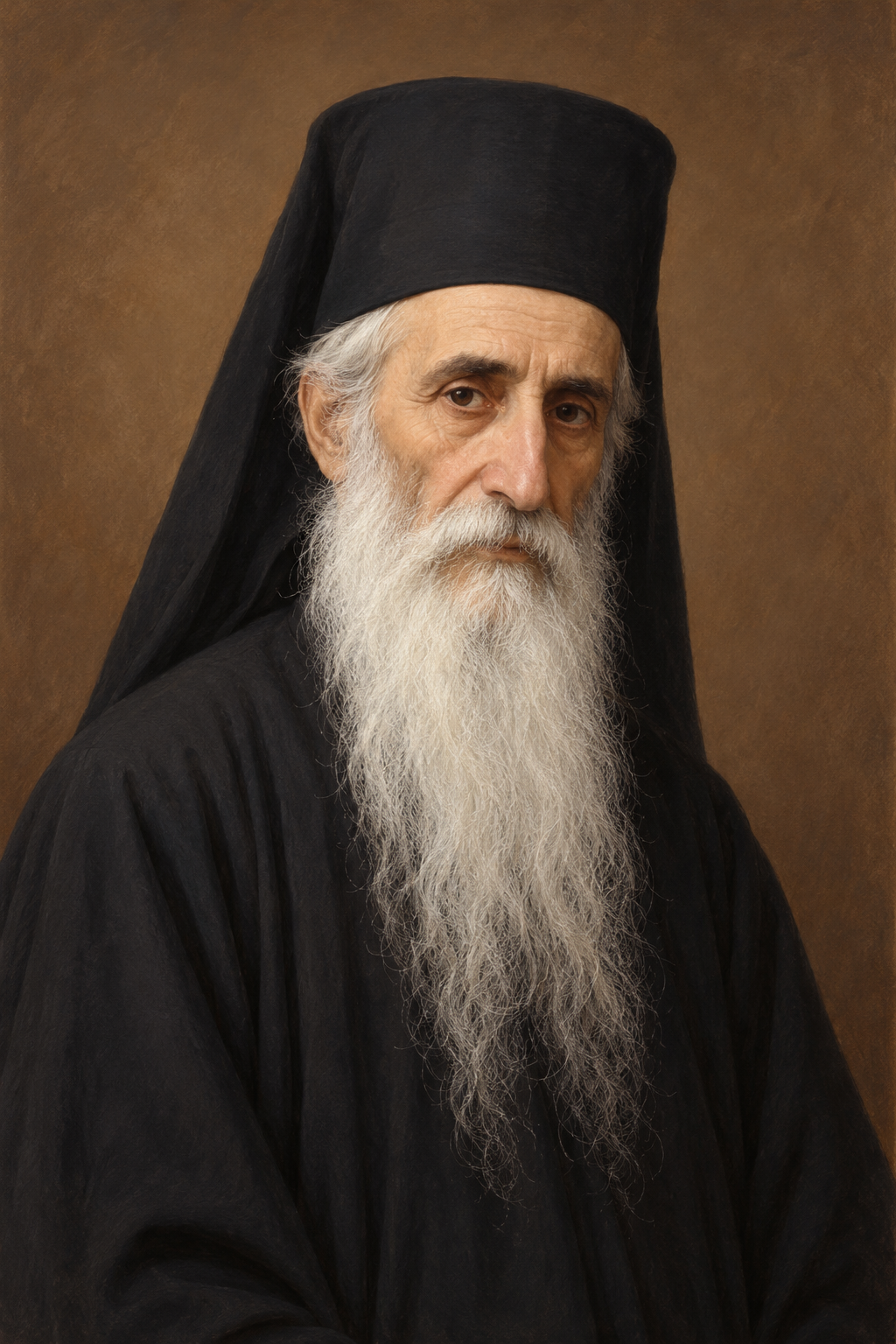
About Athanasios Hamakiotis
Athanasios Hamakiotis was born in Tourlada in 1891. He entered Agia Lavra in 1906 and received his monastic name in 1913. After moving to Attica, he served at Panagia Neratziotissa in Maroussi. The metropolitan biography remembers a patient confessor whose pastoral care included helping young people find work, learn a trade, or continue their studies.
His practical help involved others. He encouraged his spiritual children to provide food and money, visit sick people and prisoners, and seek out neglected older neighbors. Hospitality also formed part of the counsel he gave the nuns of his community.
His letters show how he maintained these relationships when people moved away. Writing in December 1948, he described illness and exhaustion that had interrupted his own work, then expressed pleasure at a correspondent’s progress. He recommended seeking help from clergy near her new posting, rather than depending only on contact with him. In another letter, he encouraged cooperation with the local bishop and urged his correspondent to continue learning while teaching others. Practical introductions and concern for another person’s circumstances accompanied his spiritual advice.
The correspondence also sets out priorities for daily life. Athanasios urged time for private prayer, regular reading, confession and Communion, while warning against personal ambition. He asked that a person’s example go before her teaching and encouraged readiness to forgive others. His demanding language about self-examination belongs to his spiritual counsel, not to a clinical account of distress. He also asked his correspondent to pray for him, both for his health and for his salvation. The relationship was sustained through mutual prayer as well as instruction.
Athenagoras Karamantzani remembered meeting Athanasios while still a student, around 1949–1950, through his friend Giorgos Baltsas. He visited the small cell beside the chapel and recalled a gentle man whose presence made a lasting impression. One memory concerned his friend’s wedding, at which Karamantzani served as best man. The gathering was small, and he remembered Athanasios reciting the prayers with closed eyes and offering a few simple words afterward. The recollection places him in the ordinary life of a community: receiving students, listening to visitors and celebrating a marriage. It is a personal account of the effect his manner had on a participant, rather than evidence that every service unfolded in precisely the same way. Karamantzani also recalled his emphasis on humility as a restraint on anger, envy, stubbornness and the desire to dominate others.
Gregory of Docheiariou left a different recollection of meeting him at the monastery in Bala. Athanasios spoke about a difficulty within his own role as a spiritual guide: he asked others for obedience while feeling that he had not sufficiently learned it himself. He worried about giving instructions to a nun without understanding the struggle her obedience involved. Reading ascetic works in old age had deepened that concern. Gregory presents this conversation as an example of humility, not as an accusation that Athanasios had abandoned his monastic commitments. The account preserves the self-questioning of an older monk who continued to measure his conduct against the teaching he gave others. It also shows a private conversation quite different from the public respect he received as a confessor.
The monastery’s life also depended on the women who formed its community. In his account of Abbess Makrina Panteli, Dimitrios Kavvadias describes Athanasios consulting her about decisions and directing the sisters to respect her responsibility. He entrusted money to her management and encouraged generosity rather than attachment to possessions. This account places the abbess within the practical governance of the foundation, alongside the priest’s spiritual guidance. Kavvadias knew Makrina and records visiting her near the end of her life in 2008; his narrative preserves the community’s remembered relationship with its founder, rather than a surviving administrative diary from his lifetime.
A devotional account in Lychnos recalls him quietly cleaning and cooking for a woman with paralysis, asking that his assistance remain private. He spent his final years at the monastery of Panagia Faneromeni in Rodopoli and died on August 17, 1967.
His recognition as a saint became part of a wider church celebration in 2023. On December 18, the Ecumenical Patriarch presided at the signing of the acts entering Athanasios, Gabrielia Papayanni, and Gervasios Paraskevopoulos into the church’s calendar. The patriarch spoke of the three saints as witnesses to God’s love for humanity. This formal recognition belongs to the history of their reception, following the lives and ministries that their communities had already remembered.
The connection with Maroussi continues. In October 2025, the metropolitan chapel received his relic from the monastery at Rodopoli for the anniversary of the 2014 translation of his remains. Vespers and the Divine Liturgy marked the occasion. The preaching returned to two linked aspects of his ministry: worship and service to people. In this remembrance, his small urban chapel mattered as a place where prayer and practical compassion could be lived together.
Wondering how to weigh the stories and sources? Learn how to read a saint biography.