Biography
Auxentius of Bithynia
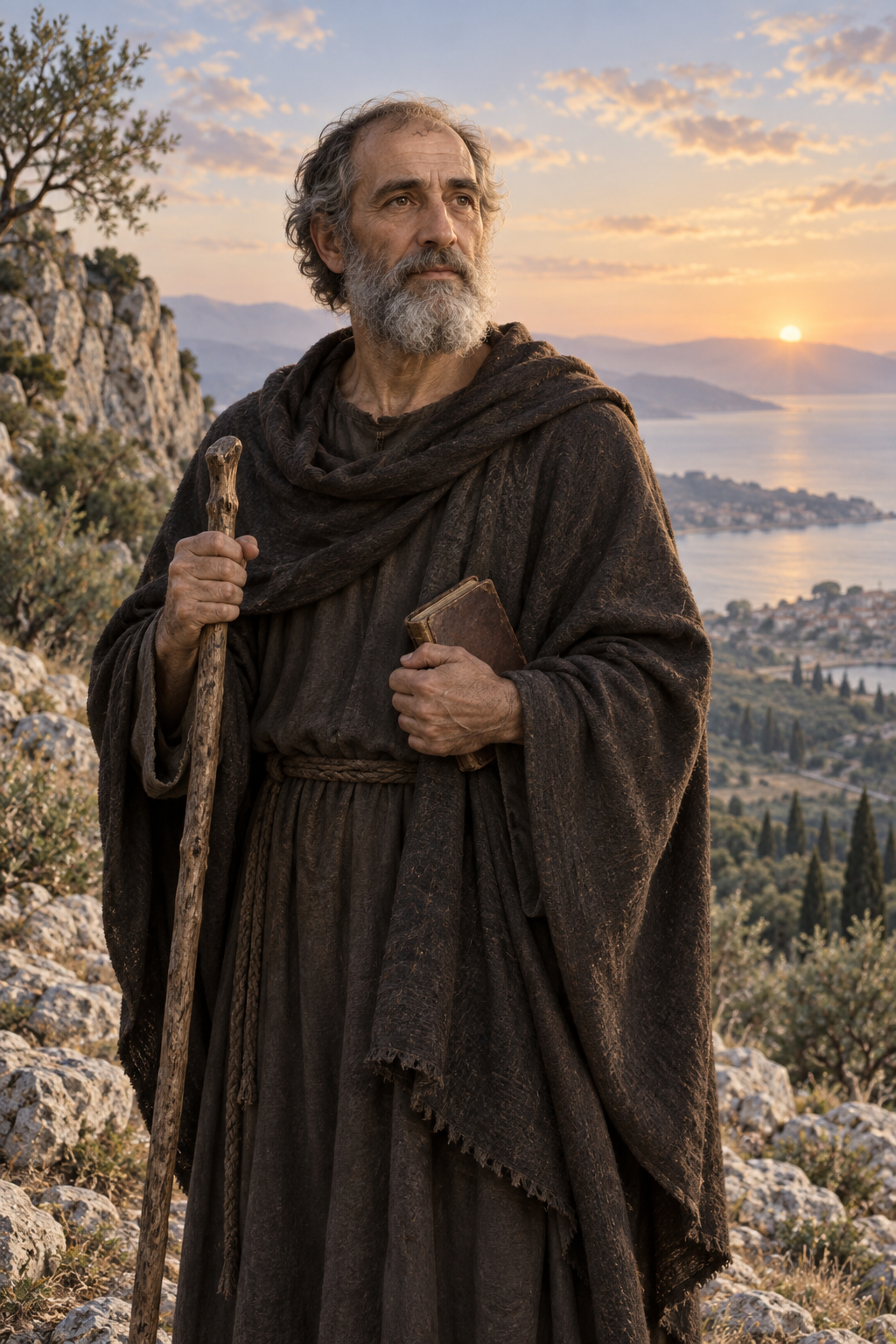
About Auxentius of Bithynia
Auxentius is known chiefly through a hagiographic dossier, not contemporary biography. Pinakes identifies him as a fifth-century Bithynian presbyter, commemorated on February 14, and lists six Greek Lives under BHG 0199–0203c. Marie-France Auzépy studies their relations and changing portraits of the saint. [Pinakes; Auzépy]
The received narrative places Auxentius at the imperial court before monastic life. It tells of withdrawal to Mount Oxia and discovery by shepherds. These scenes belong to the Lives, not independently corroborated chronology. [OCA Life]
The Chalcedon episode requires care. Some modern retellings say Auxentius attended in 451 and disputed with the council's opponents. The consulted acts do not name him; their silence neither proves nor disproves a connection, and records no attendance or speech. The February Acta Sanctorum presentation instead describes a summons and attempted excuse. Participation therefore remains unresolved; he is not identified as a council father. [OCA Life; Chalcedon Acts; Acta Sanctorum]
Auzépy traces Mount Skopa's continuing monastic importance after Auxentius's death. Renamed Mount Saint Auxentius, it remained a holy place near Constantinople for centuries. This reception history explains the lasting link between hermit and landscape, but cannot settle the sequence or historicity of every Life episode. [Auzépy]
Pinakes gives 470 as the traditional death year, which is represented here as approximate rather than as a precise contemporary date. No birth year or exact birthplace is proposed. The liturgical commemoration on February 14 is independently visible in the GOARCH Menaion. Together, manuscript cataloguing, later Lives, scholarship, and worship preserve Auxentius's memory while leaving important biographical details open. [Pinakes; GOARCH Menaion]
Wondering how to weigh the stories and sources? Learn how to read a saint biography.