Biography
Anthony of Egypt
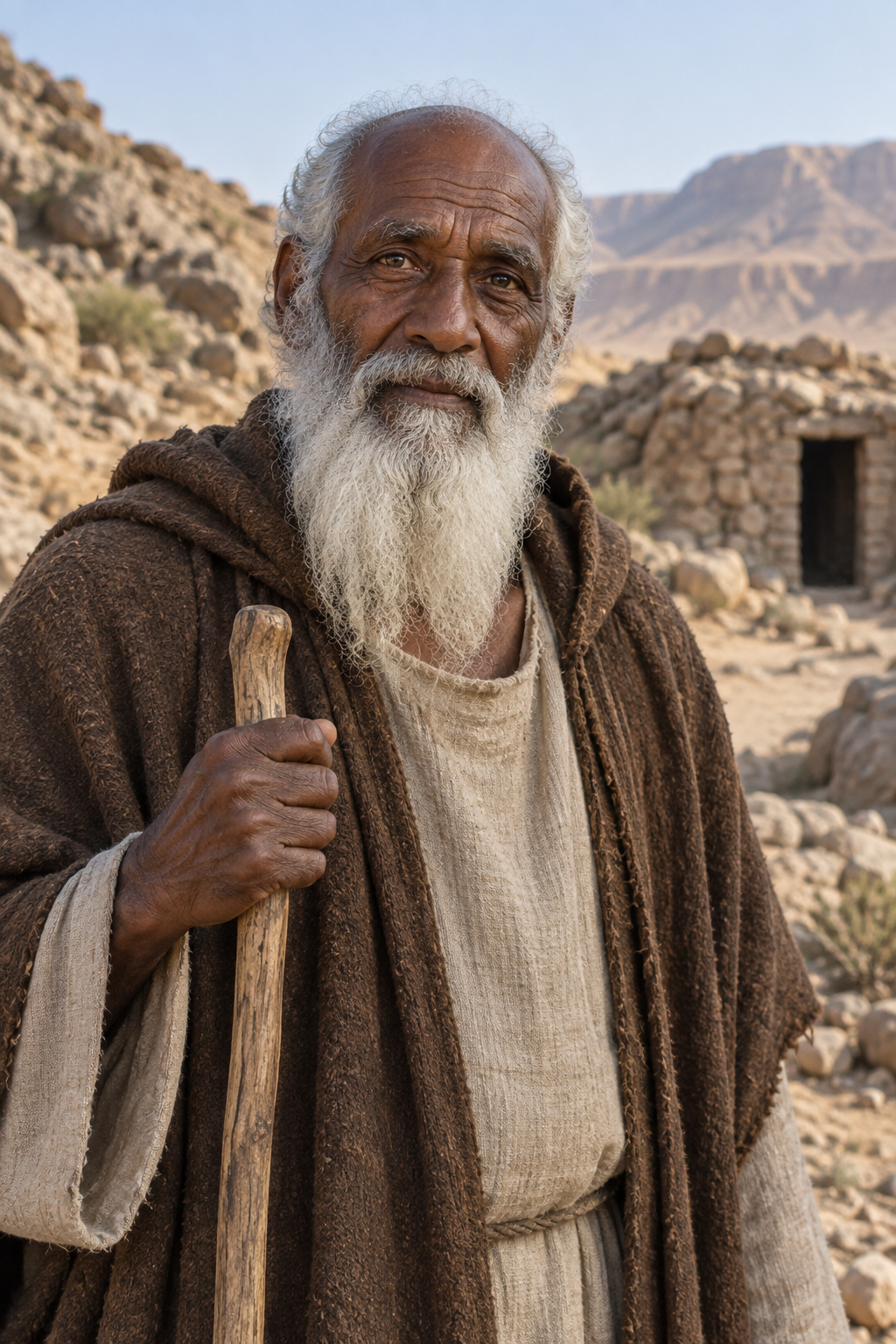
About Anthony of Egypt
Anthony of Egypt left a comfortable household for a life of prayer and work that made him an influential guide to other monks. The Vatican City State account places his birth around 251 in Koma, Egypt, and describes a family with substantial resources. After his parents died, he responded to the Gospel by giving away his property and choosing an ascetic life. His early retreats included a tomb, and his growing reputation repeatedly brought visitors to places where he had sought quiet.
The Orthodox Church in America's account describes a beginning close to home: Anthony lived near his village, worked for his livelihood, and shared what he earned with people in need. He sought guidance from local ascetics before moving farther away. Later, he occupied an abandoned fort with water inside, while a friend brought bread. After a long period of seclusion, people who wanted his guidance opened the entrance. He then taught the monks gathering around him, encouraging them to persist in their commitments. In this received account, a solitary's retreat became a meeting place for a wider community.
Withdrawal did not prevent Anthony from responding to suffering outside the desert. The Coptic Synaxarium recalls his journey to Alexandria during persecution, where he visited imprisoned Christians and encouraged them. It describes him continuing to appear publicly despite a governor's order to leave. He survived and returned to monastic life. The account remembers someone willing to share danger with prisoners, although his own life did not end in martyrdom.
At a more remote retreat, daily necessities required practical decisions. Athanasius relates that Anthony obtained tools and grain, found suitable ground near water, and cultivated food for himself. He wanted to spare the monks the effort of carrying bread to him. When visitors continued to arrive, he also grew vegetables to offer them after their journey. The small garden supported both his independence and his hospitality: the work that reduced his dependence on others also made it possible to welcome them.
Anthony also appears in accounts of Christian learning beyond the desert. Socrates, in his Church History, reports a conversation with Didymus at Alexandria. Anthony recognized the learning of this blind teacher and encouraged him to value his spiritual understanding despite his loss of sight. Elsewhere Socrates preserves a saying in which Anthony answers a philosopher who wonders how he manages without books. Anthony points to the created world as something through which he can attend to God. Both episodes are transmitted anecdotes, rather than records written by Anthony himself.
His relationships also placed him within the disputes over Christian doctrine. Benedict XVI describes Anthony as a supporter of Athanasius, the bishop who defended the full divinity of Christ. The bishop's forced absences from Alexandria carried him to Trier and Rome, where he promoted Egyptian monastic ideals alongside that teaching. Athanasius later wrote Anthony's biography while staying among monks in the Egyptian desert. Their connection was personal as well as theological: Anthony left him a sheepskin and a garment that the bishop had previously given him.
The traditional death accounts place Anthony's last years in the desert. The Coptic Synaxarium gives his death year as 355 and remembers instructions to conceal his body and distribute garments among his companions. These directions leave an image of an elder arranging a private burial and providing keepsakes for those around him.
The OCA calendar instead dates his death to 356. Its account assigns him an age of 105; that precise age belongs to the received chronology.
The written account of his life reached readers who had never encountered an Egyptian hermit. In the Confessions, Augustine recalls Pontitianus introducing him and Alypius to Anthony's story. Their visitor also told them about two imperial officials at Trier who found a copy of Anthony's life in a cottage occupied by ascetics. One began reading and reconsidered his ambitions at court; his companion joined him in deciding to serve God. Augustine places this story within his own struggle over commitment. It gives a concrete example of Anthony's influence traveling through a book and a conversation, far from the setting of his monastic life.
Later devotion gave Anthony associations that went beyond the events of his lifetime. Vatican News connects the pig in his familiar iconography with the Antonian hospital order, whose care for sufferers included using pig fat. It also describes blessings of domestic animals on his feast day. These customs belong to the history of his remembrance and should not be mistaken for episodes involving animals in his own household.
His name also remains attached to a substantial material heritage. At the Coptic Monastery of Saint Anthony near the Red Sea, the American Research Center in Egypt conserved medieval wall paintings and documented earlier monastic remains. The paintings had been obscured by soot and later painting; conservation made their imagery visible again. Their survival shows successive generations building and preserving a place of monastic worship. Alongside the writings that carried his story abroad, this continuing care for the monastery records the long life of Anthony's memory.
Wondering how to weigh the stories and sources? Learn how to read a saint biography.
Explore similar vocations
Prayers for Anthony of Egypt
Anthony: petition from the OCA troparion
Therefore, entreat Christ God that our souls be saved.