Biography
Bartholomew of Farne
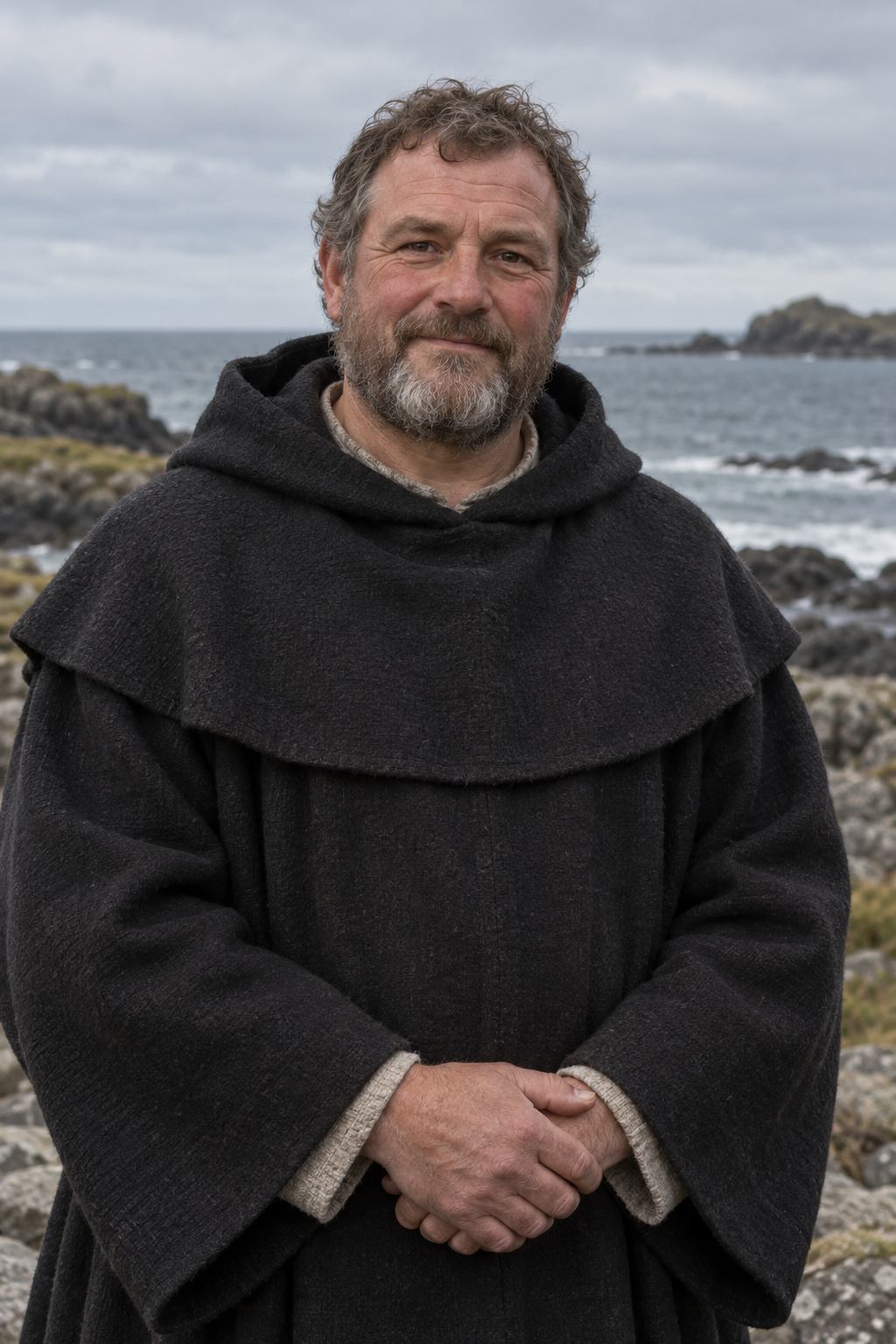
About Bartholomew of Farne
Bartholomew of Farne became a monk at Durham and later lived as a hermit on Farne. His early Life says that he came from the Whitby district. It records two earlier names, Tostig and William, before his monastic name.
The same account describes his travels to Norway, where he was ordained deacon and priest. Returning to England, he served briefly in a Northumbrian church before entering the monastery. It links his move to Farne with a vision of Cuthbert. That vision belongs to the religious account of his vocation.
His island life included prayer, reading, work and fishing. Solitude did not always mean being alone. The Life describes difficult periods sharing Farne with Elwin and the former prior Thomas. After a disagreement with Thomas, he returned to Durham for a time; their subsequent reconciliation allowed them to live together again.
The surviving text also has a history of its own. Editor Thomas Arnold explains that the earlier Bollandist publication lost its ending during preparation and filled the gap from another account. His 1882 edition restored the missing portion from manuscripts. Its introduction identifies the author as Geoffrey, a Durham monk, while treating his identification with Geoffrey of Coldingham as probable. Those distinctions matter when assessing what survives: the Life is one authored religious account, transmitted through later copies and editions.
Arnold places Bartholomew’s death on 24 June 1193, reconstructing the year from the Life’s chronological details. The modern National Trust inventory gives about 1195. The edition’s reasoning supports 1193, although the difference should remain visible rather than disappear into a precise-looking date.
The heritage inventory concerns the later monastic settlement on Inner Farne. It distinguishes earlier hermits, including Bartholomew, from the regular Benedictine cell established around 1255 for two monks. That later institution depended on Durham. The record identifies the surviving site as a scheduled monument, preserving its wider monastic history as well as the memory of individual island hermits.
His Catholic cult is reported chiefly in Durham and northeastern England, with an observance on 24 June.
Wondering how to weigh the stories and sources? Learn how to read a saint biography.