Biography
Bathilde
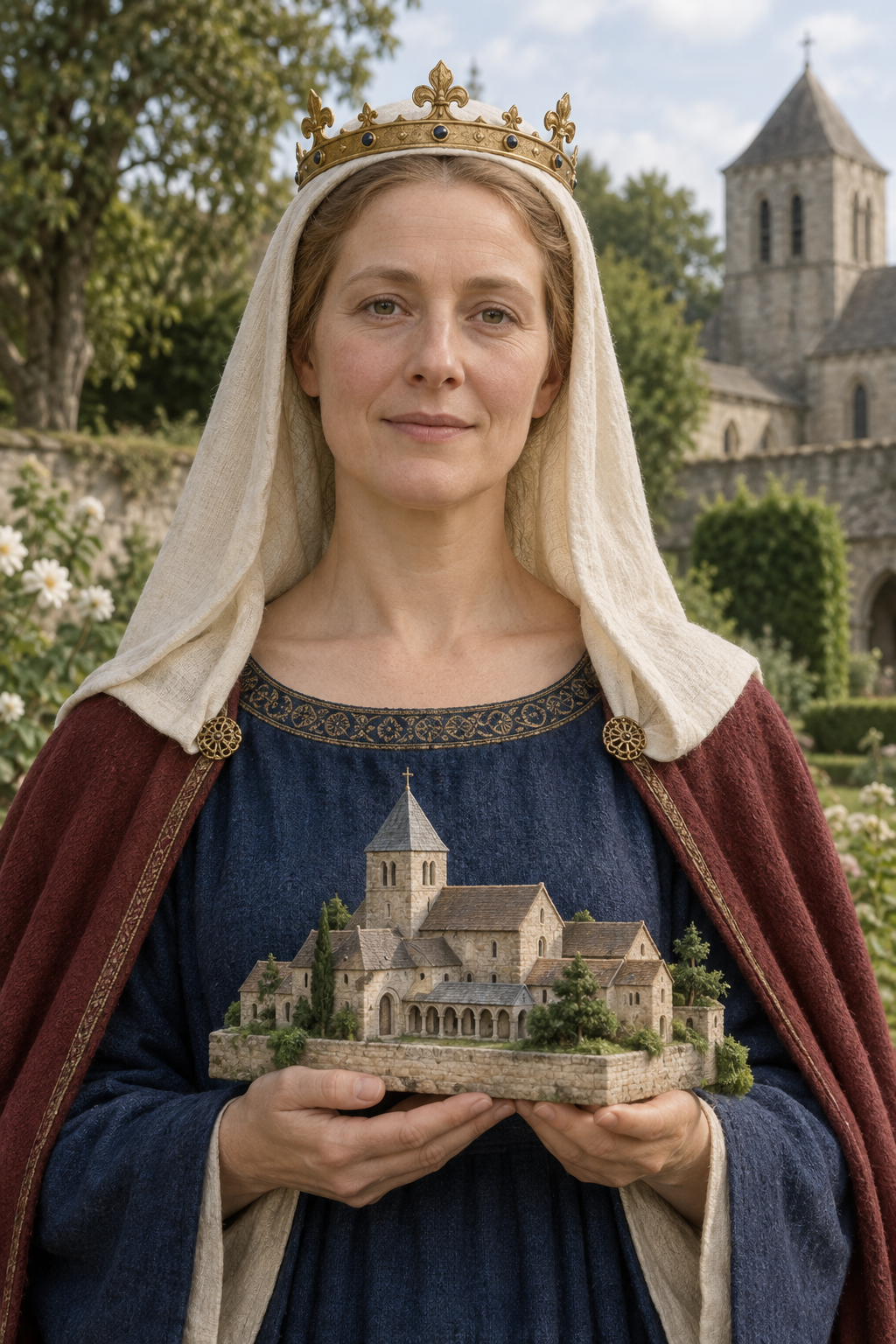
About Bathilde
Bathilde's birth is placed at approximately 633. Bathilde crossed the sea as an enslaved girl before becoming a queen in Francia.
Her husband, Clovis II, ruled the Franks. According to the Life of Eligius, Bathilde feared bearing a daughter rather than a male heir; the bishop reassured her during pregnancy and predicted Chlothar's birth.
Clovis and Bathilde had three sons: Chlothar, Childeric and Theuderic. When Clovis died in 657, their eldest son, Chlothar, succeeded him, with Bathilde sharing responsibility for government while he was still a child.
She exercised that responsibility in royal acts as well as in the palace. In two diplomas issued between 658 and 661, her sign follows Chlothar's, and she bears an elevated royal title. Although the documents were issued in her son's name, they recognized her authority alongside his.
Her government brought her into bitter conflicts among powerful families. An account of Bishop Aunemund of Lyon places Bathilde and Chlothar at a royal assembly at Mareuil, near Orléans. There the bishop and his brother, a prefect at Lyon, appeared to answer accusations of treason. The bishop was Chlothar's godfather, according to the account of Aunemund's life. His enemies alleged that he wanted to overthrow the young king, turning an accusation against a churchman into a direct threat to the royal household.
Bathilde also intervened when violence left Autun without a bishop. According to the account of Leudegar's life, two candidates had fought over the position: one was killed, and the other was sent into exile for the killing. Bathilde, governing with her son, sent Leudegar to take charge of the church there. Once in office, he worked to reconcile the opposing groups, a task he also pursued at the royal court. His appointment linked the queen's choice of a bishop to the work of restoring peace after a deadly dispute.
The Life of Eligius recalls her grief when the bishop died. She arrived with her sons and nobles, mourned beside his body and asked to take it to Chelles. Kneeling beside him, she kissed his face and held his hands. She kept vigil during a three-day fast while people at Noyon resisted losing their bishop and others favored Paris. The author tells a miracle story in which no one, including Bathilde, can lift the bier; she finally agrees to burial at Noyon. She followed the funeral on foot despite muddy ground. When a vehicle was offered, she refused it. Later, after visiting a sick courtier who reported a vision of Eligius, she gave jeweled ornaments for alms and for his resting place. She kept gold bracelets, but ordered a golden covering for his body.
For Corbie, Bathilde helped provide eight estates and woodland, with immunity and exemption from tolls. The foundation stood under her son's name. The royal grant of 661 asked the community to pray for the rulers and the kingdom's peace. Land and protection from tolls gave the monks resources for their common life. In 664, Bishop Berthefrid of Amiens granted Corbie ecclesiastical exemption and the right to choose its own abbot.
The later Life of Bertila describes Bathilde consulting bishops and leading men about a women's monastery at Chelles. She looked for a woman whose character and way of life would make her a trustworthy guide for the community. Reports of Bertila reached the queen through people she trusted. Bathilde asked Abbess Thelchild to send sisters from her monastery. She requested women who could take responsibility for the monastery's religious life and guide its new community. Thelchild considered the request before agreeing; she arranged for Bertila and other women to travel with the priest Genesius. The abbess personally recommended Bertila to the queen. Bathilde welcomed the women and entrusted Bertila with leadership.
In 662, another of her sons, Childeric, became king in Austrasia, with Duke Wulfoald beside him. Chlothar's brother thus ruled a neighboring Frankish kingdom while she remained associated with Chlothar's government.
She restricted exports of Christian captives and arranged ransom and release.
Slavery had survived from Roman times, and traders continued to bring enslaved Saxons into Francia. Protecting Christian captives did not end that institution or give everyone the same protection.
Her relations with churchmen were not always remembered affectionately. The hostile Life of Wilfrid blames her for episcopal killings and includes Wilfrid's host at Lyon among the victims. The accusations remain disputed; they should not be treated as proven orders from Bathilde.
Around 664–665 she left government for Chelles. Historian Santinelli-Foltz associates her removal with opposition from Ebroin, the mayor of the palace, and aristocrats who resisted her authority as Chlothar came of age.
Her Life portrays her nursing sisters at Chelles.
Bathilde retained royal standing at Chelles; Pilet's review finds no formal monastic vows.
Bathilde died at Chelles in 680. Nominis lists her local commemoration on January 30.
Wondering how to weigh the stories and sources? Learn how to read a saint biography.
Explore similar vocations
Prayers for Bathilde
Bathilde: petition
accorde aux croyants de chercher à son exemple, ton Royaume.