Biography
David
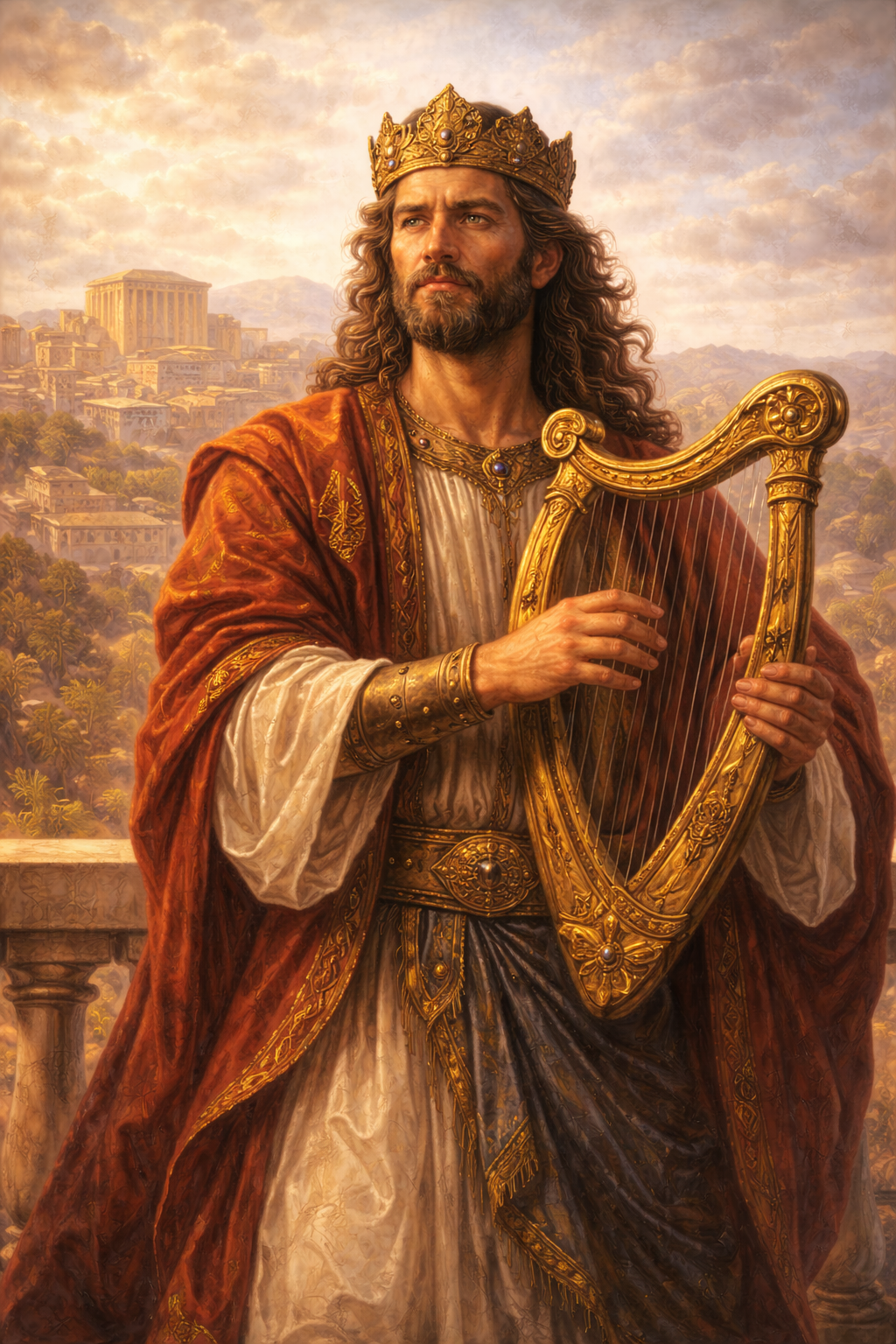
About David
The Books of Samuel present David as shepherd, court musician, fugitive, military leader, and king during the formation of Israel's monarchy. Their introduction explains that the David narratives combine independent traditions and edited cycles rather than supplying continuous modern history. No contemporary source establishes exact birth or death years for David, so the catalog does not preserve the draft's fabricated BCE dates. The narrative is influential but morally mixed, and its violence and abuses of power cannot be turned into uncomplicated heroism.
First Samuel introduces David when Samuel visits Jesse's household at Bethlehem to anoint a future king. The chapter calls David the youngest son present and says he was tending sheep before being summoned. It then offers another account of David entering Saul's service as a skilled player who gives the troubled king relief. The USCCB notes that these traditions contain repetitions and inconsistencies, so the biography does not invent a single seamless sequence or claim access to David's private motives.
The next chapter tells of David facing the Philistine champion Goliath with a sling and stone, killing him, and cutting off his head with Goliath's sword. This is a battle narrative, not a harmless children's adventure. The chapter also differs from the preceding account in how Saul and David become acquainted, another reason to preserve the text's complexity. David's speech attributes deliverance to God, but the reported encounter is not independently dated or archaeologically verified.
David's military success brings public acclaim and Saul's jealousy, while Jonathan forms a covenant with David. Saul repeatedly attempts to kill David, and Michal helps David escape from their home. Jonathan later tests Saul's intentions and warns David to flee. These chapters document important literary relationships—friendship, marriage, rivalry, and protection—but do not justify romantic speculation beyond what the text says.
As a fugitive, David twice encounters Saul in vulnerable circumstances and refuses to kill him. The USCCB identifies the cave and camp episodes as alternative versions of the same basic story rather than two securely separate events. David restrains his followers and appeals to judgment beyond his own hand. This restraint is specific and meaningful, yet it does not erase later violence, nor does it prove that every decision during his fugitive years was just.
First Samuel also records morally troubling choices during David's exile. Abigail intervenes after David vows lethal revenge against Nabal's household, and David accepts her appeal before taking Abigail as a wife after Nabal's death. Later David lives under Philistine protection and tells Achish deceptive reports about his raids. After Ziklag is attacked, David recovers captives and goods and orders that those who guarded supplies receive a share. The narrative combines threatened bloodshed, political deception, rescue, and a rule of distribution.
After Saul and Jonathan die, David laments them and is anointed king over Judah at Hebron. A prolonged conflict follows between David's house and Saul's surviving dynasty before Israel's elders anoint David over all Israel. David then captures Jerusalem and makes it his capital. The account assigns lengths to his reign, but those literary regnal totals do not by themselves establish exact modern BCE endpoints. The consolidation of power includes warfare and should not be described only as peaceful national unity.
David brings the ark toward Jerusalem, but the procession is interrupted when Uzzah dies after touching it. A later procession includes sacrifice, music, and David's public dancing, followed by conflict with Michal. In the next chapter Nathan announces a dynastic promise to David's house while denying David the role of building a temple. Christian tradition receives that promise in relation to Jesus, but this later theological reading must remain distinct from historical proof about David's reign.
Second Samuel's account of Bathsheba and Uriah is an abuse-of-power narrative. David sees Bathsheba, summons her, has sex with her, and then arranges Uriah's death after attempts to conceal the pregnancy fail. The text gives no basis for assigning Bathsheba equal responsibility or calling the encounter a romance. Nathan confronts David through a parable; David acknowledges wrongdoing, but the ensuing death of the child and violence within the household are narrated as consequences that fall heavily on others.
The royal household later fractures through Amnon's rape of Tamar, Absalom's killing of Amnon, and Absalom's rebellion. David flees Jerusalem and eventually orders his commanders to deal gently with Absalom, but Joab kills him during battle. David's cry for his dead son expresses devastating grief without resolving his failures as father and king. The chapters resist any account that praises David's repentance while ignoring Tamar, Uriah, Bathsheba, the dead child, and subjects harmed by royal decisions.
Near the book's close, David orders a census despite Joab's objection, and the narrative links it to a plague that kills many people. David accepts responsibility and purchases Araunah's threshing floor for an altar. First Kings later narrates his final instructions to Solomon and his death, including directives for settling old political scores. Acts and Eastern Orthodox tradition preserve later reception of David as prophet and ancestor; the OCA commemorates him on the Sunday after Nativity, not on one fixed civil date every year. David remains significant because these traditions hold kingship, worship, poetry, friendship, restraint, predation, repentance, family catastrophe, and political violence together.
Wondering how to weigh the stories and sources? Learn how to read a saint biography.