Biography
Edmund the Martyr
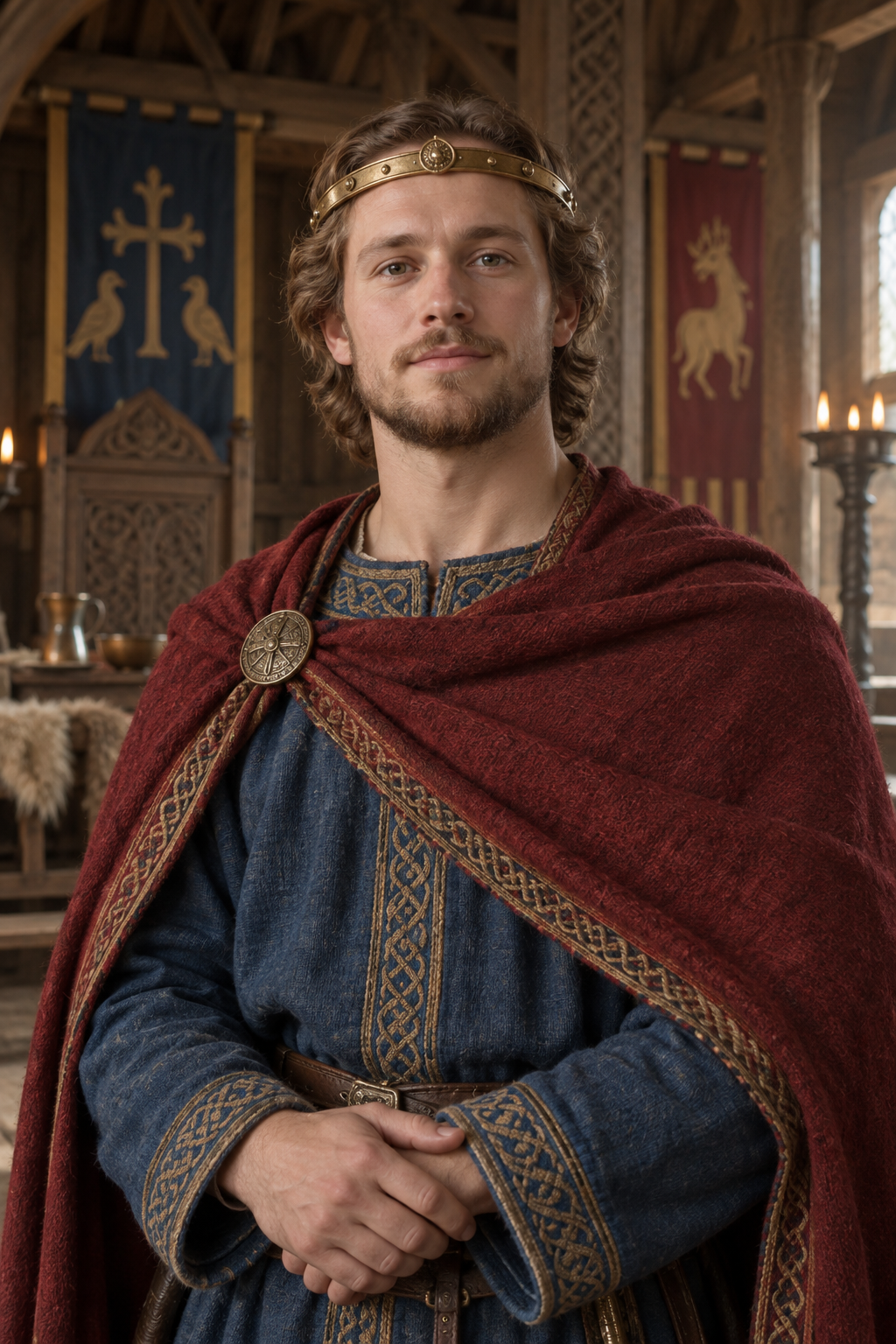
About Edmund the Martyr
Edmund ruled East Anglia in the ninth century, before the kingdom fell to a Danish army. Tradition places his birth around 840 and his accession in 855, while he was still a boy. The early outline is brief, but it places a young ruler in a kingdom facing an increasingly dangerous invasion.
The oldest written account gives him little space. As Dorothy Whitelock explains, the Anglo-Saxon Chronicle records that the army wintered at Thetford, defeated Edmund, killed him and conquered the country. Its annal is headed 870, but the chronicler's reckoning places these events in the autumn of 869. That notice remembers resistance and defeat, without recording the king's final words.
A much fuller story reached readers through Abbo of Fleury and then Ælfric. Ælfric's introduction traces it from Edmund's elderly sword-bearer to Dunstan, and from Dunstan to Abbo. Juliet Mullins places these writings in the renewed Viking conflicts of the late tenth century. For their audiences, remembering Edmund meant asking what a Christian ruler should do when power, loyalty and faith came under threat.
In Ælfric's telling, Edmund cares generously for poor people and widows and restrains violence. When an invader demands his submission, the king consults a bishop rather than answering alone. He refuses to abandon his people or turn from Christ. He then spares the messenger and puts aside his weapons before his capture. The account remembers courage through restraint as well as refusal.
The passion describes Edmund being bound, beaten and shot at before his execution. He continues to call upon Christ, and his captors finally behead him. These details belong to the later martyr narrative, not to a surviving transcript of the killing.
The same narrative follows the grieving people who search for their king's missing head. A wolf guards it and accompanies the searchers home. Mullins explains how this wonder reverses the story's earlier comparison of the invading leader with a wolf: the animal protects what violent men have attacked. It is a miracle story within the saint's remembrance, not an episode that can be independently reconstructed.
The place of Edmund's death remains disputed. Richard Hoggett's heritage assessment weighs Hoxne, Hellesdon and Bradfield St Clare rather than identifying a securely established site. His review also points to memorial coinage circulating in the Danelaw within a generation of the king's death. Such objects show that devotion developed early, even though they cannot settle every detail of the passion.
Edmund's remains eventually became the focus of worship at Beodricsworth, now Bury St Edmunds. The timing of their arrival is uncertain; the heritage assessment records competing dates. A wooden church housed the shrine, and the community later grew into a major abbey. This enduring place of prayer gave the defeated king a place in the lives of people born long after his kingdom had disappeared.
His remembrance continues in distinct church calendars. East Anglia's Catholic ordo names him a secondary patron of the diocese and assigns his November feast. The title honours a regional bond that outlasted the political kingdom he once ruled.
Wondering how to weigh the stories and sources? Learn how to read a saint biography.
Explore similar vocations
Prayers for Edmund the Martyr
Edmund the Martyr: sourced prayer excerpt
grant us such steadfastness of faith that, with the noble army of martyrs, we may come to enjoy the fullness of the resurrection life;