Biography
Beuno
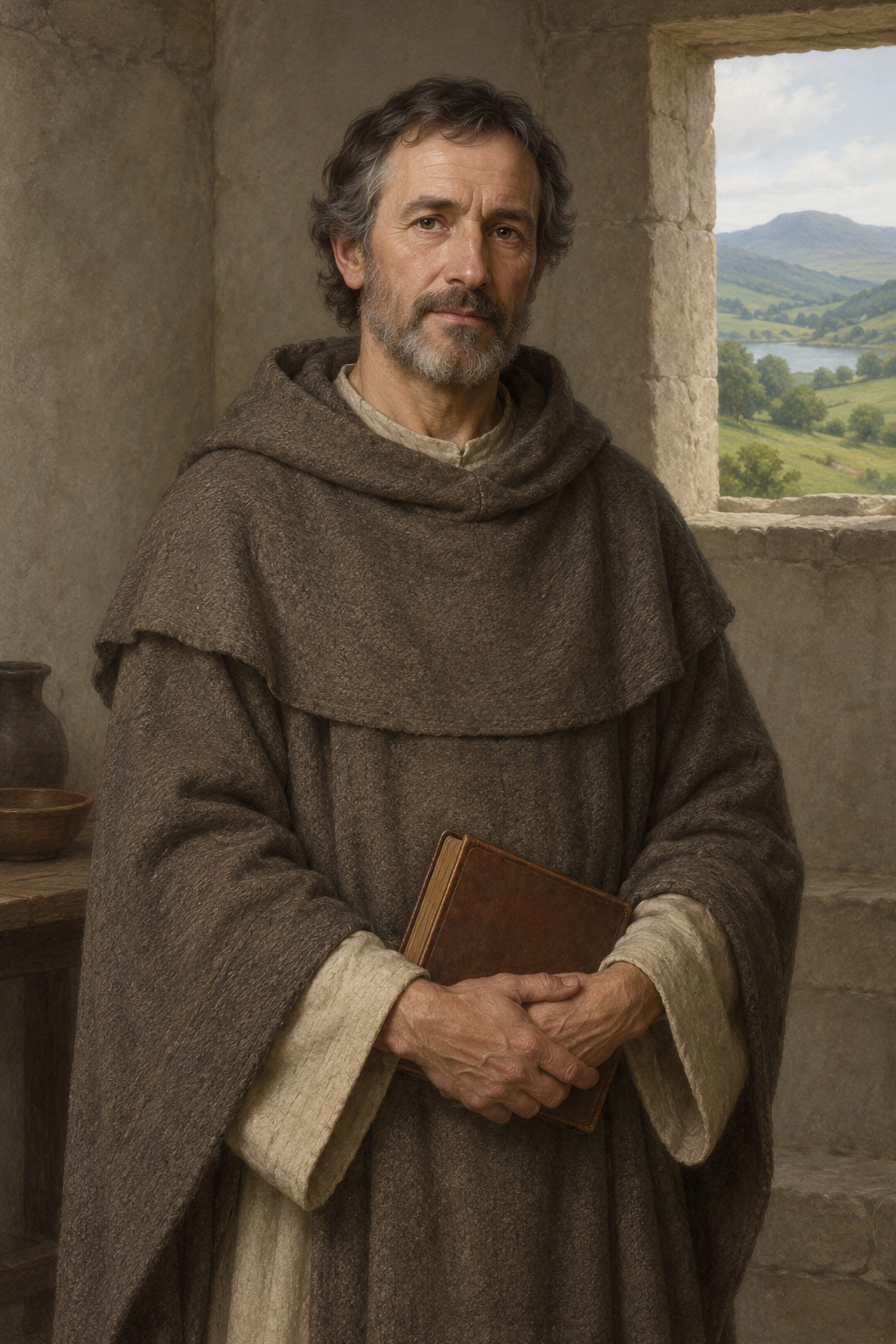
About Beuno
Beuno is remembered as an early Welsh religious leader whose name remains closely associated with Clynnog Fawr. The medieval Life presents him travelling between communities, receiving land and establishing churches. The surviving account is much later than the period in which he lived. It preserves traditions about a saint rather than a continuous contemporary record of his career.
One of its most memorable episodes concerns a royal gift of land. While Beuno and his disciples are building, a woman arrives with her young son and says that the property belongs to the child. The Life describes Beuno stopping the work and taking their claim to the king who had given him the land. The king refuses to make amends, and Beuno eventually receives another place at Clynnog. The story places the saint’s religious work alongside a question of justice: a royal gift does not make the child’s claim disappear. This remains a story told by the medieval author, not an independently documented land dispute.
The strongest historical connection is with the later community at Clynnog. John Edward Lloyd’s account notes that its clergy appear in an early Welsh law manuscript as a body associated with Beuno, alongside Bangor, in the legal privileges of Arfon. Lloyd also describes a cluster of local names attached to Beuno’s memory: a grave, a well, a chest and a record of the church’s claims. Such names show how remembrance became part of the life of a place. They provide evidence for the importance of his cult even where the details of his own life remain uncertain.
The community’s history also includes the gifts that sustained it. Lloyd notes that later donors increased its holdings and made Clynnog a wealthy foundation in north-west Wales. He names traditions attached to Beuno’s chest and the way cattle dedicated to him were marked. These details concern the community that guarded his memory. They do not make every later donation or practice an act of Beuno himself. They show how devotion was kept through material things as well as through written accounts, linking religious remembrance with the resources used by a local institution.
Karen Stöber’s study explores another part of that remembrance. She places the Welsh Life within the political and religious pressures of the later Middle Ages. In her reading, native saints could become defenders of the land and symbols of a shared identity. The author’s concerns about English encroachment belong to the world in which the account was preserved and used. They should not simply be transferred back into Beuno’s lifetime. Stöber also cautions that the language of national identity needs care when applied to a Wales divided among regions and rulers. Her interpretation makes the Life useful evidence for later Welsh concerns as well as for traditions about the saint.
Poetry carried his memory in a different voice. An anonymous late medieval praise poem, edited and translated by Eurig Salisbury, begins with a speaker turning towards Beuno for help. It presents him as a builder and protector, and combines religious praise with inherited stories. Salisbury’s notes examine the poem’s language, including uncertainty about the regions meant by its reference to two lands. They also identify differences between the names found in the poem and those in versions of the genealogy. These details reveal an active tradition of remembrance, in which verse, names and local stories could develop without becoming a single fixed biography. The poem’s praise belongs to that later tradition; it is not a portrait of the saint made during his life.
The Cult of Saints in Wales project maps this devotion across church dedications and other sites. Its account identifies Clynnog as the main centre, while also tracing connections around Holywell and Berriew. The pattern makes Beuno more than a name attached to one village. It also shows why evidence from the later cult needs to be considered alongside the narrative: a community can continue to honour a saint through its buildings, place names and stories when little contemporary biographical material survives.
Calendar history adds a further distinction. The scholarly cult record gives 21 April as the traditional Welsh feast. The Catholic national calendar for Wales now lists Beuno on 20 April, and the Church in Wales calendar places his commemoration on the same day. These dates concern observance. They do not resolve the competing years proposed for his death. The Church in Wales collect remembers the traces of his ministry in the land, connecting a local history with an enduring religious hope.
Beuno’s significance rests in that continuing connection between religious memory and place. Clynnog remains a centre of devotion in the Catholic calendar’s account, while scholarly work continues to examine the texts that shaped his reputation. The medieval stories, later praise and surviving local names each preserve a different part of that history.
Wondering how to weigh the stories and sources? Learn how to read a saint biography.