Biography
Brioc
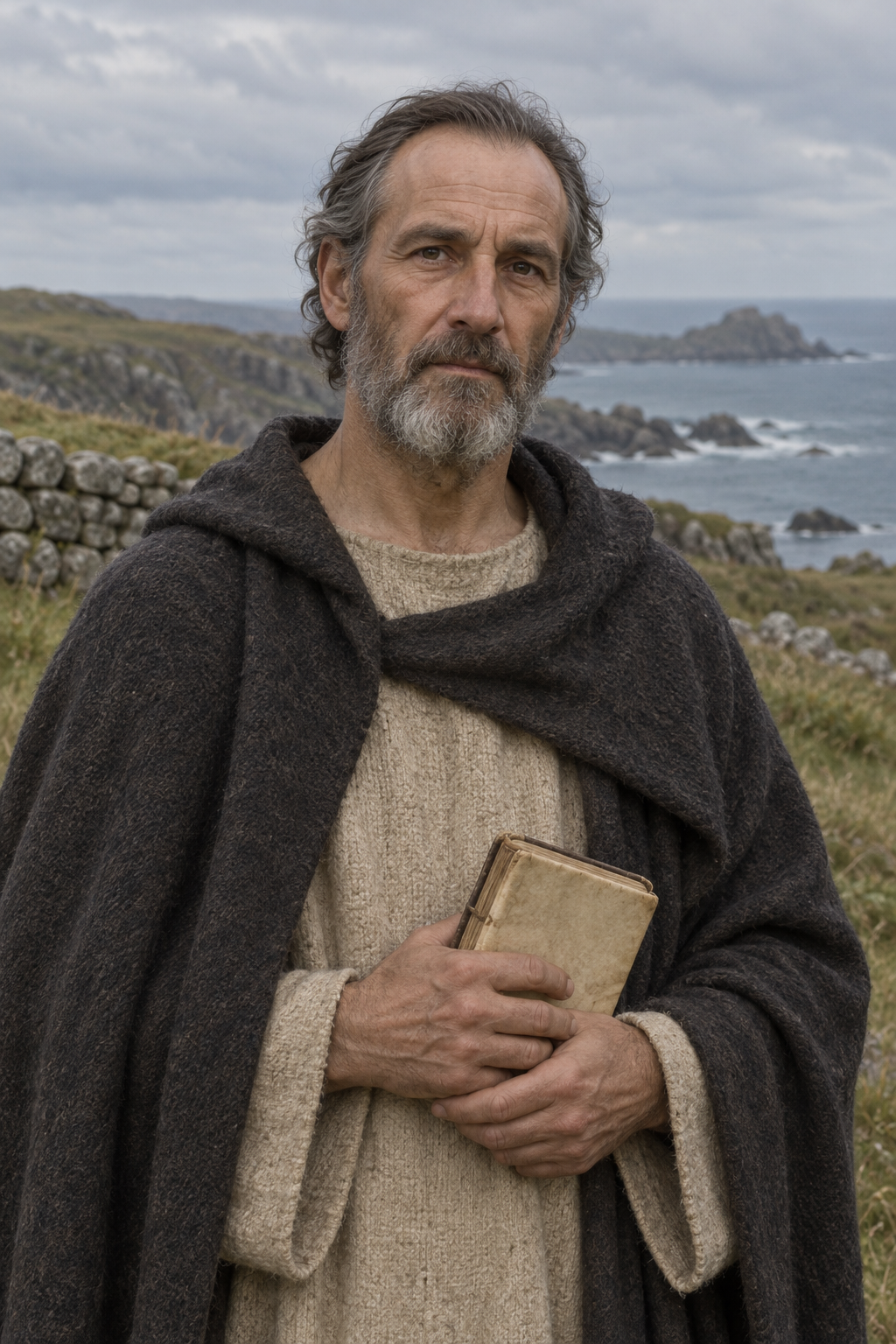
About Brioc
Brioc is remembered as a Welsh monastic founder whose name became closely associated with Saint-Brieuc in Brittany. The later Life places his origins in a region identified with Ceredigion and describes journeys between Britain and Armorica. It presents him gathering religious companions and founding communities. This is a received account preserved long after his lifetime, rather than a contemporary record of his travels.
The Life gives him an education under a bishop named Germanus and describes his ordination as a priest. Its appendix, however, admits that the narrative does not explain his episcopal career or name the city he governed. Instead, the claim that he was a bishop rests on a reported inscription associated with his remains. That distinction limits how confidently the later title can be used to reconstruct his work.
René Couffon’s critical study draws attention to the narrative’s contradictions. Its teachers and companions do not fit a consistent chronology, and the account of his parents’ conversion conflicts with their later appearance in a pagan gathering. Couffon also questions stories of princely land grants and the relationship with Tugdual. These objections prevent a continuous biography from being assembled simply by combining all the episodes in the Life.
The text’s literary character is nevertheless important. Couffon identifies borrowing from biblical passages, classical writing and other saints’ Lives. He regards it as an accomplished work of rhetoric, despite its weakness as a record of Brioc’s personal history. The saint’s remembrance reached later readers through the choices of a medieval author, including familiar patterns of charity, travel and miraculous assistance. Recognizing those patterns preserves the difference between a devotional narrative and independently established events.
André-Yves Bourgès revisits the setting in which the Life was written. He places its author at the monastery of Saint-Serge in Angers, where Brioc’s relics were venerated, and argues for a later composition than Couffon proposed. The text, he suggests, also expressed claims about the relationship between the monasteries of Saint-Brieuc and Tréguier. This interpretation remains an argument about the author’s purpose, rather than evidence that Brioc himself took part in later disputes between dioceses.
Bourgès also considers differences among surviving versions. A longer account may contain additions, but a shorter manuscript may instead have omitted material. The relationship cannot be settled merely by assuming that length measures how much a text has changed. His discussion therefore keeps questions about copying and revision open. The medieval claim to have used an older source does not, by itself, establish that source’s date, content or reliability.
Brioc’s cult can be studied through names and dedications as well as narrative. The University of Glasgow’s place-name project records his remembrance in Brittany and Cornwall, with other identifications treated more cautiously. It also distinguishes a possible association with another saint, Briac, from a demonstrated identity. A dedication indicates that a community remembered a saint; it does not prove that he visited that place. The project’s qualified treatment of Scottish evidence is especially useful for keeping remembrance separate from a reconstructed itinerary.
Catholic commemoration continues in Saint-Brieuc. A parish bulletin for 2026 announced a celebration beginning with morning prayer at Notre-Dame de la Fontaine, followed by a procession to the cathedral and Mass. It also listed a concert as part of the festivities. These announcements document a modern community’s remembrance, even where the details of the founder’s lifetime remain uncertain. His name still joins a place, its worship and the stories through which it has understood its past.
Wondering how to weigh the stories and sources? Learn how to read a saint biography.