Biography
Camillus de Lellis
About Camillus de Lellis
Camillus de Lellis wanted the care of sick people to be a work of love. Born at Bucchianico in the Abruzzi on 25 May 1550, he eventually made nursing the work of a religious community. His instructions for caregivers, written in 1584, asked for the tenderness a mother shows her sick child. John Paul II drew attention to those instructions because they concerned more than a patient's physical needs. They connected bodily care with emotional, social, and spiritual attention. Camillus wanted the person in the bed to receive love expressed through the caregiver's conduct.
His earlier life had taken a very different direction. The Camillian account of his conversion describes a former mercenary and gambler reduced to begging in Manfredonia. A local benefactor found him work on a Capuchin building project. On 1 February 1575, a journey to the friars at San Giovanni Rotondo brought a conversation with Father Angelo. Returning toward Manfredonia the following day, Camillus resolved to change his life. The order remembers 2 February as the turning point. This was a beginning rather than an instant arrival at his future vocation: the man who had depended on soldiers' employment and gambling still had to discover how to live differently.
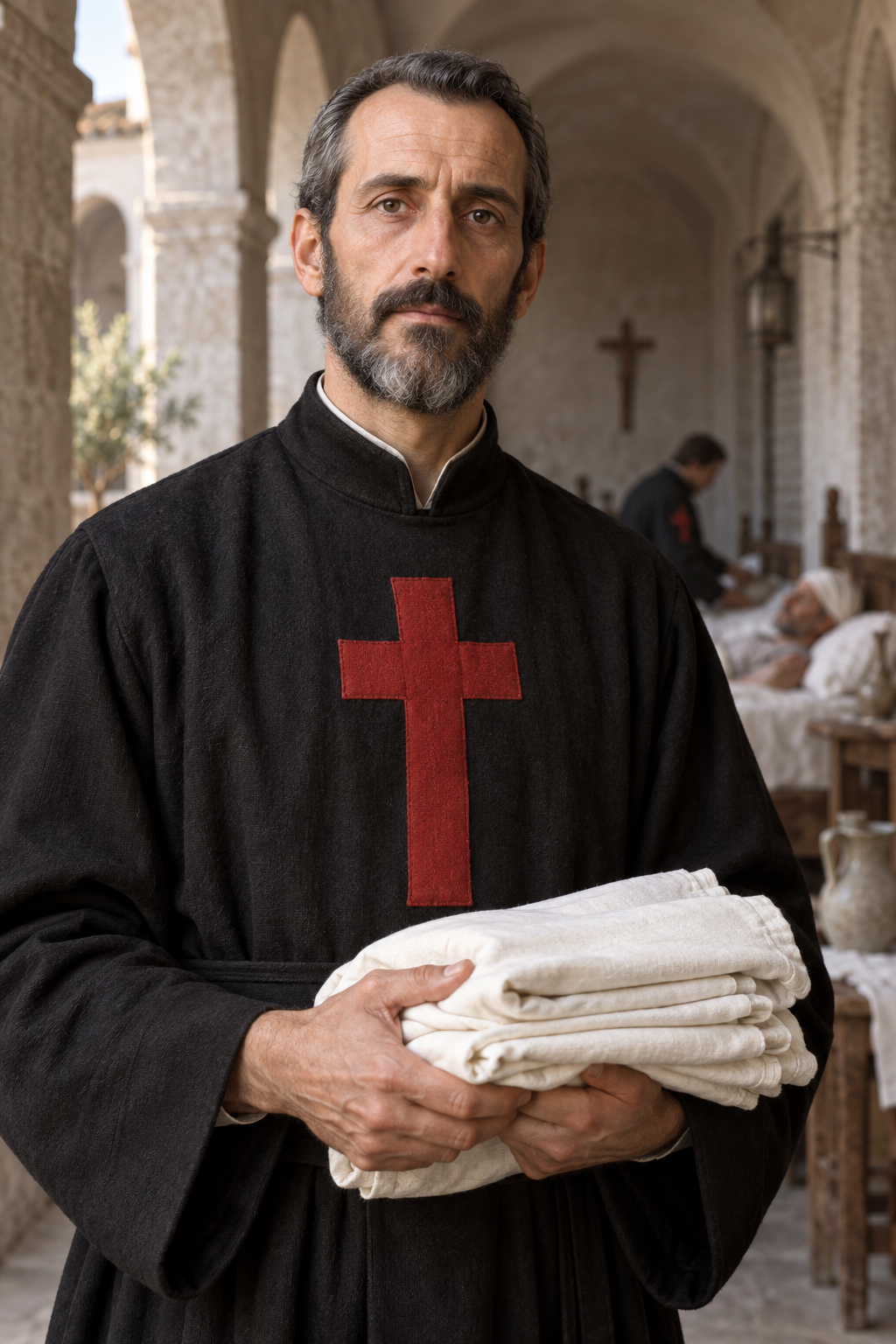
Hospital work eventually gave that change a practical direction. Antonio Sicari's life describes Camillus checking purchases at San Giacomo in Rome, challenging suppliers, and returning goods that were not fit for patients. Charity required attention to what actually reached the bedside. The same account remembers him teaching companions to make a bed without unnecessarily disturbing the person lying in it. He set up a demonstration with a companion playing the patient and repeated the procedure until the learners could manage it. Folded linen and purchasing decisions might seem small concerns beside the foundation of an order, but they show the kind of service he was trying to establish. For Camillus, a patient's comfort depended on habits that caregivers could learn and practice together.
The road into that work was complicated. A persistent leg wound had brought Camillus to San Giacomo and prevented him from remaining with the Capuchins. He later became a hospital supervisor and studied for ordination, becoming a priest in 1584. His confessor Philip Neri opposed his decision to leave San Giacomo; their disagreement should not be recast as encouragement for every new undertaking. Camillus left with Bernardino Norcino and Curzio Lodi and began serving at Santo Spirito. The clothing of companions in 1585 marked another step in the community's formation. In 1607, poor health led him to relinquish leadership, though he continued caring for patients.
A group of helpers had become a lasting religious undertaking. The Roman province's history distinguishes the community's beginnings in Rome from its recognition as an order by Gregory XIV in 1591. Its members took a distinctive fourth vow: to serve poor sick people even when plague made that service dangerous. The early constitutions joined this commitment to the usual religious vows. Priests and brothers belonged to the same work, while their particular duties included both bodily assistance and spiritual ministry. The promise was demanding because it bound members to people whom fear could leave isolated. Its institutional form also meant that care would depend on a community's continuing commitments, not only on the energy of its founder.
Near death, Camillus returned to these responsibilities in his testamentary letter. He urged peace between priests and brothers and resisted divisions that would weaken their shared service. He asked the community to hold spiritual assistance and bodily care together rather than retaining one while abandoning the other. Poverty also mattered: he wanted reliance on alms and warned against comforts that could redirect the order's priorities. His concern reached beyond large cities to smaller places where a community could be sustained. The letter ends by asking the brothers for prayers after his death and blessing those who would come after them. He also asked that Masses be offered after his death. These were instructions to successors who would have to make decisions when his own voice was no longer present.
Camillus died on 14 July 1614. Francis recalled that exact date when the order approached the fourth centenary of his death. The Church remembers him especially in connection with sick people and those who care for them.
His legacy continued through people he never met. Addressing the Camillian family in 2019, Francis distinguished the men's order from women's congregations formed in the nineteenth century and secular institutes formed in the twentieth. Religious and lay participants now share that inheritance. Their task includes direct assistance and teaching others how to care. This later growth should not be credited to Camillus as though he personally founded every branch. What connects them is the vocation to attend to suffering people in body and spirit, with practical tenderness rather than mere professional distance.
Wondering how to weigh the stories and sources? Learn how to read a saint biography.
Explore similar vocations
Prayers for Camillus de Lellis
Camillus Fourth-Centenary Prayer — excerpt
Warm our hearts at the fire of mercy