Biography
Carlos de Dios Murias
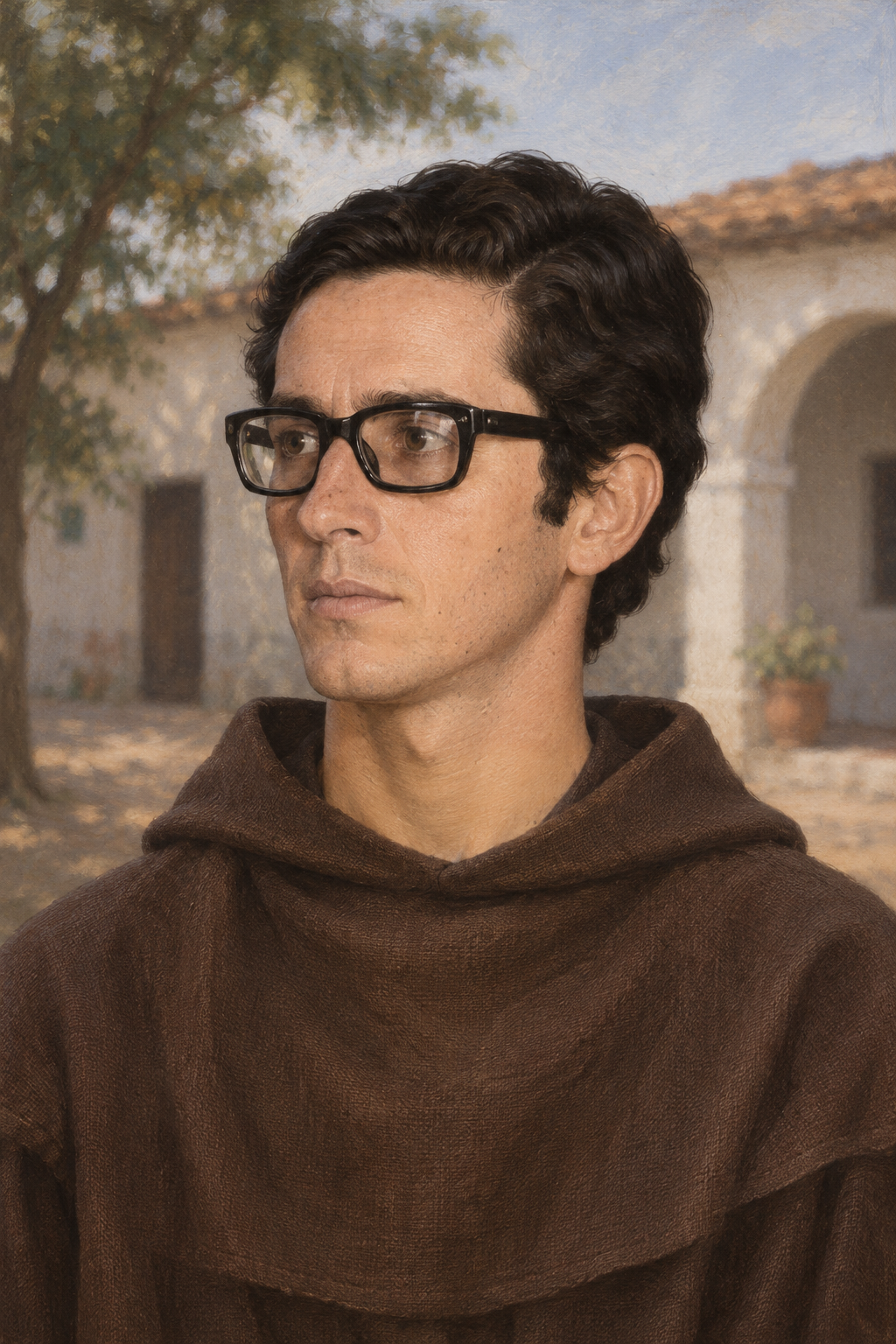
About Carlos de Dios Murias
Carlos de Dios Murias was born in the city of Córdoba in 1945, into a family with ties to several places in the province. His mother taught in La Falda, where he was baptized, while his father owned property and was active in local politics at San Carlos Minas. He spent periods there during childhood and returned as a young man. San Carlos Minas was a family connection.
He studied at a military secondary school and began university studies before deciding on religious life. The minister general’s 2019 letter remembers his interest in music, generosity toward classmates and attraction to the priesthood. Enrique Angelelli, whom Carlos knew from his student years, was an important influence. His concern for people who were poor offered the young man an example of priestly service.
The decision developed through relationships as well as private reflection. Historian Luis Miguel Baronetto describes a connection with Father Alberto Fulgencio Rojas, who had been his school chaplain, and with young people around Córdoba’s church communities. Baronetto also preserves a recollection of Carlos as cheerful and positive, yet firm in his convictions. This is a later remembered portrait, rather than a diary entry, but it connects the future friar’s religious choice with his continuing concern for young people and poorer communities.
He entered the Conventual Franciscan community at Montevideo in 1966. Formation included the novitiate, studies for the priesthood and solemn religious profession in 1971. Angelelli ordained him a priest in December 1972. His first assignments took him to Moreno and José León Suárez, near Buenos Aires, where his work included ministry with young people in need. The Franciscan vocation did not take him away from the questions that had interested him as a student; it gave those concerns a community and a form of service.
The diocesan historical chronology distinguishes his temporary profession, made in January 1968, from the solemn vows that followed in December 1971. Between these commitments he continued philosophical and theological formation, including study at the Franciscan seminary in San Antonio de Padua.
The La Rioja historical commission gives an account of these early responsibilities. It records his placement under experienced priests while beginning parish ministry, later work with youth and a temporary assignment at Saldán. He repeatedly sought permission to develop new forms of fraternal life. In 1975 he was allowed a period of experience in La Rioja, where the order hoped to establish a community. His eventual move therefore followed discussion and assignments within the order, rather than an independent departure from it.
In 1976 he joined Father Gabriel Longueville at El Salvador parish in Chamical. Their work belonged to the diocese led by Angelelli and was shared with sisters, catechists and other local collaborators. The historical commission describes an energetic pastoral partnership and sermons informed by Scripture and Catholic social teaching. Carlos’s appointment as parish collaborator made him part of a wider effort to serve communities in the Llanos, where religious work and concern about injustice were closely connected.
A surviving published excerpt from a 1976 homily gives a direct glimpse of that preaching. Murias insisted that suppressing the voice of a priest or bishop could not silence Christ’s demand for justice and love. He connected that demand with the daily labor of woodcutters. The excerpt places his concern in the lives of identifiable workers rather than in a distant political abstraction.
His connection with his family continued during these months. When his father died at San Carlos Minas in June 1976, Carlos returned to celebrate Mass, accompanied by Longueville.
Just weeks later, on 18 July, the two priests were abducted in Chamical and killed. Later legal proceedings addressed their deaths: the Argentine public prosecutor’s account records convictions in December 2012 for their murders. The report also describes subsequent litigation concerning the convicted men’s detention.
The Catholic Church beatified Murias with Longueville, Angelelli and Wenceslao Pedernera on 27 April 2019.
A year later, the Conventual Franciscan minister general, Carlos Trovarelli, asked the friars to remember his faithfulness amid difficulty. The letter placed him within a longer Franciscan memory of men and women who remained with the people entrusted to them. Its emphasis was on perseverance, faith and the gift of oneself in service. This was a religious reading of his life, preserving the connection between his membership of a community and the work that had brought him to Chamical.
That memory also lives in places he knew. In a celebration reported by the Diocese of Cruz del Eje in January 2026, the people of San Carlos Minas carried an image of Murias to their parish church. The gathering included reflection, procession and Mass, recalling his relationship with the town and his family. The community remembered the young man who had worked there and the priest who returned, alongside the martyr honored by the wider church.
Wondering how to weigh the stories and sources? Learn how to read a saint biography.