Biography
Catherine of Ricci
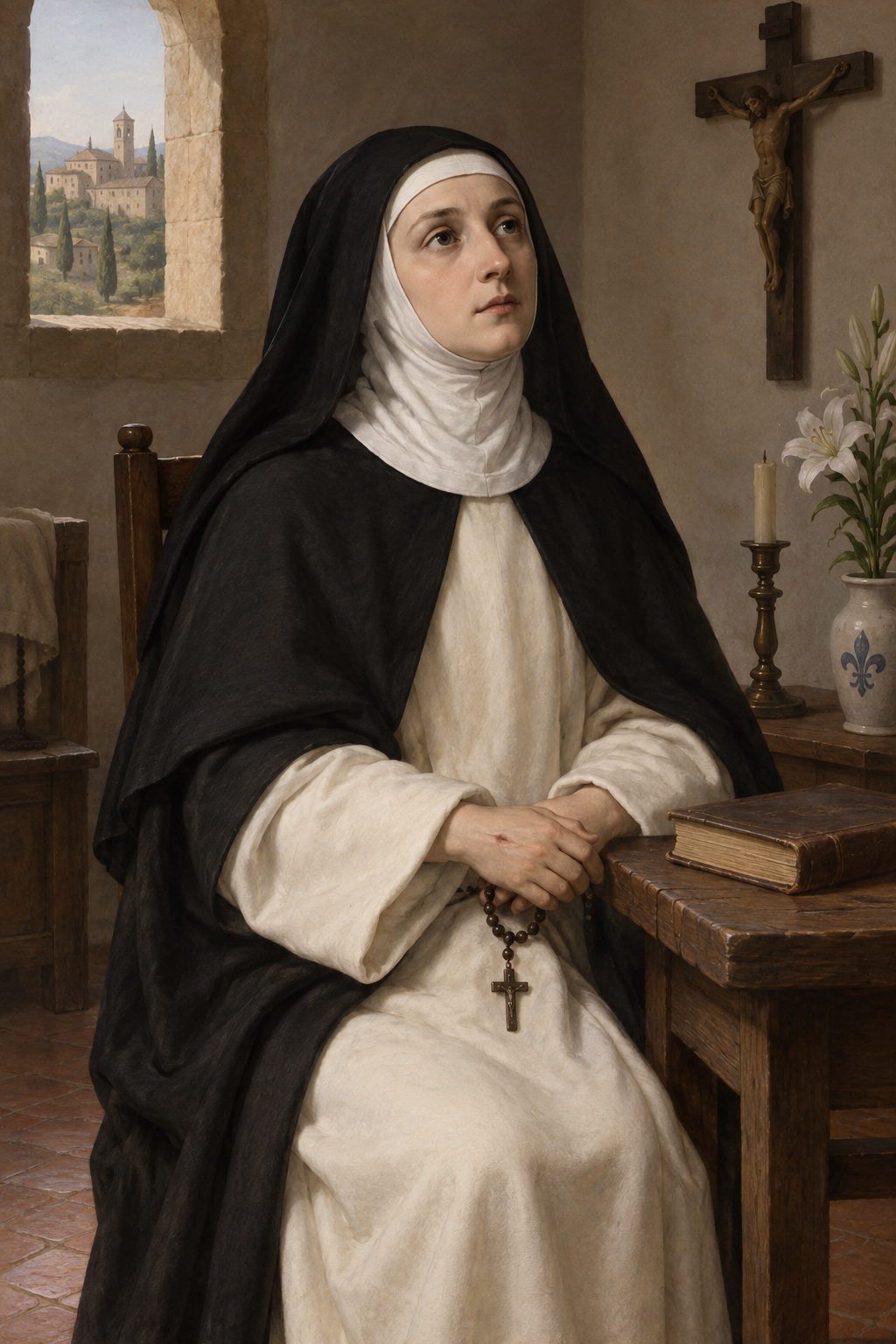
About Catherine of Ricci
Catherine de’ Ricci was born Alessandra Ricci in Florence in 1522. Her mother died in 1526, when Catherine was four. As a child Catherine was educated in a religious setting and developed a strong devotion to the Passion of Christ. At about thirteen, she entered the monastery of San Vincenzo in Prato. Some devotional biographies say her father opposed the choice, but Renzo Ristori notes that the basis for this story is uncertain. The community belonged to the Dominican Third Order regular. Catherine’s spiritual reputation developed over time. The Causes of Saints account describes ecstatic experiences associated with contemplation of the Passion and bodily signs that initially caused distrust among some of her sisters. It records that episodes began in 1542 and continued for twelve years. Catherine’s community first viewed the events with suspicion, but she gradually gained the respect of her sisters. Catherine’s influence extended beyond her cloister. The official account says that a group of disciples gathered around her, including people later recognized as saints, who sought prayer, counsel and charitable help. The documentary account of Catherine’s formation begins before San Vincenzo. As a child she spent about two years in the convent of San Piero a Monticelli near Florence, where her aunt was a nun. She then returned to her family home and appears to have developed an early desire for religious life. Renzo Ristori notes that family circumstances likely influenced her eventual choice of San Vincenzo, where many young women from Florentine noble families lived and her uncle served as confessor. Earlier devotional biographies say that her father resisted her choice, but Ristori cautions that the basis for this detail is not clear. Catherine received the habit and her religious name on 13 May 1535. She made her profession in 1536 after a novitiate marked by illness and tension with some of the sisters. It reports serious illness in the first years after profession and says that her education is not well documented; her later letters, however, show literary skill. Accounts of Catherine’s mystical episodes attracted public attention. Ristori dates the more intense weekly experiences to 1542 and says that they continued until 1554. The reports describe visions related to the Passion and physical signs, and they circulated widely enough that visitors came to Prato. Dominican authorities expressed doubts, and in 1544 Pope Paul III sent Cardinal Roberto Pucci to examine the reports. Catherine also held practical responsibility within the monastery. She became subprioress in 1547 and was elected prior on several occasions beginning in 1552. Ristori describes her as energetic and practically capable in those roles. She maintained relationships with a wide circle of people, especially members of the Florentine nobility, and her influence combined spiritual counsel with an ability to deal with different kinds of visitors. Letters written over several decades provide evidence of her literary ability and a durable record of her relationships. Their publication history includes editions prepared from family and spiritual correspondence, making them an important source for her religious thought and public reputation. The history of her veneration also preserves difficult memory. Some later debate arose from Catherine’s devotion to Girolamo Savonarola, whose reputation remained controversial during her beatification process. Treccani records that these disagreements required a papal decree directing the parties to stop discussing the matter. She remained at San Vincenzo until her death in 1590. Catherine died at Prato on 2 February 1590. The Dicastery records her beatification in 1732, under Clement XII, and canonization in 1746, under Benedict XIV. Her Roman Catholic liturgical memorial is 2 February. She is identified as a virgin of the Third Order regular of Saint Dominic.
Wondering how to weigh the stories and sources? Learn how to read a saint biography.