Biography
Célestin Ringeard
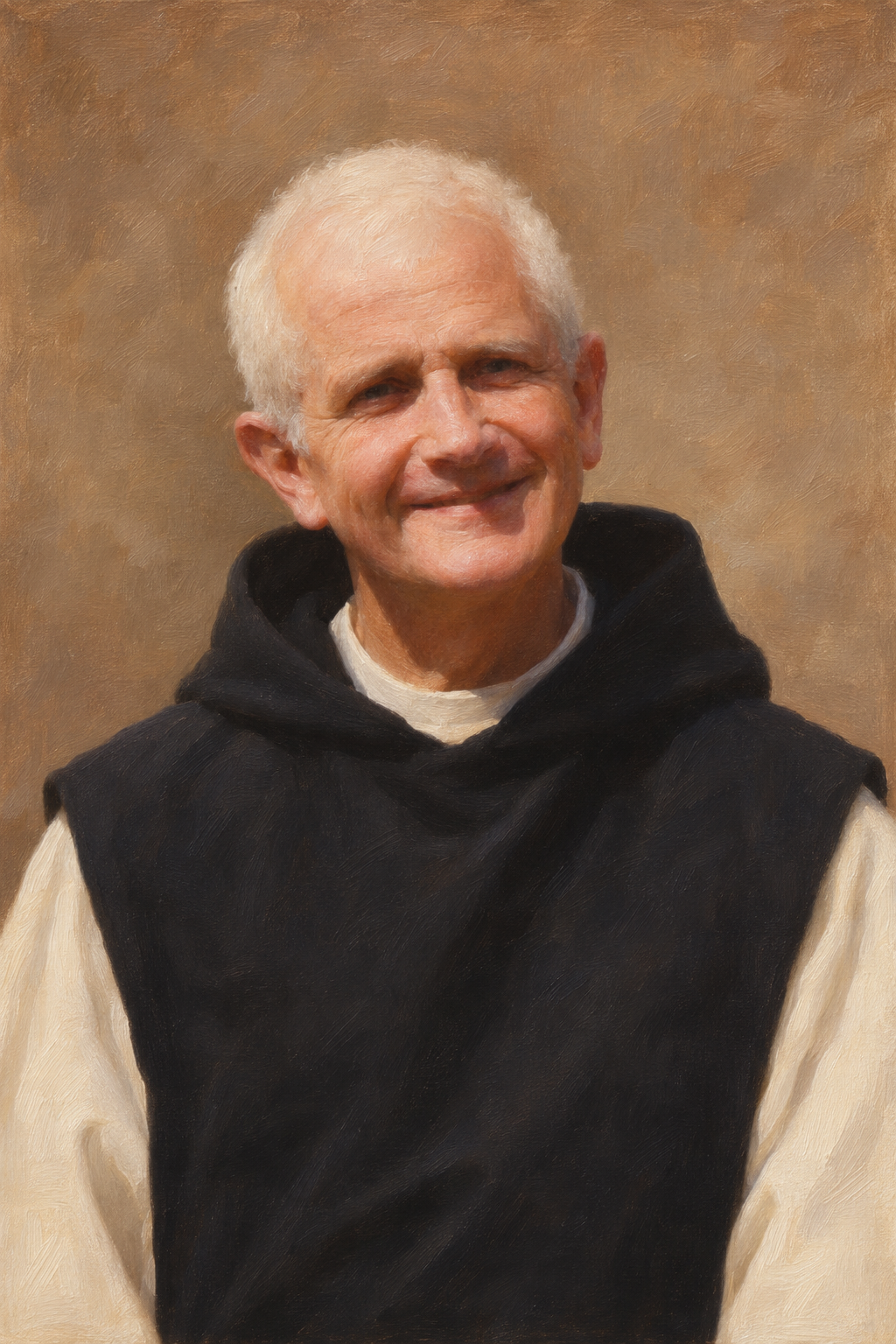
About Célestin Ringeard
Célestin Ringeard was born on 29 July 1933 at Touvois. His father died of tuberculosis six weeks later. To protect the children from infection, Célestin and his brother had been separated from their mother. A woman called Bertine cared for the baby, and he retained an affectionate memory of her. After seminary studies and military service, he was ordained a priest on 17 December 1960.
His ministry in Nantes brought him close to people whose lives were marked by poverty, addiction and imprisonment. After leaving parish work, he became a street educator and worked in a social center for people leaving prison. He entered Bellefontaine in 1983, moved to Tibhirine in 1986 and made his definitive monastic commitment in 1989.
A letter from May 1976 makes his understanding of ministry unusually clear. He wanted to live among people who believed differently from him and to meet them as equals. Religious ideas expressed from a comfortable distance did not satisfy him. He looked instead toward a shared life in which people could work, struggle and build something together. His hope for human fellowship was grounded in those encounters, rather than in a claim that differences of belief would simply disappear. The letter belongs to the difficult period when he was finding a way to continue his vocation outside a conventional parish role.
Étienne Baudry, his novice master, remembered Célestin speaking enthusiastically about a call to Algeria on 4 April 1984. Two other brothers had separately expressed the same desire within days of one another. Célestin, however, was still a novice and could not leave immediately. Baudry’s recollection shows that the move followed a period of discernment and waiting, despite the strength of Célestin’s first response.
Music remained important to him at Tibhirine, where he led the singing. Serious heart trouble required surgery in France in 1994. He returned to Algeria later that year, although his health remained fragile. During a stay at Fès in early 1995, he helped the smaller community with its singing.
Correspondence from his final months continued to look beyond the monastery. Writing to friends in January 1996, he spoke of Algeria’s suffering and of Odette Prévost, who had recently been killed. He prayed for the transformation of violence into life, peace, freedom and reconciliation. The letter records a hope held within an immediate experience of danger and bereavement. It does not suggest that he was untouched by either.
He was abducted with six fellow monks in March 1996 and died that year.
The monks were beatified with their companions at Oran on 8 December 2018.
People who had known him in Nantes continued preserving his voice. In 2021, the Diocese of Nantes described a parish collection of ten letters addressed to friends and relatives. Former parishioners also recorded their memories on film. The publication connected his later monastic life with the relationships formed during his earlier ministry at Saint-Dominique, in the north of the city.
A much larger musical legacy emerged from his family’s archives. Reporting in 2025, Camille Andres interviewed the researcher Marie-Dominique Minassian about the discovery of some 1,700 scores. Minassian’s wider work on the monks’ writings had begun in 2017; receiving Célestin’s family papers opened a further field of study. Specialists gathered to consider music that had largely remained unknown. The discovery made it possible to hear a dimension of his prayer that accounts centered on the abduction and death could easily miss. Andres’s report presents this recovery through the researcher’s account of the archives, rather than treating later performances as recordings of Célestin himself.
The resulting study, edited by Minassian and Joachim Negel and published in 2025, drew on work by monks, musicians and musicologists between February 2023 and April 2024. Its selection of about one hundred facsimiles shows the range of his compositions: antiphons, hymns, psalm tones, responsorial psalms, vocal games and music without words. He also set poems and biblical texts to music. The collection documents particular works that can now be studied and performed, giving substance to the familiar description of him as the monastery’s cantor.
Organist and composer Jean-Michel Dieuaide, quoted in Andres’s report from the musical study, describes an inventive melodist with unusual rhythmic freedom and clear harmonies. He emphasizes the expressive strength of the very short pieces. This is a musician’s assessment of the surviving scores, offering another way to understand work that Célestin had not publicly presented as a composer’s career.
His music had already brought people together at a commemorative gathering in Orvault on 8 September 2024. Odile Gautier-Mignot reported that about 250 people attended, including relatives and friends. Monks from Bellefontaine, Tamié and Aiguebelle joined Agnès Pinardel-Minier in a performance of his compositions. Her account also recalled witnesses who had seen his pleasure in music and dancing at weddings. These recollections preserve a lively personal presence alongside the solemn public remembrance of the martyrs.
Wondering how to weigh the stories and sources? Learn how to read a saint biography.