Biography
Charles Deckers
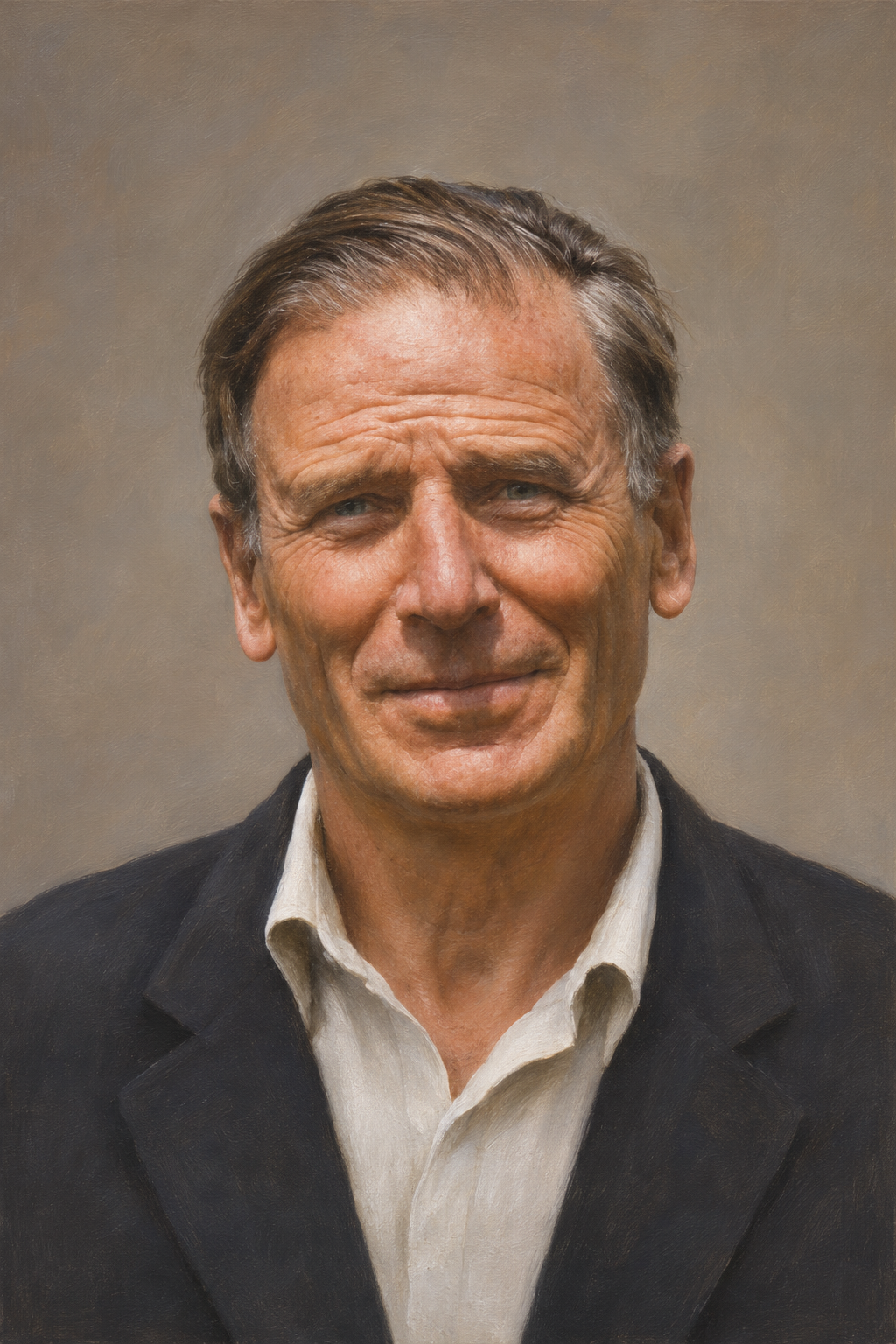
About Charles Deckers
Charles Deckers was born in Antwerp in 1924, one of nine children. At the Jesuit school he attended, pupils performed social service during the difficult war years. The diocesan account connects this experience with his growing concern for people in need. He entered the Missionaries of Africa in September 1943, completed his novitiate at Varsenare and studied theology at Heverlee. There he made his missionary oath in July 1949 and was ordained a priest on 8 April 1950. His early assignments took him to Algiers, Tunis and Paris before he began a long period of work at Tizi-Ouzou in 1955.
Salah Selloum, a former pupil, remembered the opportunities Charles created for local young people. His account describes a youth center where games and companionship were joined by practical training. Charles equipped a room with typewriters, allowing students to develop skills useful in office work. Vocational education expanded into accounting and building design. Selloum places this work against the limited opportunities available to many young people after primary school. He also remembers help with administrative correspondence, pensions and requests for assistance. Volunteers from the school took part in this service. Charles’s interest in education included girls: he taught Arabic at the girls’ school in Tadmaït and encouraged families to support their daughters’ studies. These recollections show how social contact, education and practical assistance could overlap in his work. Football provided another connection with the young people. Selloum remembers Charles organizing a team and supporting its players. Some later joined the JSK club. Alongside education and sport, the social service distributed donated goods to people who came seeking help.
His popularity did not protect him from political pressure. An obituary published on the day of his death records that he was expelled in 1977 despite having acquired Algerian nationality. Back in Belgium, the Brussels vicariate asked him to take responsibility for El Kalima, a new center for Christian-Muslim dialogue. He directed it from 1977 to 1982 and also worked with the interdiocesan Catholic commission for relations with Islam. In 1982 he left for Yemen, where his responsibilities included teaching English. The obituary recalls him as a missionary whose commitment to dialogue remained practical and sustained.
The history of El Kalima clarifies that its beginnings were a shared undertaking. In 1976, representatives of the Brussels vicariate approached the White Fathers about opening such a center. Jean-Marie Gérard helped prepare the house and make it welcoming. Charles and Hans Vöcking then joined the team, with Charles appointed to lead it. An account based on Vöcking’s recollections describes the different experiences brought together there: the missionaries had lived dialogue through relationships abroad, while the vicariate approached the project through the pastoral responsibilities of a local Church. Over time, those perspectives drew closer. Charles’s role belonged within that collaboration rather than a story of solitary foundation.
He returned to Algiers in July 1987.
His brother Simon later described his work there with the English-speaking community, at the university and as chaplain to the Poor Clares. Visits to Tizi-Ouzou remained a particular happiness. Charles could spend feast days with the fellow missionaries and friends he had known there. In a letter to his family dated 26 March 1994, he expressed his belief that actions mattered more than words, even when the action available was simply continuing to live among people. The excerpt was distributed at his memorial service after his death. It preserves his own explanation of remaining present during danger. Simon explained that the move to Yemen had answered a request for a chaplain from sisters working in health care. Charles accepted that assignment despite his hope of returning to Tizi-Ouzou. His later university teaching in Algiers included Latin and English. He entrusted his own future to God.
On 27 December 1994, the day after his seventieth birthday, he traveled to Tizi-Ouzou and was killed shortly after arriving. He was buried there with Alain Dieulangard and Jean Chevillard.
Simon attended the funeral and remembered the local shops closing as residents mourned. At the subsequent service in Antwerp, an Algerian delegation joined the congregation. The collection was given to El Kalima. The gathering connected his family and birthplace with the relationships formed through his work in Algeria and Belgium.
Charles was beatified with the other eighteen martyrs of Algeria at Oran on 8 December 2018. His family organized another remembrance in Brussels in December 2024, marking the centenary of his birth and thirty years since his death. Luc Putzeys’s account describes relatives, missionaries, representatives of El Kalima and Algerian friends gathering at La Cambre. Young members of the family also took part. The celebration recalled a life whose relationships continued across countries and generations. It brought together people connected to different parts of his ministry rather than limiting his memory to the attack in which he died.
Wondering how to weigh the stories and sources? Learn how to read a saint biography.