Biography
Charles of Mount Argus
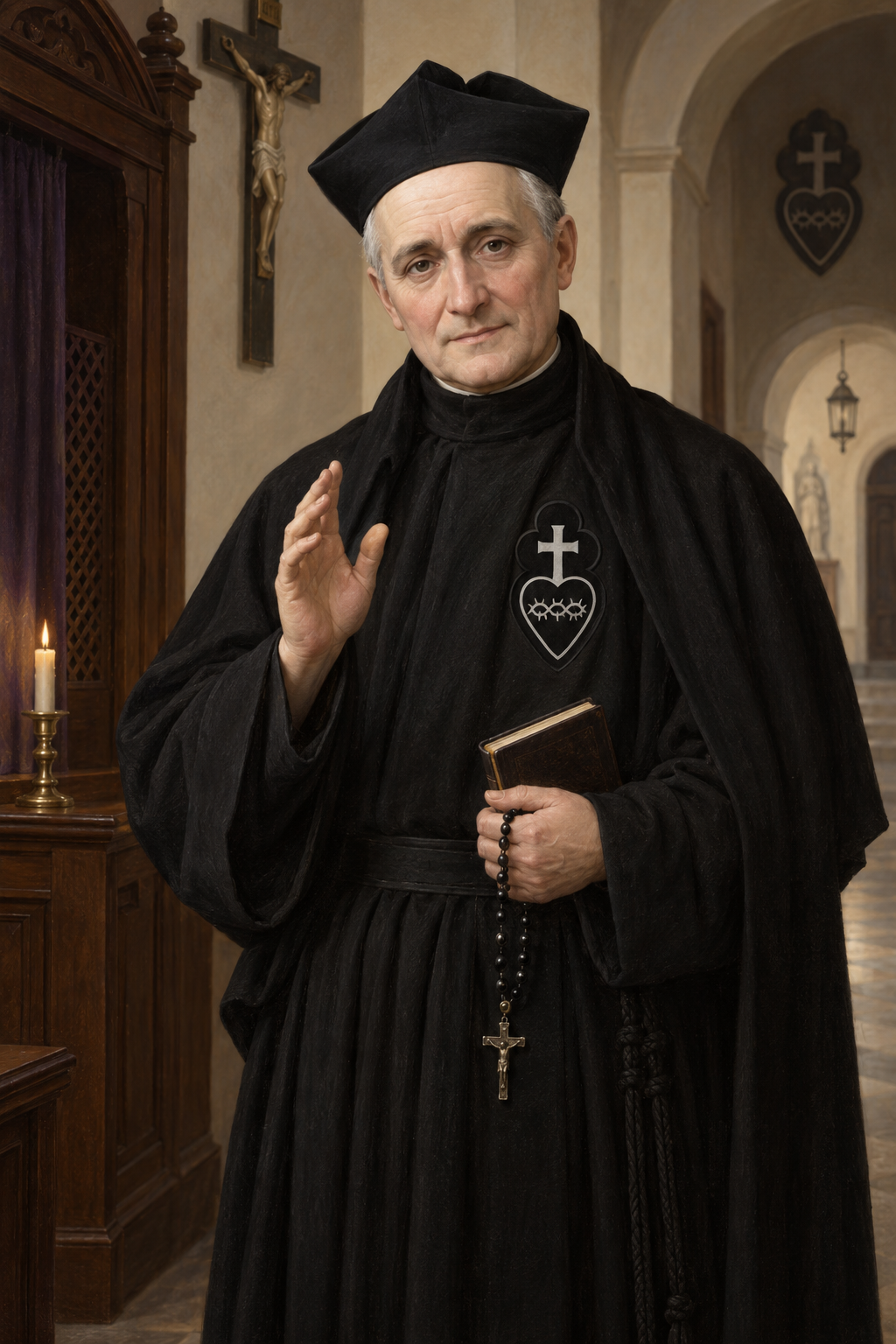
About Charles of Mount Argus
Charles of Mount Argus was born John Andrew Houben on December 11, 1821, in Munstergeleen, then in the diocese of Roermond in Holland. The says he was the fourth of eleven children and was baptized the same day with the name John Andrew.
He received First Communion on April 26, 1835, and Confirmation on June 28 of the same year. He began formal education at Sittard and Broeksittard. In 1840 he had to interrupt his studies for military service, and during that period he first heard about the Congregation of the Passion.
After military service he completed his studies and asked to enter the Passionists. Blessed Dominic Barberi received him, and he entered the novitiate at Ere near Tournai on November 5, 1845. In December he received the Passionist habit and the name Charles of St. Andrew.
Charles completed the canonical novitiate and professed first vows on December 10, 1850. At the conclusion of studies he was ordained a priest by Bishop Labis, ordinary of Tournai. The profile can name these steps without expanding them into an unsupported seminary history.
He was sent immediately to England, where the Passionists had founded three monasteries. For a time he served as vice-master of novices at Broadway and also did parochial ministry at Saint Wilfred's parish and nearby areas. This English period prepared the Irish ministry for which he became known.
In 1856 Charles was transferred to the newly established monastery of Mount Argus on the outskirts of Dublin. The Holy See biography says he lived almost the rest of his life there and was so loved by Irish people that they called him Father Charles of Mount Argus, though he was a native of Holland.
The source describes him as a particularly pious priest, marked by obedience, poverty, humility, simplicity, and devotion to the Passion of the Lord. His poor command of English meant that he was never a formal preacher and did not preach missions. This limitation shaped the form of his ministry.
That limitation is important because it prevents the profile from forcing him into the usual missionary-preacher pattern. The source shows a priest whose holiness became visible through quieter ministries: confession, spiritual direction, patient blessing, and fidelity to the Passionist life at Mount Argus.
Instead, he devoted himself successfully to spiritual direction, especially through the sacrament of Reconciliation. The biography also says crowds gathered at the monastery to seek his blessing. These claims should be presented as reputation and pastoral ministry, not as a vague celebrity story.
The crowds need sober wording. They show that many people trusted him, but the page should not turn that trust into spectacle. The safest emphasis is that people came to the monastery seeking sacramental mercy, counsel, and blessing, and that the Holy See biography records their devotion.
The source reports many testimonies of cures and says he was known as a miracle worker during his lifetime. The page should attribute that reputation to the source and avoid staging individual healings unless specific miracle documentation is being discussed. For this packet, confession, blessing, and devotion are safer central themes.
Because his fame spread through Great Britain, America, and Australia, he was transferred to England in 1866 to give him some rest. He lived for a time at Broadway, Sutton, and London. Even there, the biography says, Catholics and non-Catholics sought him inside and outside the monastery.
This transfer should be treated as pastoral pressure, not exile or punishment. The source says it was intended to give him rest. Even in England, the same pattern continued: ordinary ministry, visitors seeking help, and a reputation that crossed Catholic boundaries.
Charles returned to Dublin in 1874 and remained there until his death at dawn on January 5, 1893. His funeral drew people from across Ireland and showed the popular devotion that had surrounded him. The source records strong contemporary testimony to that veneration without needing long quotation. That devotion belongs in the profile as public memory, not proof-text ornament.
The cause for beatification and canonization was introduced on November 13, 1935. John Paul II beatified him on October 16, 1988. The biography also describes the recognized miracle for canonization, connected with Adolf Dormans of Munstergeleen, but this packet does not need the medical details in the main profile.
His page should emphasize a Passionist priest whose linguistic limitation did not prevent a deep ministry of confession, blessing, spiritual direction, and humble devotion to Christ's Passion. It should avoid unqualified miracle claims, crowd spectacle, and any implication that the generated artwork is a historical likeness.
Artwork should show a Passionist priest in black habit with the Passionist emblem, a crucifix, rosary or prayer book, and a quiet confessional or monastery setting. A blessing gesture is appropriate, but the image should avoid literal healing scenes, sickbeds, crowds, halos, and rendered text.
Wondering how to weigh the stories and sources? Learn how to read a saint biography.