Biography
Charles Raymond Barnes
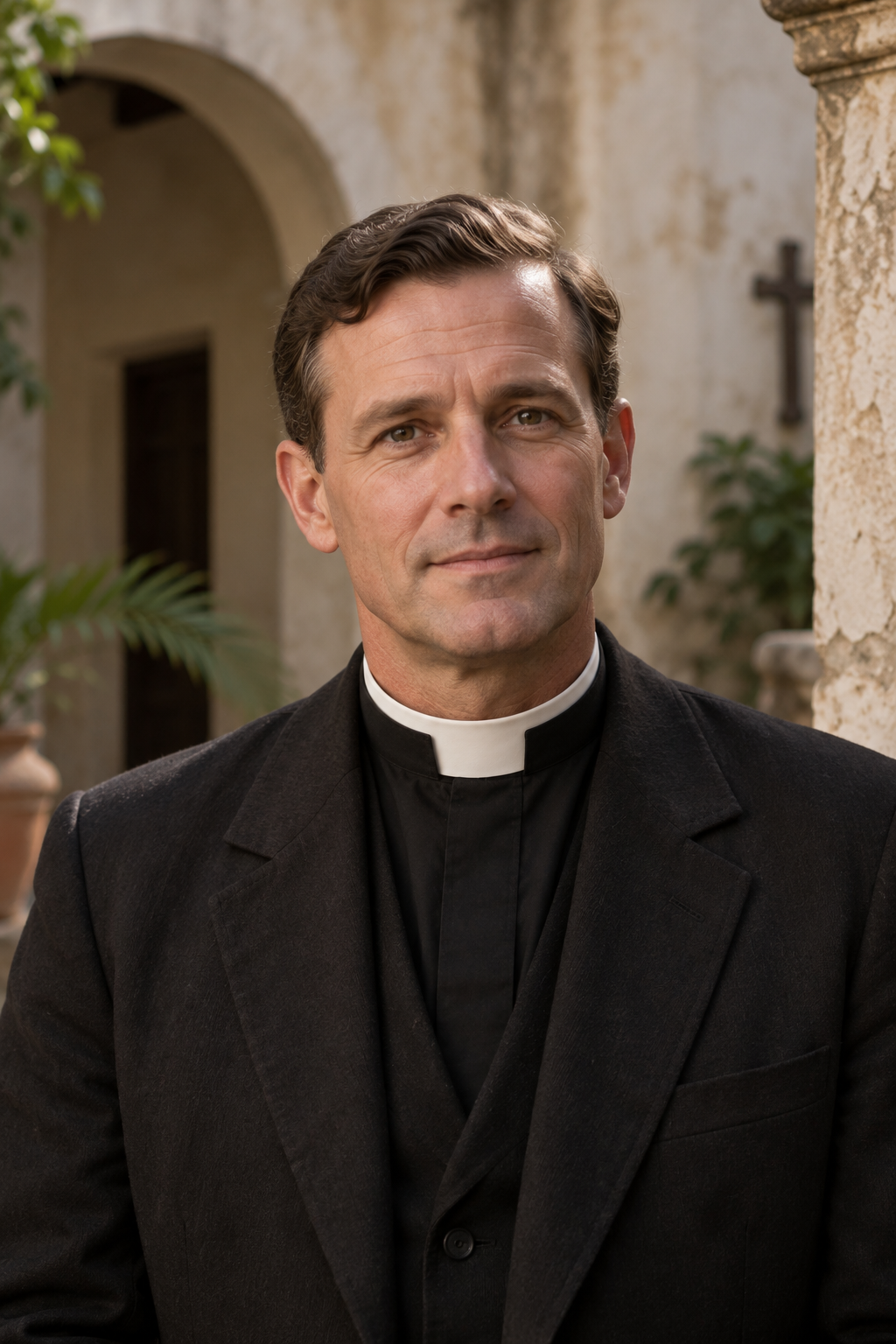
About Charles Raymond Barnes
Charles Raymond Barnes was an Episcopal priest whose ministry took him from the United States to Belize and the Dominican Republic. He served the Church of the Epiphany during the dictatorship of Rafael Trujillo. Dominican Episcopalians remember him as a martyr because he tried to draw attention to violence against Haitians and was killed in 1938. His remembrance belongs to the Episcopal tradition.
He was born in Camden, New Jersey, on March 17, 1894. His lifetime clergy-directory entry records schooling in Mechanicsburg and Harrisburg, Pennsylvania, followed by university and theological study. He received a bachelor’s degree from the University of the South in 1917, a master’s degree from Columbia in 1920 and a theological degree from General Theological Seminary in 1922. He was ordained deacon and priest in 1920 by Bishop Darlington.
His work included service as archdeacon of Williamsport, Pennsylvania, and as subdean of the Cathedral of St. John the Baptist in Belize. The directory dates the latter appointment to 1933–1935. It lists him as priest in charge of the Church of the Epiphany in Ciudad Trujillo from 1936. These appointments establish a ministry spanning several North American settings before his death.
A 1937 notice in the church’s missionary magazine records that he was already working in the Dominican field under Bishop Carson. This contemporary reference places him within the church’s existing mission structure, rather than identifying him as the founder of the congregation.
The crisis that shaped his later remembrance came in 1937. In a memorial service reported by Episcopal News Service four decades later, the rector of Epiphany recalled the massacre of Haitians ordered by Trujillo. Barnes learned of the killings and wrote articles intended to bring international pressure to bear. According to that account, authorities discovered an article while searching a friend who was leaving the country. The report connects his killing with this effort to make the violence known.
He died on July 26, 1938. Bishop emeritus Telésforo Isaac’s memorial address describes agents taking him to a house associated with Trujillo in San Cristóbal, killing him and returning his body to the residence beside the church. The address reports that his remains were buried in the church’s nave. Later accounts differ about the precise manner and location of the killing; the identification of state responsibility is more consistent than those details.
The regime offered a very different explanation. A 2010 investigation in the Dominican newspaper Hoy describes contradictory official stories that accused household workers and then a young Puerto Rican man. It reports that the latter was convicted and later killed, while his lawyer subsequently recorded his denial of responsibility. The article treats the accusations as a cover-up, not as reliable evidence about Barnes’s private life. It also identifies accounts written by opponents of the dictatorship in exile. These competing records require care: repeating a regime allegation without its setting would reproduce the explanation that the later investigation challenges.
The same investigation describes a resolution circulated within the church after his death. It praised his spiritual leadership and offered sympathy to his sister, Peba M. Barnes. She had visited him in the Dominican Republic and asked him to present her to the bishop for confirmation earlier that year. This glimpse of family and congregational life places the public controversy alongside the personal loss experienced by people who knew him.
The killing also affected the congregation that survived him. In interviews published by Hoy in 2010, church members recalled a decline in attendance and a period when laypeople continued services without a resident minister. Virginia Norman Smith, who joined the church after Barnes’s death, described the difficulty of finding anyone willing to occupy his former residence. The same report records church leaders’ continuing search for archival evidence and acknowledges disagreement about the killing’s details. Their certainty that the regime was responsible did not mean that every part of the story had been recovered.
His memory remained part of the congregation’s worship. On July 23, 1978, Dominican and American churchpeople gathered at Epiphany for a special service marking forty years since his death. The rector interpreted Barnes’s witness as a refusal to keep the church silent in the face of injustice. This was an act of remembrance by a community living with the consequences of the dictatorship, rather than a contemporary eyewitness account of the murder.
Commemoration also took musical form: Bárvaro Pagés Gómez and Timothy L. Hoet composed a hymn in his memory in 1997.
In 2015, the Episcopal Church’s General Convention authorized adding Charles Raymond Barnes to the calendar of Holy Women, Holy Men on July 26. It also authorized a collect for trial use. The prayer associates his example with speaking truth before rulers and resisting evil. His commemoration preserves the memory of a priest whose public witness became inseparable from the persecution he sought to expose.
Wondering how to weigh the stories and sources? Learn how to read a saint biography.