Biography
Charles Wesley
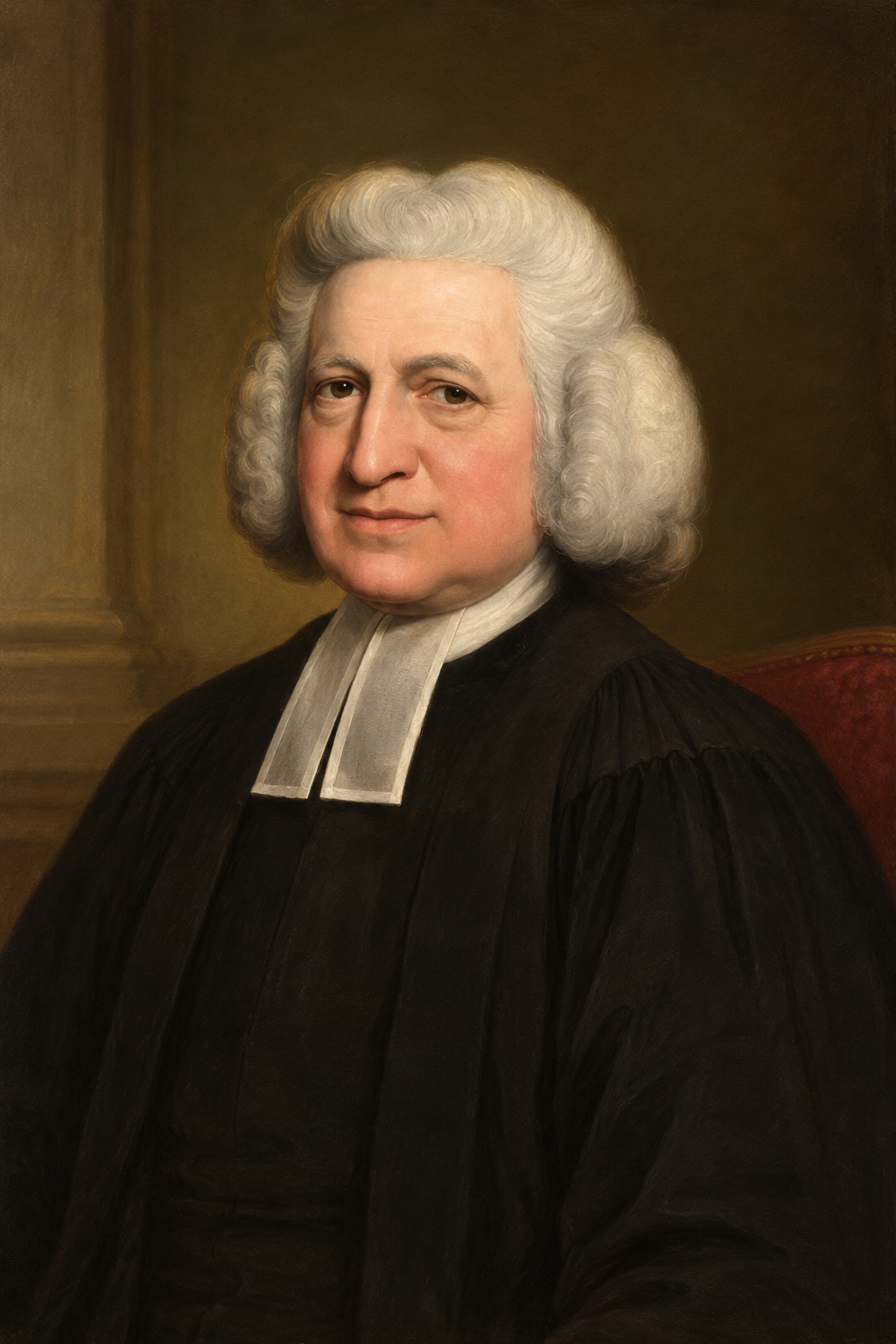
About Charles Wesley
Charles Wesley helped give Methodism a voice through hymns, but his work also included preaching, pastoral care, and leadership of religious societies. Born in Epworth, Lincolnshire, he was educated at home, at Westminster School, and at Christ Church, Oxford. In 1729 he helped initiate the religious gathering known as the Holy Club. His brother John joined the circle, whose members became known as Methodists. Charles was ordained deacon and priest in 1735 before accompanying John to the colony of Georgia. There he served James Oglethorpe as secretary and ministered at Frederica on St. Simons Island.
The appointment combined responsibilities that did not always sit easily together. Charles was both a priest and a civil secretary, with duties concerning Indian affairs as well as Oglethorpe’s correspondence. His surviving journal describes worship in improvised surroundings, including prayers outdoors and services in a storehouse. It records instruction, visits to parishioners, and disagreements over religious practice. In May 1736 he temporarily took over John’s pastoral duties in Savannah while John traveled to Frederica. He described preparing and explaining Scripture morning and evening, visiting parishioners, and talking with his fellow missionaries. These entries preserve a working pastor’s routine alongside the better-known conflicts.
The journal also has limits. As S. T. Kimbrough’s study explains, it does not cover every day of the visit and includes material supplied by Oglethorpe as well as Charles’s own account. Its record of disputes therefore cannot simply stand for the experience of every colonist. Charles’s work among English settlers did not develop into the Indigenous mission he had hoped to undertake.
His stay in Georgia was brief. Returning to England, he continued to struggle with illness and religious uncertainty. On May 21, 1738, while receiving help from fellow believers, he experienced a new assurance of faith. The General Commission on Archives and History identifies this as a decisive moment preceding John’s better-known Aldersgate experience by three days. Charles subsequently joined the Methodist revival through traveling preaching and hymn writing. His participation was active and public, rather than limited to supplying words for other people to sing.
For years he traveled through England, Wales, and Ireland. The University of Manchester’s account of his papers records frequent harassment, sometimes encouraged by other clergy. He remained an important colleague of John, while resisting pressure for Methodism to separate from the Church of England. His preaching and his loyalty to Anglican worship belonged to the same ministry. Methodist communities increasingly gave hymn singing a central place in their services, and his poems became a substantial part of their shared worship.
The 1739 volume Hymns and Sacred Poems brought some of Charles’s verse into print. It appeared under both brothers’ names, but the editors of Duke’s scholarly transcription identify John as its principal collector and editor. The collection also included works by other writers. Because the brothers did not consistently identify individual authors, attribution sometimes remains uncertain. Charles’s manuscript copies help establish authorship in particular cases. The volume should therefore be understood as a collaborative collection, rather than a book in which every poem was written by Charles.
Among the poems associated with Charles, Free Grace expresses astonishment at Christ’s love and describes release from sin through the image of a prisoner finding freedom. Other verses give voice to spiritual weariness and the difficulty of prayer. They distinguish forgiveness from a life already free of inner conflict. The range matters: this poetry offered language for uncertainty and continuing struggle as well as joyful confidence.
Marriage and family altered the pattern of his work. He married Sarah Gwynne in 1749; only three of their eight children survived to adulthood. As constant travel diminished, he continued preaching in Bristol and later London. His family moved to London in 1771, and his sons developed notable musical talents.
In Bristol, he also encouraged the societies to assist poor, sick, and imprisoned people, and offered comfort to those approaching death. These activities gave practical expression to the pastoral responsibilities he continued alongside preaching.
His loyalty to the Church of England also produced serious disagreement with John. Epworth Old Rectory’s account, drawing on G. M. Best’s biographies, describes Charles’s efforts to prevent the societies from becoming a separate church. John’s 1784 ordinations for American ministry sharpened the disagreement. Charles regarded his brother’s assumption of ordaining authority as a breach with the established church. Yet he continued ministering within the Methodist movement, including at City Road Chapel. His opposition concerned the movement’s relationship to Anglican order, not a rejection of the religious revival he had helped lead.
Charles died on March 29, 1788.
He was buried in St. Marylebone churchyard, maintaining his Anglican allegiance to the end.
The Church of England remembers him with John on May 24.
His hymns continued to circulate beyond the societies he had served, carrying Methodist religious language into the worship of other Christian communities.
Wondering how to weigh the stories and sources? Learn how to read a saint biography.