Biography
Christian Chessel
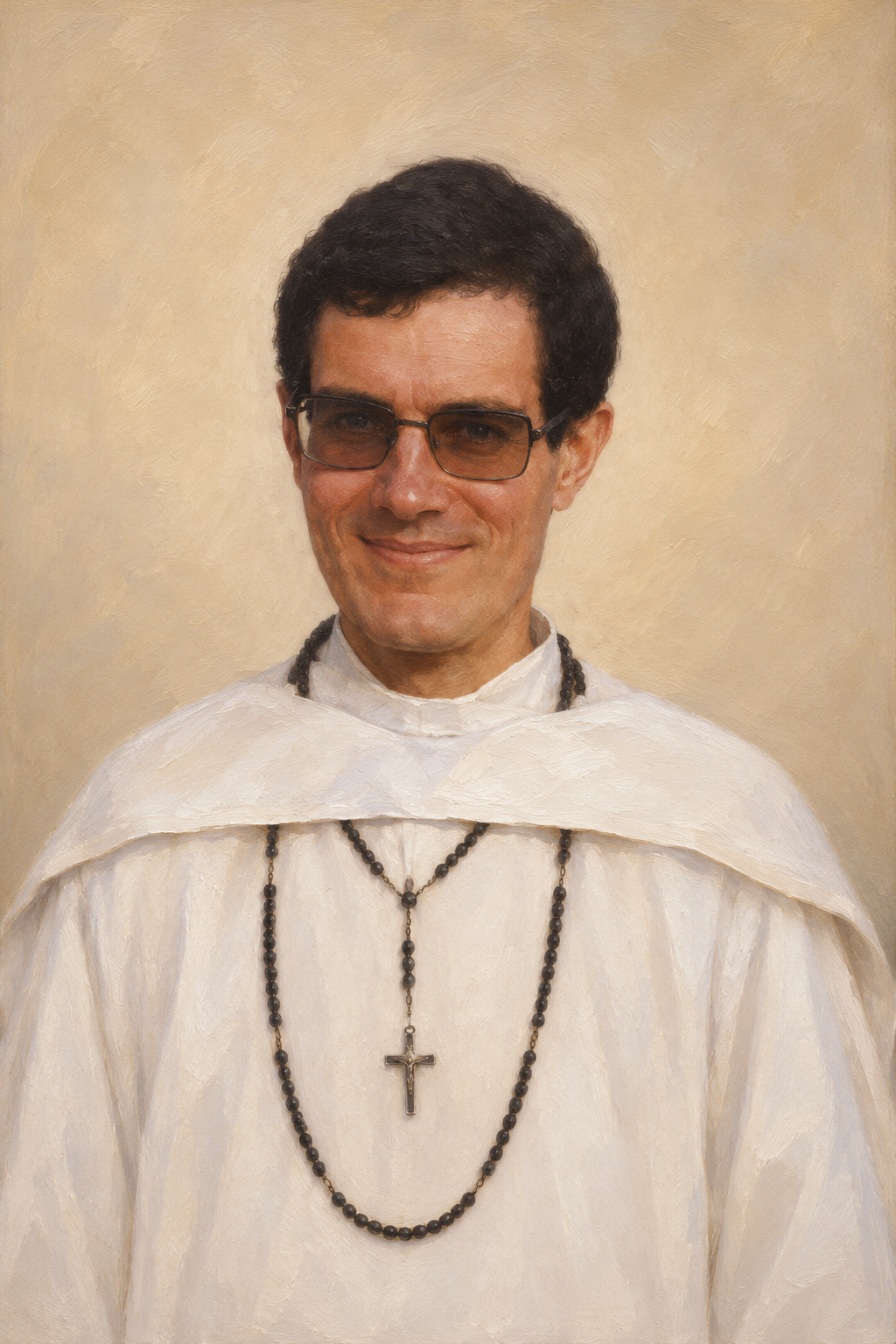
About Christian Chessel
Christian Chessel trained as an engineer before becoming a Missionary of Africa. Born in Digne, France, in 1958, he received his engineering diploma in 1981 and spent two years working in Côte d’Ivoire. In 1985 he entered the congregation commonly called the White Fathers. His formation eventually brought him to Rome, where he made his missionary oath in 1991 with his hand on an Arabic Gospel of Luke recovered after the death of an earlier missionary. He was ordained a priest the following year.
His preparation for priesthood and mission took him through several countries. The congregation’s Polish account records earlier seminary study at Avignon, practical experience at Tizi-Ouzou, theological study in England and Arabic and Islamic studies in Rome. It describes his first experience in Algeria as an encounter with the spiritual demands of service among Muslims. Study and work belonged together in this preparation. After ordination, he continued at the Pontifical Institute for Arabic and Islamic Studies before returning to Tizi-Ouzou. In June 1994 he became superior of the community there. His appointment came only months before his death.
Andreas Hermann Fritsch remembered him from the years when they lived in the same religious house in Rome. Christian worked hard at Arabic and joked about the difficulty of pronouncing sounds that came more easily to German speakers. Fritsch also recalled him jogging in winter, sharing meals and conversation, and joining prayer. These small memories describe a companion whose serious preparation did not prevent sociability. Before Christian’s final departure for Algeria, friends asked what his work could mean where public proclamation of the Gospel was restricted. He answered in terms of the Church’s presence, prayer and celebration of the Eucharist. Fritsch understood those commitments as central to his friend’s vocation.
At Tizi-Ouzou, Christian worked toward a library for young people. After his death, an Algerian woman named Zakia wrote to his parents about the happiness she had seen in him as the project began to take shape. Her recollection connects his final months with the hope of offering students something useful. The library was a project for the young people of the city, rather than simply an institution for members of the Christian community.
A priest who often met him remembered that he quickly recognized the importance of hospitality in Kabyle families. The testimony, published without the witness’s name on the cause website, describes a man who combined demanding standards for his own work with readiness to help others. He could be interrupted for humble tasks despite the intensity with which he used his time. The witness also recalled his long periods of prayer. Young people whose education or professional preparation had been cut short particularly troubled him. Their lack of opportunities stirred him to action. This account gives a personal context for his educational work without suggesting that he had already solved the difficulties facing them.
Christian also sought a place in Ribat es-Salaam, a group of prayer and spiritual sharing between Catholics and Muslims. In the surviving excerpt of his request, he acknowledged the strongly intellectual character of his own approach. Reflection and analysis came readily to him. He wanted to balance those habits through a spiritual relationship that was simpler and more directly lived. The request shows that his academic study of Islam did not exhaust what he hoped to learn from encounter with Muslims. He recognized a need within his own life, rather than presenting himself only as someone who could meet the needs of others.
In an essay written before his death, he explored weakness as a condition of Christian mission. Drawing on the letters of Paul and the life of Jesus, he argued that accepting one’s limitations could change the way one approached other people. A missionary who acknowledged personal weakness could relinquish the desire to dominate and become more willing to share another person’s vulnerability. He did not present weakness itself as a virtue. Nor did he equate it with resignation or inactivity. His reflection insisted that this approach required courage and commitment to justice and truth. Its strength came from faith rather than the attraction of power. He applied the argument to individuals, communities and the Church, recognizing that the process could be painful. The essay preserves a considered account of how he understood his vocation, not merely a meaning assigned to his life after his death. He also warned against approaching another person with pretensions of superiority, describing encounter as an invitation to carry weakness together rather than conceal it.
Christian was killed at Tizi-Ouzou on 27 December 1994.
He died with Jean Chevillard, Alain Dieulangard and Charles Deckers. The four Missionaries of Africa were among the nineteen martyrs beatified on 8 December 2018. Fritsch’s later remembrance links that recognition with the friend he had known through ordinary conversation, study and prayer.
Wondering how to weigh the stories and sources? Learn how to read a saint biography.