Biography
Clement Mary Hofbauer
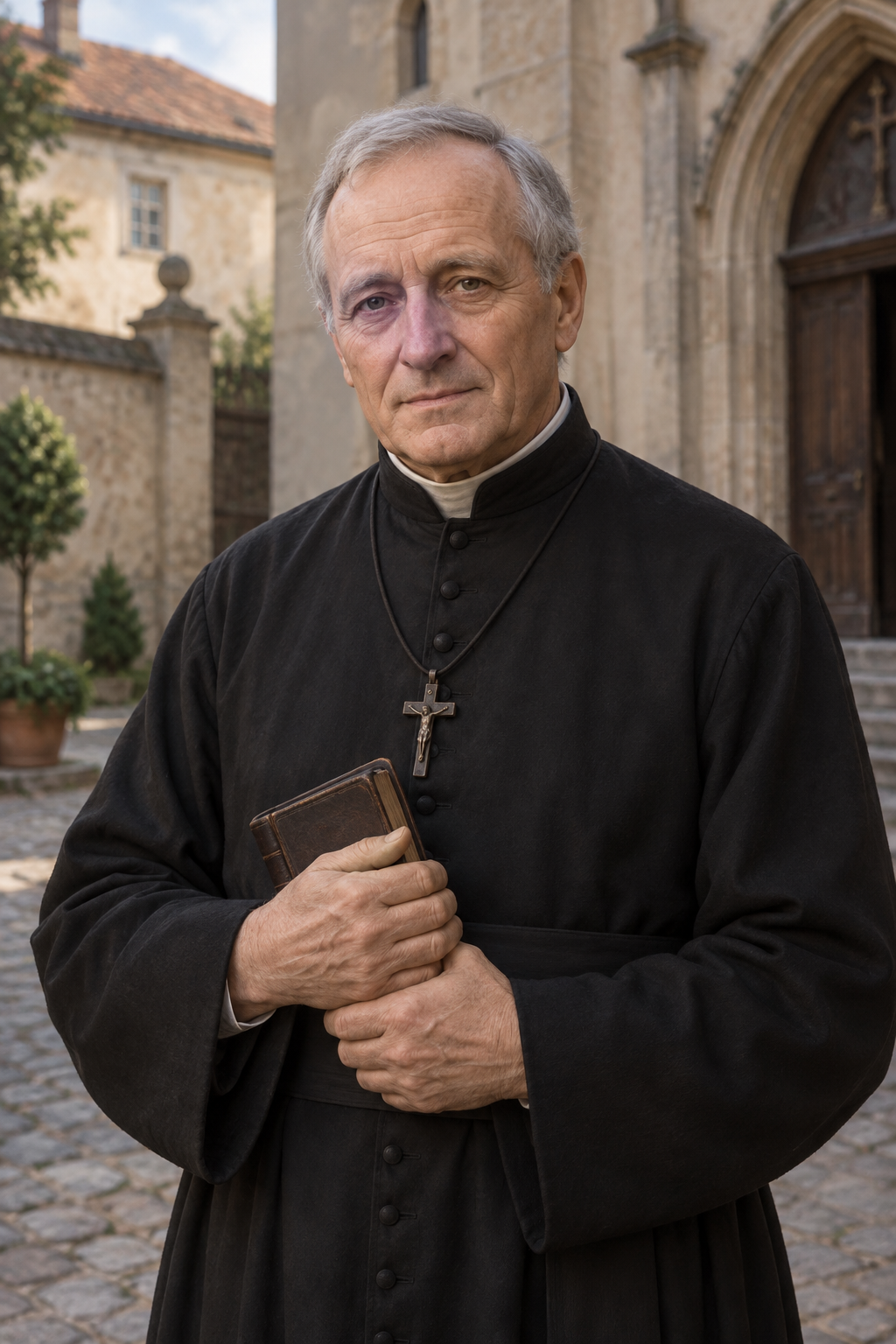
About Clement Mary Hofbauer
Clement Mary Hofbauer was born on December 26, 1751, in Tasswitz, Moravia, now Tasovice in the Czech Republic. His father died when he was a child, and limited family means delayed his hope of becoming a priest. He trained and worked as a baker, studied when circumstances allowed, and spent periods trying a hermit's life. These changes are well attested in outline, though devotional biographies sometimes supply motives and polished scenes that cannot be checked independently.
His route to ordination was unusually indirect. He served for a time at the Premonstratensian monastery at Bruck, returned to baking in Vienna, and made pilgrimages to Rome. Near Tivoli he briefly lived as a hermit under the authority of Bishop Barnaba Chiaramonti, the future Pius VII, and adopted the name Clement. The episode belongs to his documented search for a stable vocation, though it should not be turned into a continuous monastic career. Imperial policy had abolished some eremitical arrangements, and Clement repeatedly moved between manual work, study, pilgrimage, and religious experiments before entering an established congregation over time.
Benefactors eventually enabled him to study in Vienna. In 1784 he traveled to Rome with Thaddeus Hübl and entered the Congregation of the Most Holy Redeemer, then still a young institute founded by Alphonsus Liguori. The two professed their vows in March 1785 and were ordained priests shortly afterward. Clement's profession joined him to the Redemptorists for the rest of his life and opened the work for which he is best documented: establishing the congregation north of the Alps.
Clement and Hübl reached Warsaw in 1787 and began Redemptorist work there. They were serving at St. Benno's, the German national church in Warsaw. Their community developed a sustained cycle of preaching and worship, opened a school, and cared for orphaned or poor children. Clement also recruited and formed Redemptorists for work beyond Poland. The mission operated amid the partitions of Poland and repeated political upheaval, so its institutions were both pastoral projects and fragile public works.
His responsibilities extended beyond Warsaw. As vicar general for Redemptorists north of the Alps, he helped carry the congregation into Switzerland and southern Germany.
In 1808, under French control, the Warsaw houses were suppressed and their members expelled. Clement was sent to Küstrin, released after about a month, and unable to resume the Warsaw mission. The expulsion ended more than two decades centered on St. Benno's and removed the institutional base he had built. It also began his final period of ministry under another government that closely regulated church life. This political setting matters: later titles such as “apostle of Vienna” should not hide the legal limits under which he worked.
In Vienna Clement first served at the Minorite church and, from 1813, directed the church of St. Ursula. He preached, heard confessions, visited homes, and offered guidance to students, writers, workers, and members of prominent families. The Archdiocese of Vienna remembers his approach as personal and wide-ranging rather than confined to formal sermons. His rooms and circles of conversation became important meeting places, while police oversight and the state-church system continued to restrict his plans for a recognized Redemptorist house.
Clement's influence in Vienna extended through people he taught and encouraged, including younger clergy and participants in the city's Catholic intellectual life. A scholarly national biography credits him with renewing preaching before the 1848 era, while also observing that many of his attempted foundations in Central Europe failed. That mixed record is historically more useful than a simple triumph story. His achievement lay in maintaining pastoral networks and forming people through unstable institutions, not in uninterrupted organizational success.
He continued seeking legal authorization for the Redemptorists in Austria. The decision was achieved around the end of his life, and the congregation received a permanent Viennese base soon afterward. Clement died in Vienna on March 15, 1820. The older Catholic Encyclopedia prints 1821, but modern Redemptorist, Austrian, and scholarly references agree on 1820; the database should follow the better-supported date.
Leo XIII beatified Clement in 1888, and Pius X canonized him in 1909. He is venerated as a patron of Vienna, and March 15 is his Roman Catholic feast. Those later honors reflect the reception of a life spanning Moravia, Rome, Warsaw, and Vienna. They should remain concise in the profile because the most distinctive evidence concerns his formation of communities under suppression and his direct pastoral work after institutional plans repeatedly failed.
Clement remains significant as a priest who adapted without abandoning his vocation. When legal systems blocked monasteries, schools, or foundations, he shifted toward preaching, education, household visits, and personal guidance. His Warsaw mission and Vienna ministry were different responses to different political settings, yet both centered on accessible worship and sustained care. That documented adaptability gives substance to his Redemptorist memory without requiring legendary episodes or claims that he single-handedly transformed Central European Catholicism.
Wondering how to weigh the stories and sources? Learn how to read a saint biography.