Biography
Cosme Spessotto
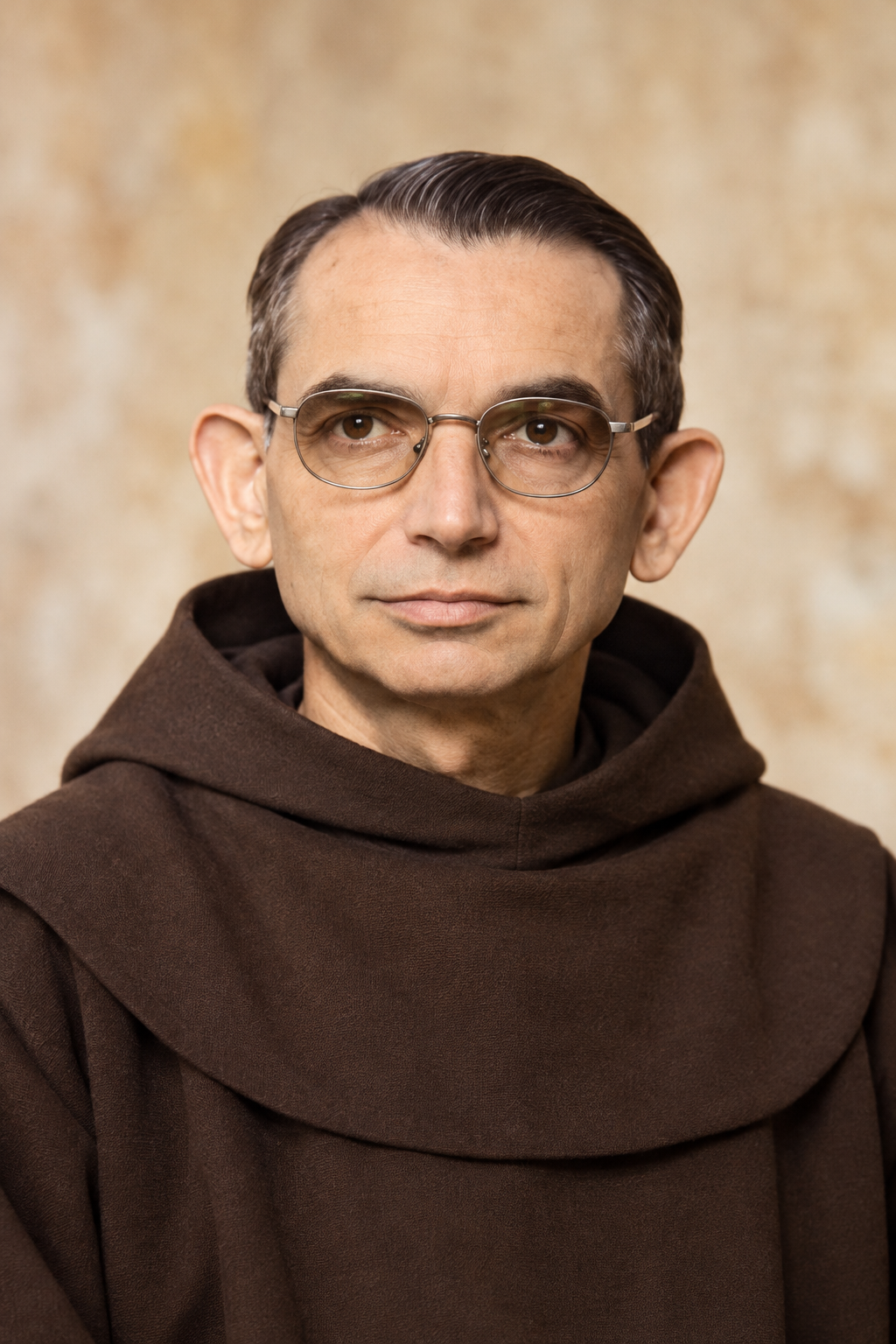
About Cosme Spessotto
Cosme Spessotto was an Italian Franciscan priest who made El Salvador the center of his missionary life. Born Sante Spessotto in Mansuè, he entered the Franciscan seminary at Lonigo in 1935 and was ordained in 1948. He hoped to serve in China, but political obstacles prevented that plan. He went instead to Central America.
After arriving in El Salvador, he spent time in San Pedro Nonualco learning the language and local customs. He later served in San Juan Nonualco, where his work included a new church and a parish school for poor children. He visited families and sick people and trained lay Catholics.
The Franciscan postulation’s account describes the cooperation behind these parish projects. The new church was dedicated to John the Baptist, while the school bore the name of Pope John XXIII and was entrusted to Franciscan sisters from Mexico. Catechists helped coordinate religious instruction in the villages. Visits to remote families also brought food, clothing and medicines. The account links the military’s growing suspicion of him to this regular presence in communities where guerrillas recruited young people.
His efforts also included practical training. A Vatican News account records sewing courses for local women.
Claudio Bratti, a fellow Franciscan missionary and vice-postulator of his cause, remembered a priest who welcomed parishioners and devoted himself to teaching and the sacraments. In a 2022 interview, Bratti recalled visiting him after he had refused to let guerrillas occupy his church. He also described Spessotto’s warnings about accusations and lists of suspected enemies: careless denunciations could put other people’s lives in danger.
Spessotto’s nephew Giovanni Tellan remembered another side of the same commitment. During visits to Italy, his uncle spent much of the day raising money for work in El Salvador. Tellan recalled his smile and laughter, together with his insistence that violence only produced more violence. The article also describes his attempt to establish a vineyard using vines from his homeland, intended to offer young people a way to earn a living.
His own correspondence makes the danger more immediate. A family letter preserved in the Franciscan liturgical reading is dated January 7, 1980, and addressed to two sisters and a cousin who were religious. He recalled asking them, before his departure in 1950, to share in his mission through prayer and sacrifice. Now he needed their prayers again. Relatives had asked about alarming reports reaching them through newspapers and television. He reassured them that he was well and was trying to remain calm so that he could serve everyone.
He nevertheless described a worsening political situation. In his judgment, both opposing factions wanted the Church to support them and justify hostility toward their enemies. He resisted that pressure. He wrote about armed groups occupying churches, turning them into defensive positions or political platforms, and returning after earlier occupations. He recognized that speaking against these actions placed priests in danger. His request for prayer was therefore specific: he wanted to remain steady and fulfill his responsibilities despite threats. This is his account of the situation, preserved through a published transcription rather than an inspected original manuscript.
The postulation profile also records his efforts to obtain the release of catechists seized by the army. It says that in March 1980 he was transferred to Santa Lucia in Zacatecoluca and later returned to San Juan Nonualco for a previously promised Mass. The suggestion that the transfer was intended to protect him is presented by that source as a possibility. His death in San Juan therefore should not be taken to establish an uninterrupted final residence there. It also describes his burial of young guerrillas whose bodies had been left beside the road and his reception of a guerrilla for confession. These pastoral acts, the account says, became accusations against him.
Despite threats, Spessotto continued his ministry in El Salvador. He was shot and killed in the church at San Juan Nonualco on June 14, 1980. The Catholic Church recognized his death as martyrdom.
He was beatified on January 22, 2022.
Before the beatification, Franciscan minister general Massimo Fusarelli addressed the two provinces connected with Spessotto’s life. He placed this missionary’s witness alongside that of Tullio Maruzzo and other Franciscans in Central America. His letter interpreted their decision to remain with threatened communities as an expression of faith, hope and charity. It asked the friars to understand missionary work as sharing people’s lives and serving the poor, even when that service carried serious risks. This was a later Franciscan reading of Spessotto’s vocation, not an additional eyewitness account of his killing.
At the ceremony, Cardinal Gregorio Rosa Chávez recalled his work for reconciliation. He described a pastor who challenged both military authorities and insurgents and urged young people he had baptized to abandon violence. That remembrance placed his parish ministry within the Church’s continuing hope for peace in El Salvador.
Wondering how to weigh the stories and sources? Learn how to read a saint biography.