Biography
Cristóbal Magallanes Jara
About Cristóbal Magallanes Jara
Cristóbal Magallanes Jara was born in Totatiche, Jalisco, on July 30, 1869. The existing catalog stores Totatiche as his birthplace and preserves the full date, and this draft keeps those fields unchanged.
His story belongs to northern Jalisco, not only to the dramatic final months of religious conflict in Mexico. The public page should begin with a local priest rooted in a particular town, parish, and people.
That anchoring matters because Cristóbal is sometimes remembered chiefly by the way he died. Martyrdom is essential to his public Catholic recognition, but it should not flatten his earlier decades of pastoral care.
He entered seminary formation and became a diocesan priest in the Archdiocese of Guadalajara. The sources emphasize ordinary priestly work before they reach the persecution narrative.
The biography should therefore describe him first as a pastor. His ministry was not a detached clerical career; it was tied to the spiritual and material life of the people around Totatiche.
The Mexican episcopal reference connects him with parish leadership, education, mutual aid, practical social initiatives, and local works that served families and workers.
Those details should be used carefully. The page need not catalogue every local project, but it should show that his priesthood had concrete civic and social consequences.
Cristóbal also supported priestly formation. Diocesan sources remember the auxiliary seminary at Totatiche as one of the important fruits of his ministry.
The seminary context is useful for artwork and prose. A study table, books, and papers can represent priestly formation better than weaponry, uniforms, or a scene of execution.
That restraint is deliberate. The final portrait should show a priestly teacher and pastor whose martyrdom grew out of a life of service, not a staged moment of political violence.
The early twentieth century brought severe conflict between the Mexican state and Catholic communities. Cristóbal's later years unfolded within that pressure, especially as religious practice and priestly ministry became dangerous.
The Holy See homily for the canonization of the Mexican martyrs names Cristóbal Magallanes and his 24 companions, priests and laymen, in that context of religious persecution.
The biography should avoid partisan slogans. It can state the documented religious persecution and martyrdom while refusing to turn the page into a political banner.
It should also avoid making the suffering abstract. The persecution disrupted real parishes, schools, families, seminaries, and sacramental life, and the sources connect Cristóbal's final witness to that pastoral world.
In the last days of his life, Cristóbal was taken in the region around Totatiche and Colotlán. The catalog stores Colotlán, Jalisco, as the place of death, and the Guadalajara profile supports that field.
He died on May 25, 1927. This draft preserves the catalog's death date, death place, Roman Catholic feast day, and martyr class.
The page should say enough about his death to explain why the Church venerates him as a martyr, but it should not linger over method or scene beyond what is needed for historical clarity.
The canonization homily places Cristóbal and his companions among witnesses who continued ministry during intensified religious persecution and accepted martyrdom as testimony to faith.
That witness included forgiveness and calm fidelity in the Holy See's presentation of the group. The page can summarize that group recognition without attributing undocumented private words or emotions to Cristóbal alone.
He was canonized by Pope John Paul II on May 21, 2000, with 24 companion martyrs of Mexico. The structured record already keeps him as priest/deacon and martyr, and this draft preserves both classifications.
The article should explain that he is remembered with companions rather than as an isolated figure. His sanctity is public and personal, but his feast and canonization memory belong to a wider body of Mexican martyrs.
At the same time, Cristóbal's individual profile should not disappear into a list. His Totatiche roots, pastoral organization, seminary support, and local service give readers a concrete life to remember.
The final account should be written in a calm register. It can honor courage without heroic exaggeration, name persecution without bitterness, and present martyrdom as witness rather than spectacle.
His enduring significance is the steadiness of a local pastor. He formed future clergy, organized parish life, served ordinary people, and remained faithful when public ministry became dangerous.
That makes him more than a symbol of a conflict. Cristóbal Magallanes Jara remains a witness to priestly service rooted in place, sustained by formation, and sealed by martyrdom.
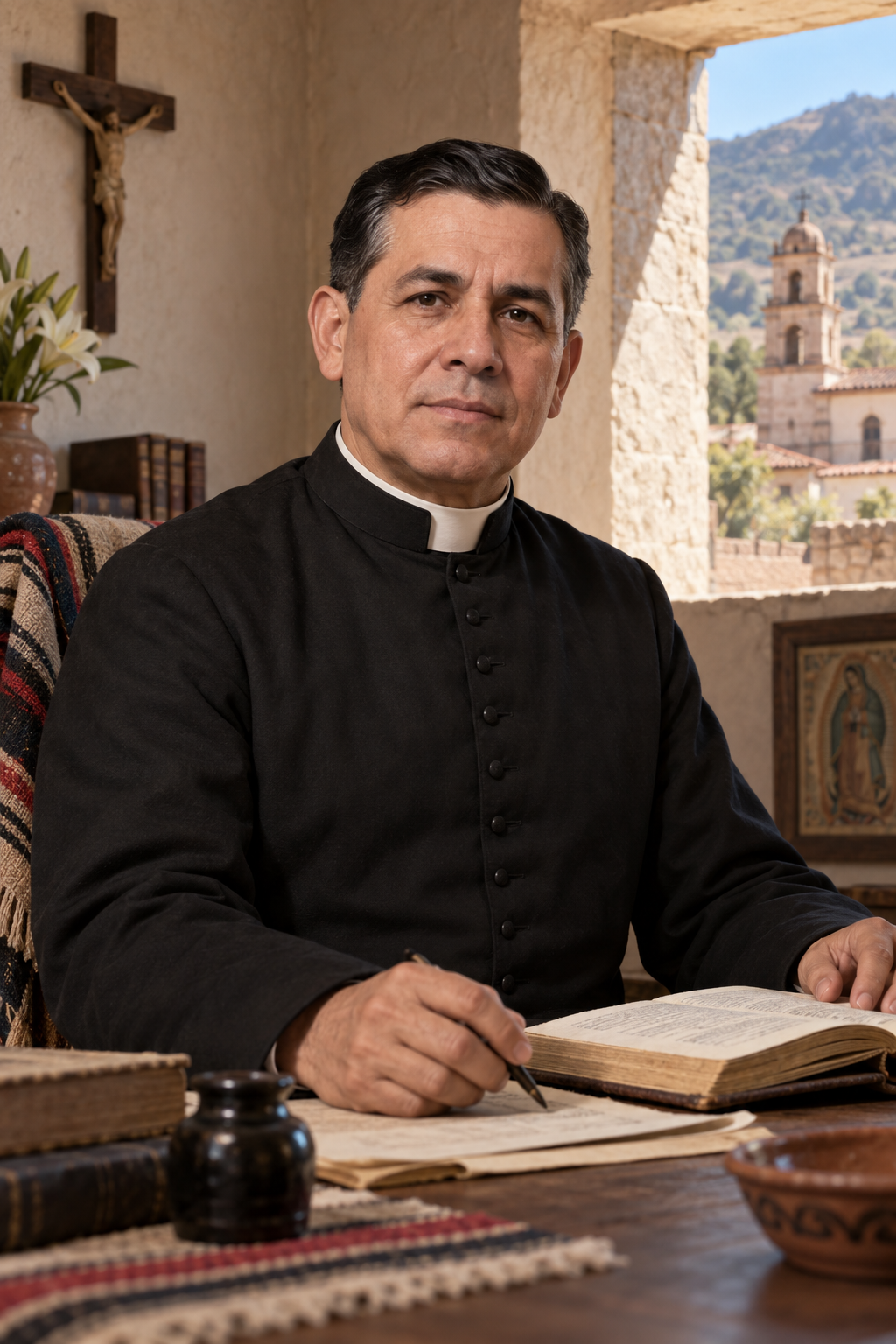
Artwork should show him as a mature Mexican diocesan priest in a black cassock, seated or standing in a modest Jalisco parish or seminary room with books, papers, crucifix, and daylight. Avoid weapons, soldiers, flags, execution imagery, slogans, halos, modern objects, and exact-likeness claims.
The badge crop should keep his face, cassock collar, and seminary desk context visible. It should read as pastor and teacher before it reads as a generic martyr portrait.
Wondering how to weigh the stories and sources? Learn how to read a saint biography.