Biography
Cyprian Michael Iwene Tansi
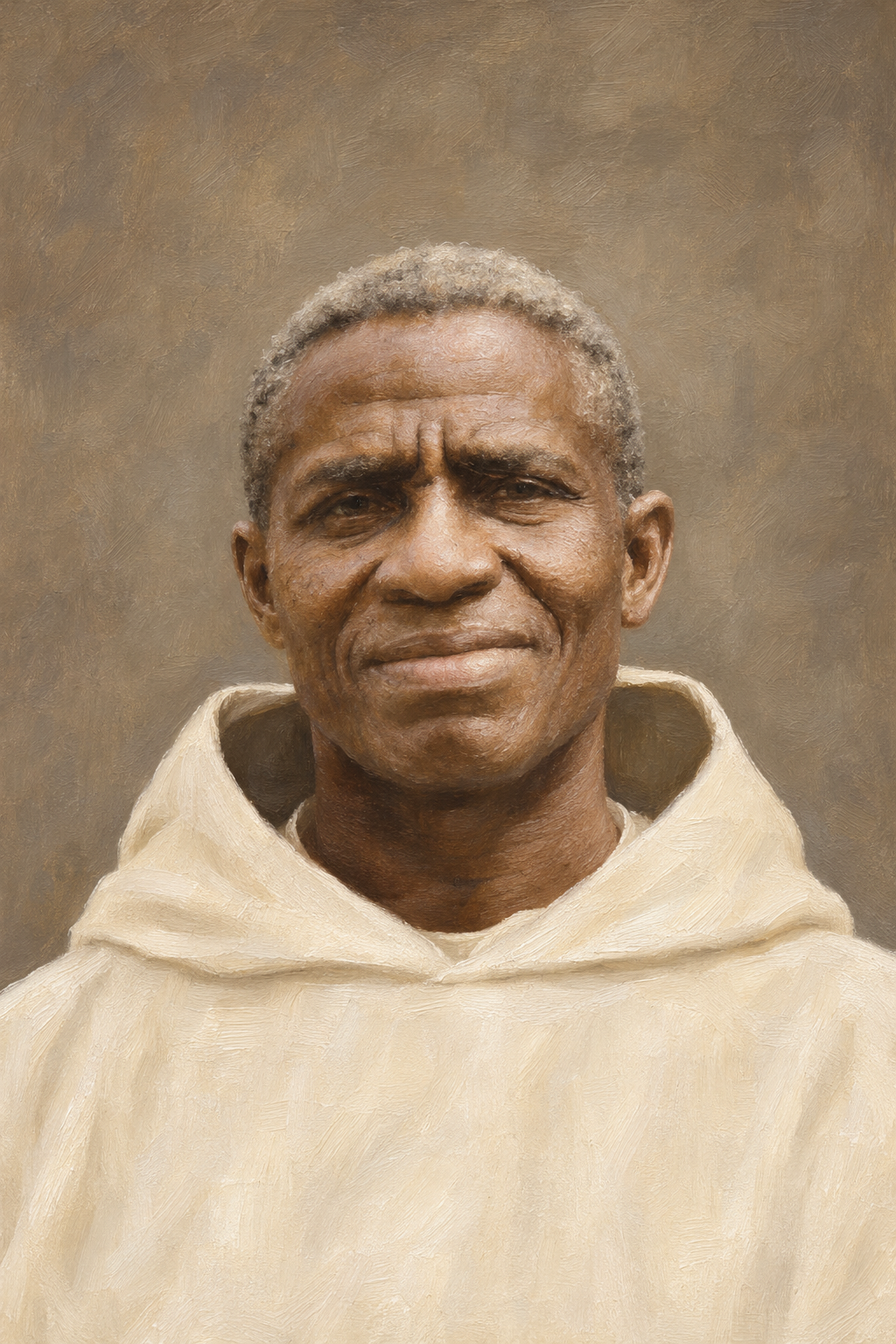
About Cyprian Michael Iwene Tansi
Iwene Tansi was born in 1903 at Igboezunu, near Aguleri in southeastern Nigeria. He grew up in an Igbo farming family and received schooling through the Catholic mission. Baptized as Michael while still a child, he later qualified to teach. His work included teaching at Holy Trinity School in Onitsha and serving as headmaster at Saint Joseph’s in Aguleri. Education was therefore an established part of his life before he entered the seminary, and it remained important throughout his later ministry.
He also worked as a catechist before beginning priestly formation. He was ordained for the diocese of Onitsha in 1937. His monastery’s account remembers both energetic service and demanding personal habits of prayer. He encouraged devotion to the Sacred Heart, Mary and the rosary. His religious work thus involved instruction and the sacraments alongside a disciplined spiritual life. Those commitments were visible to the people who knew him as a parish priest, long before he became a monk in England.
After serving at Nnewi, he became the first parish priest of Dunukofia at the end of 1939. The new parish gathered several towns, and others later sought to join it. Isizoh’s local history describes its growth and the influence of a priest whose poverty, generosity and directness impressed people around him. Such work required decisions about where schools and churches should stand, as well as the daily work of visiting communities. The administrative shape of a parish affected who could reach its institutions.
At Ogbunike, Tansi moved a school and church toward a more central location. The choice of site was difficult, and some residents opposed moving away from their own village. The church building took several years to complete and outlasted his assignment there. This episode gives a concrete view of ministry as work with land, buildings, local expectations and differing interests. The decisions were not accepted equally by everyone, even when they were intended to serve a wider population.
Francis Arinze knew him as a child, pupil and altar server. In a later interview, the cardinal recalled a priest travelling by bicycle and sometimes motorcycle through a large area. He remembered life in a boarding school where pupils prayed, served Mass and heard readings about Dominic Savio. Arinze also spoke of the impression Tansi made at worship. These are recollections from someone whose own education and religious life began under his care, rather than simply a later institutional summary of his achievements.
John Paul II later emphasized Tansi’s attention to families, preparation for marriage and the dignity of women. The education of young people was also central to the pope’s remembrance. His care for parishioners was understood as an expression of prayer, with time before the Blessed Sacrament shaping the service that followed. The Church’s recognition therefore included the years he spent among ordinary households. His later choice of monastic life did not replace or erase those earlier relationships and responsibilities.
In 1950 he travelled to Mount Saint Bernard Abbey in Leicestershire, England, with the hope that training there might eventually help establish contemplative life in Africa. As a Cistercian he received the name Cyprian. He passed through the stages of formation and made solemn profession in 1956. Plans for an African foundation later focused on Cameroon, and he was selected for work there. Ill health prevented his return. The life that had once involved extensive travel through parishes now took a quieter form within a monastic community.
Robert Hodge, a fellow monk, worked beside him in the refectory during their early years at the abbey. In a signed reminiscence, Hodge recalled conversations about Tansi’s childhood and his understanding of providence. The opportunity to speak while working allowed the two men to know one another within a community that usually limited conversation. Hodge remembered the strength of his faith and his habit of seeing the events of his life through that faith. The testimony preserves a personal glimpse of companionship within monastic routine.
Hodge recalled Tansi speaking about his father’s imprisonment under colonial authority and the decision to send him to a Christian school. He distinguished the possible practical reasons for that decision from the religious meaning Tansi later saw in it. For Tansi, the remembered events belonged to a larger story of vocation. This is a fellow monk’s account of conversations, offering access to how Tansi understood his past rather than a claim to settle every historical motive.
The abbey records his work in its refectory and bookbindery. Those tasks belonged to the ordinary rhythm of a life of prayer and shared labour. He died in Leicester Royal Infirmary on 20 January 1964. The community that had received him continued to remember the Nigerian priest who had lived among them for fourteen years. His Catholic commemoration also remained connected with his homeland, where John Paul II proclaimed him Blessed at Oba on 22 March 1998, in the presence of people who had known his earlier ministry.
Wondering how to weigh the stories and sources? Learn how to read a saint biography.