Biography
Cyriacus
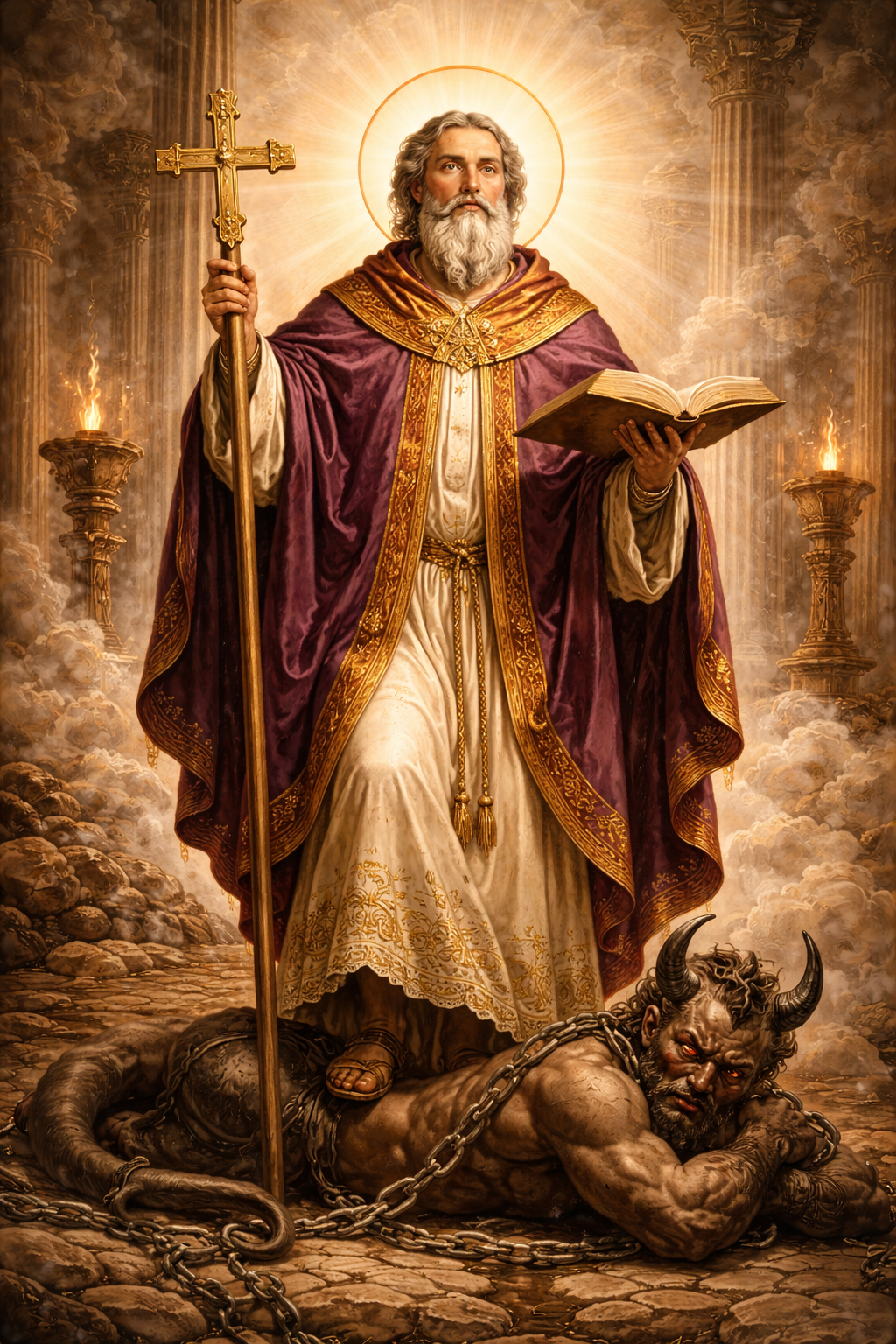
About Cyriacus
Cyriacus is remembered as a Roman martyr with Largus, Smaragdus, and other companions. His early commemoration is firmer than the detailed story later told about him. A fourth-century Roman calendar preserves the group's cult, and an ancient burial association places them by the Via Ostiensis. This evidence supports a real martyr remembered early at Rome. It does not provide Cyriacus's childhood, social rank, birth year, ordination history, daily ministry, words, or exact execution date. The record must keep that narrow attested core separate from the dramatic acts that accumulated around it.
The name is Greek, Kyriakos, meaning ‘of the Lord,’ and appears in several unrelated ancient saints. This packet concerns the Cyriacus commemorated with Largus and Smaragdus at Rome, not other martyrs, bishops, or ascetics who bear the name. Western martyrological tradition calls him a deacon. Because that office is not established by a surviving contemporary personal record, it is entered with traditional confidence. Martyrdom and Roman veneration have stronger support from the early calendar and burial tradition, although even these sources do not narrate the arrest or identify the magistrates who condemned him.
Later acts place Cyriacus during the joint rule of Diocletian and Maximian, when imperial building projects and persecution form the story's setting. They say Christians were forced to labor on the Baths of Diocletian and that Cyriacus, Largus, and Smaragdus carried food and encouragement to them. Some versions make Cyriacus himself a laborer; others emphasize charitable access to prisoners. The Baths are real, but that fact does not authenticate the episode. Vatican News preserves the service narrative as current ecclesial memory. It is recorded here as tradition, with Rome at city or broad-site precision and no invented work location.
The acts then describe discovery, imprisonment, and exorcisms. Artemia, presented as Diocletian's daughter, is said to be freed through Cyriacus's prayer and to become Christian. Another story sends him to Persia, where he delivers a king's daughter and inspires many baptisms. These episodes are not supported by contemporary imperial or Persian records, and the narrative geography shifts between versions. They belong to hagiographic legend. Persia is therefore not entered as a mapped event or route. The stories are retained because they explain later patronage against demonic affliction, but that patronage is reception history rather than evidence about a verified ministry.
According to the same passion tradition, political protection ends and Cyriacus and his companions are arrested again. Accounts enumerate imprisonment, boiling pitch, stretching on a rack, beating, and beheading. The violence should not be reduced to a decorative claim of heroic suffering. These are explicit scenes of state torture and execution in the received narrative. Yet their literary detail cannot be promoted to documented history simply because Roman persecution was real. The packet records a traditional execution at Rome and refuses the former exact year 304, which lacked a defensible source and disguised uncertainty behind a January 1 placeholder.
Burial is a more stable element. The Roman tradition associates Cyriacus and companions with the seventh milestone of the Via Ostiensis. Later accounts describe translations of their remains into the city and connect Cyriacus with a Roman diaconia and churches. The critical Acta Sanctorum discussion shows how difficult it is to reconcile names, dates, companion lists, and locations across martyrologies. A location label can preserve the Via Ostiensis association, but no exact grave coordinate is asserted. Likewise, later relic claims and dedications document the growth of a cult, not an unbroken modern chain of forensic identification.
Cyriacus's companions are essential to the surviving memory. Largus and Smaragdus consistently stand beside him in Roman commemoration, while longer lists add Crescentianus, Memmia, Juliana, and many unnamed martyrs. Variations are evidence of transmission, not permission to collapse every list into a single verified execution party. The page names the stable companions and notes the broader group without assigning each person a role. It also avoids invented relationships to Diocletian, Maximian, Pope Marcellinus, or Persian royalty. In the later acts these figures belong to the plot; they are not securely documented acquaintances.
Roman Catholic tradition commemorates Cyriacus, Largus, and Smaragdus on August 8. Vatican News continues to list them on that date. The calendar observance does not prove that August 8 was the execution date; older martyrologies sometimes distinguish suffering from the later deposition of remains. Cyriacus also became one of the Fourteen Holy Helpers in late medieval devotion, especially in German-speaking lands. That grouping and associated patronages developed many centuries after the Roman martyr's death. They belong in reception history and should not be projected backward as Cyriacus's own chosen vocation.
No historically attributable words of Cyriacus survive. A prayerful sentence assigned to him under torture appears in later devotional retellings, but using it without that label would manufacture an eyewitness quotation. The packet therefore quotes the Roman Martyrology's concise identification instead: ‘Cyriacus, deacon, Largus, and Smaragdus.’ This is not speech by the saint; it is a traceable liturgical description. Virtues are similarly tied to received actions: care for condemned laborers, solidarity with companions, and steadfastness under coercion, each clearly marked according to the evidence supporting it.
Cyriacus remains significant as a case in which early remembrance and late biography must be read together but not confused. A Roman community clearly honored a martyr and his companions; later Christians gave that memory a deacon's ministry, works of mercy, confrontations with spiritual evil, and an elaborate passion. The legends preserve ideals of practical care and courageous fidelity, while critical review protects the martyr from false dates and fabricated precision. What can responsibly be said is modest: Cyriacus belonged to an early Roman martyr cult, was remembered with named companions, and became the center of stories about serving prisoners before sharing their vulnerability.
Wondering how to weigh the stories and sources? Learn how to read a saint biography.