Biography
David Pendleton Oakerhater
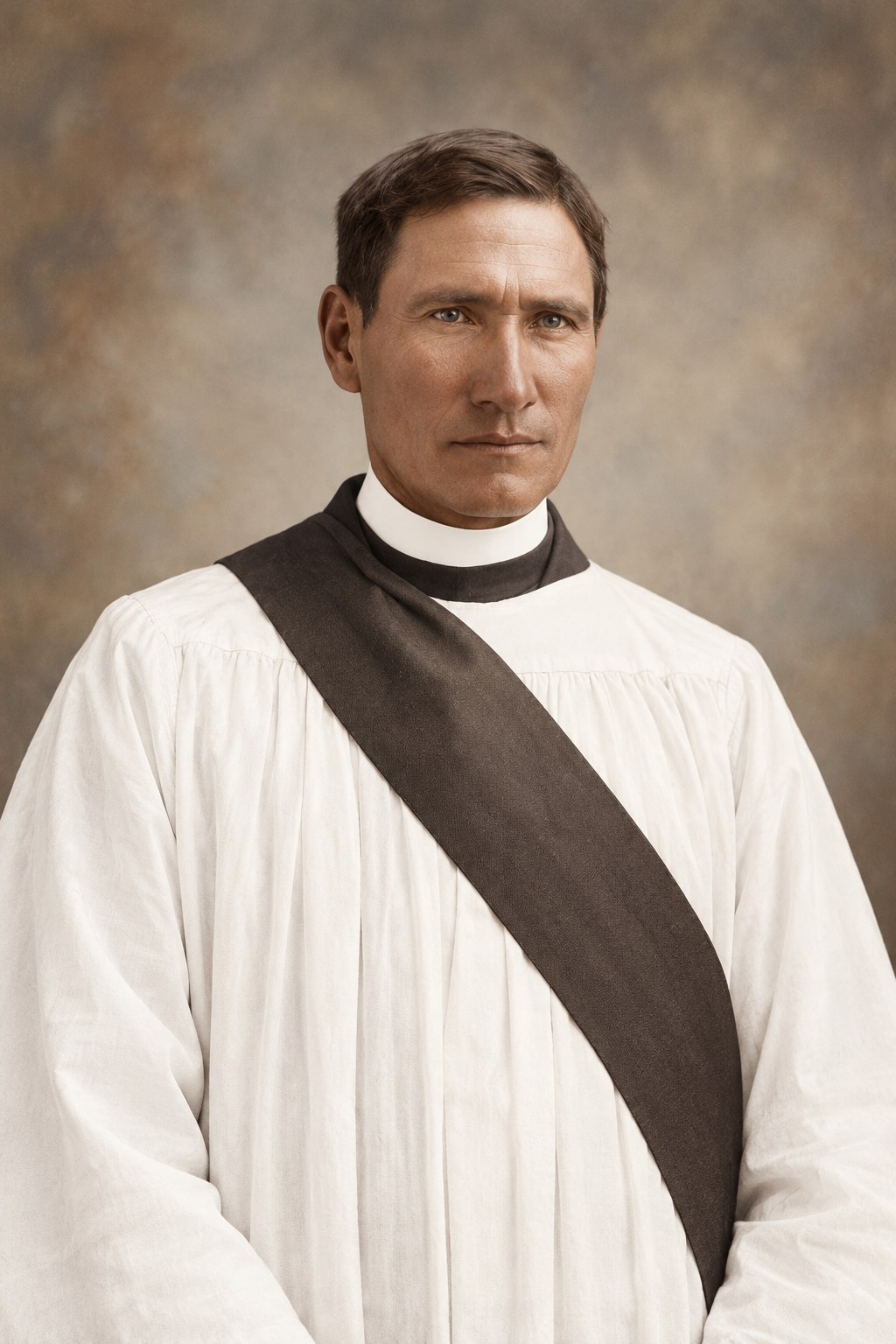
About David Pendleton Oakerhater
David Pendleton Oakerhater was a Cheyenne Episcopal deacon whose ministry continued in western Oklahoma for decades. He taught, visited the sick, and continued preaching after his retirement from formal missionary duties. The Episcopal Church remembers him on September 1. His story includes warfare and imprisonment, artistic work, religious conversion, and a sustained commitment to the people among whom he lived.
His birth year is uncertain. Later records give several different years, and even accounts based on his own statements do not agree. Before becoming a Christian, he held responsibilities within Cheyenne religious and military life. His early name and the circumstances in which he acquired the name associated with Sun Dancer have also received differing explanations. These uncertainties caution against turning a complicated life into a simple sequence of precisely dated milestones.
In 1875 he was among the Plains people taken to Fort Marion in Saint Augustine, Florida. The imprisonment followed the Red River War and formed part of a campaign to break Native resistance. Conditions initially included confinement and shackles. Richard Henry Pratt later introduced schooling, work, military drills, and changes in accommodation. Such changes did not end the prisoners’ captivity, and Pratt’s educational program sought the abandonment of Indigenous cultural identities.
Oakerhater, known as Making Medicine, became a prolific artist during that imprisonment. A surviving sketchbook in the Smithsonian’s National Anthropological Archives contains twenty-one drawings of hunting, camp life, transportation, and experiences at Fort Marion. The archive distinguishes his own signature from captions supplied by interpreter George Fox. The distinction matters: these drawings preserve an artist’s work, while the accompanying words may reflect another person’s interpretation of it.
After release in 1878, he studied with the Episcopal priest John Wicks in Paris Hill, New York. Mary Douglas Burnham helped organize support for the students, and Alice Key Pendleton sponsored his expenses. Baptized that year, he adopted the name David Pendleton Oakerhater. He also recruited children for Carlisle Indian Industrial School, placing his work within the wider movement for Native assimilation. His Christian vocation and participation in that movement are both part of his history.
He was ordained a deacon on June 7, 1881, and returned west to undertake missionary work.
A letter to Burnham written soon after his return describes a reunion with his mother, relatives, and friends. His mother embraced him and at first wondered whether she was dreaming. Children also came to greet him. He explained that he had little time to write because he and Wicks had attended the burial of a Cheyenne chief’s son. The letter joins family affection with the pastoral responsibilities already occupying his days.
Other letters show him making practical judgments rather than simply carrying out instructions. In September 1881 he asked Burnham whether a hospital or a church and mission house should be built first. He favored the church and mission house, explaining that sick children wanted to return to their families’ tents. His concern was shaped by what people would actually use, and he invited Burnham’s advice rather than presenting his preference as a settled decision.
The same letter records his disapproval of Paul Caryl Zotom’s attendance at a traditional religious ceremony. Oakerhater also wrote about resisting temptation himself. These passages reveal the sharp division he then drew between Christian practice and ceremonies he had once known. They should not be softened into a claim that his conversion left all his earlier religious commitments unchanged.
In June 1885 he thanked Burnham and women from All Saints Church for a barrel of supplies. He reported visiting sick people almost daily, praying with them, and reading the Bible. Some older listeners resisted his appeal to abandon religious images. He nevertheless expressed a conviction that Christians of different peoples shared one faith and one Spirit. The letter reveals both his opposition to older practices and his sense of spiritual kinship across racial boundaries.
His ministry faced obstacles beyond personal effort. Historian Alvin Turner describes inadequate funding, long gaps in clerical support, and federal policies that restricted opportunities for Cheyenne communities. Whirlwind Mission later brought renewed activity, but the school eventually closed. Oakerhater continued preaching in Watonga after retirement, sustaining religious life when the institution could no longer provide its former support.
His home became a place where the work continued. Visiting bishops conducted baptisms and confirmations there, bringing wider church relationships into a household setting. This account of his later years helps explain why retirement did not mean the end of his ministry. The closing of a school could interrupt an institution, while the relationships formed through years of prayer, teaching, and visiting could continue in another place.
He died on August 31, 1931.
His later recognition was a church process rather than a Roman Catholic canonization. In 1985 the Episcopal General Convention authorized a trial commemoration with prayers remembering his service as a deacon and missionary.
Wondering how to weigh the stories and sources? Learn how to read a saint biography.