Biography
Dionysios of Olympus
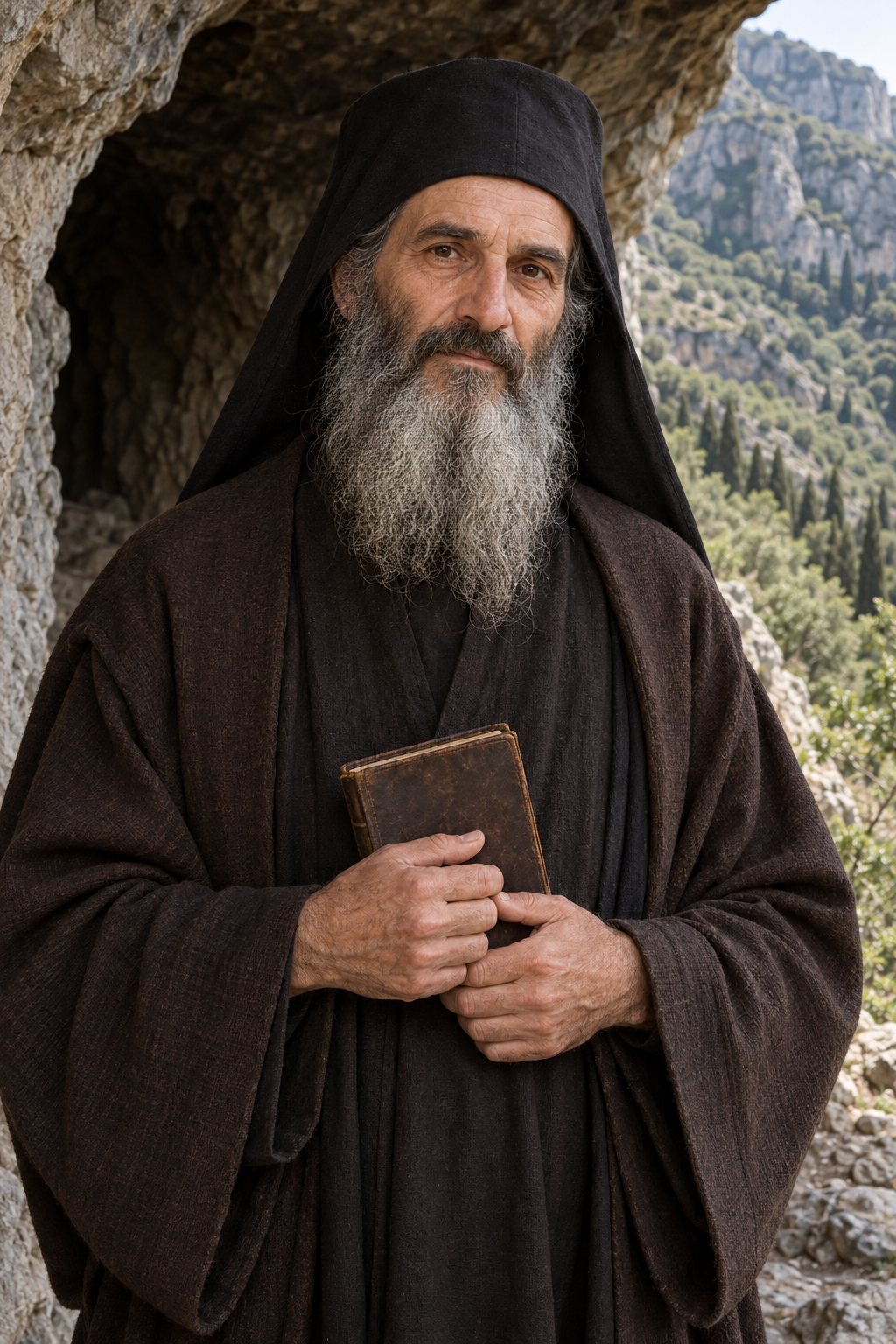
About Dionysios of Olympus
Dionysios of Olympus was a Greek Orthodox monk and priest remembered for establishing the monastery of the Holy Trinity on Mount Olympus. His early life belongs to Thessaly, where the village named in his biographies appears in several forms, including Platina and Sklataina. Its modern identification is disputed: the Orthodox Encyclopedia notes both Drakotrypa and Rizoma. The local diocese places his birth around 1500, while the Orthodox Encyclopedia gives the 1490s; neither establishes an exact year.
The local church account names him Demetrios Kaletsis before he became a monk. At Meteora he received the name Daniel, then traveled to Mount Athos, where he became Dionysios. The account places him under the guidance of Gabriel and describes his ordination as a priest. It also remembers his wish for a quieter life: after serving at Karyes, he withdrew to a cell near Karakallou.
His relationship with Philotheou monastery is told differently in different church accounts. The Orthodox Church in America describes opposition that prevented his election as superior. Greek accounts instead make him abbot before his departure. The disagreement leaves the sequence uncertain, although both traditions connect his move away from Athos with conflict in the community.
The Metropolis of Kastoria describes him as an abbot who attempted to change the life of Philotheou and subsequently left with companions. Its account then takes him to Veria, where he renewed the monastery of the Forerunner and formed a friendship with Nikanor. It connects his later veneration in western Macedonia with his journeys there and with that friendship.
On Olympus, his building work brought him into conflict with the local Ottoman authority. The church narrative says that he withdrew to Pelion and was later invited back after a drought. It interprets the drought and his return as miraculous events. The same account says that permission to rebuild was eventually granted.
The foundation’s chronology remains difficult. The Orthodox Encyclopedia gives 1541 as his death year but also describes a permission issued in 1542 after his return to Olympus. Those dates cannot both describe events in the same sequence. A precise year of death is therefore left unresolved here.
A study by Thanasis Papazotos supplies a useful distinction about the monastery’s documents. It dates the foundation to 1542 and explains that the founding document was not an imperial decree. A separate imperial confirmation concerning the monastery’s Skala property was thought to have existed, but was no longer available.
The municipal account identifies the original dedication as the Holy Trinity and locates the monastery in the Enipeas gorge. It also describes the nearby cave associated with Dionysios’s solitary prayer. The monastery later became known by its founder’s name. The cave and the old monastic buildings remain distinct places in the landscape visited by pilgrims and walkers.
In the local Life, his final instructions combine demanding communal discipline with care for others. He tells the monks to reconcile before sunset, work according to their abilities, and care for the sick as members of their own community. When they complain that parts of his testament are too severe, he permits them to set aside what is burdensome while retaining the Athonite rule. These words are preserved in a devotional narrative, not a contemporary transcript.
His monastery endured long after his death. Papazotos describes the destruction of the old buildings by German forces in April 1943 and the community’s move to Skala. A surviving early twentieth-century register preserved information about its property and library.
Dionysios is honored locally on January 23. The Metropolis of Kitros, Katerini and Platamon explicitly calls him the protector of all Pieria. Its report of the 2025 feast describes worship at his monastery and throughout the diocese, with visiting monastic communities and local residents taking part.
Wondering how to weigh the stories and sources? Learn how to read a saint biography.