Biography
Dominic of Silos
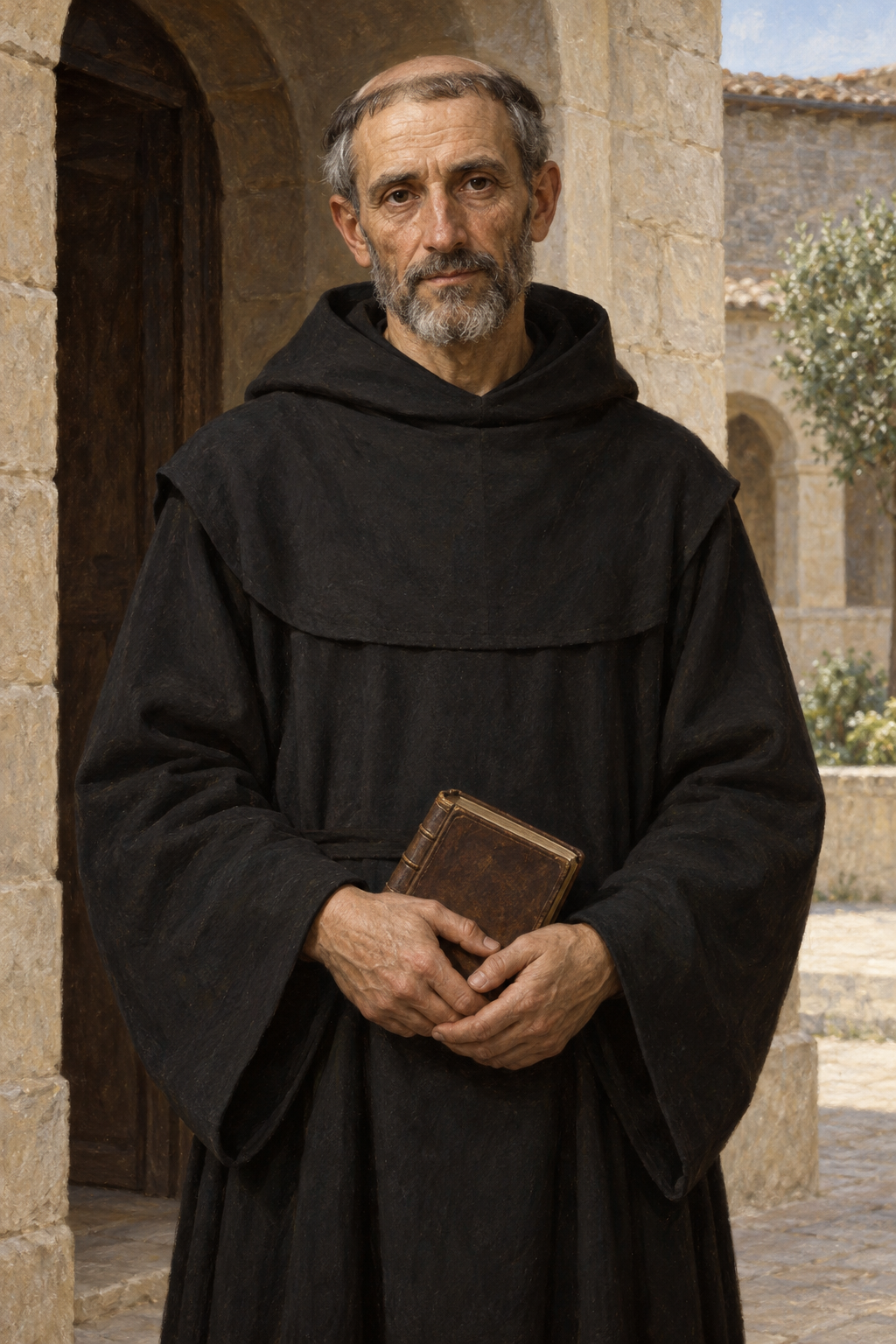
About Dominic of Silos
Dominic of Silos was a Benedictine abbot remembered for restoring a struggling religious monastery in eleventh-century Castile. Born at Cañas around the year 1000, he first belonged to the community of San Millán de la Cogolla. His later association with Silos became so strong that the monastery, originally dedicated to Saint Sebastian, came to bear his name.
The abbey’s own history dates his arrival to 1041, when King Ferdinand I entrusted him with its renewal. Silos already had a history: a document of 954 names the earlier monastery. Dominic’s task was therefore to rebuild an existing religious community. His abbacy became a decisive period in the institution’s recovery.
Much of the personal story comes through medieval hagiography. One important witness is the Latin Life attributed to the monk Grimaldo. Reviewing its modern critical edition, Ulrich Mölk places its composition between 1088 and 1109, after Dominic’s death. He explains that earlier printed editions had not adequately studied the manuscript transmission or established whether the whole text belonged to one author. These questions matter when a later biography presents every episode with equal certainty.
Gonzalo de Berceo subsequently retold Dominic’s life in Castilian verse. His opening stanzas describe a boy tending sheep at Cañas, learning sacred texts and eventually receiving priestly orders. Berceo also admits that he does not know the mother’s name because it was not recorded. His narrative presents an exemplary religious childhood, rather than a contemporary family record.
A central conflict concerned King García’s demands on San Millán. In Berceo’s telling, Dominic refused to surrender property dedicated to religious use, despite threats from the king. The dispute cost him his position and eventually forced him to leave. The poem’s extended speeches express the religious meaning of his resistance; they should not be mistaken for a transcript of the confrontation.
At Silos, the poem emphasizes work as well as prayer. Dominic teaches the brothers, restores their observance and distributes provisions without favouring the more important members. Contributions from the king and other supporters help supply the church, refectory, clothing and dormitory. This literary portrait remembers leadership through the shared necessities of community life.
The government’s historical guide places the monastery’s recovery within a wider pattern of royal and noble support. Donations strengthened its resources and territorial holdings, while its religious influence increased. The guide distinguishes Dominic’s work from that of his successor Fortunio, who led the community through later liturgical changes. Renewal at Silos continued beyond the life of the abbot who became its best-known saint.
The New Catholic Encyclopedia connects the revival with the preservation of Visigothic writing and elements of the Mozarabic liturgy. These belonged to the religious culture inherited by the community before the later introduction of Roman liturgical practice. Dominic’s importance therefore extends beyond the repair of buildings to the life of a monastery preserving and transmitting its traditions.
That distinction also applies to the buildings. The surviving cloister took shape in successive phases, with parts belonging to the eleventh century and others to the twelfth. Its arrangement brought worship, meetings, manuscript copying, meals and hospitality into a connected setting. The whole monument cannot simply be treated as a structure completed by Dominic himself.
He died on 20 December 1073. The abbey dates the recognition of his sanctity to 1076 and describes how his tomb became a destination for pilgrims. His name remained attached to the community through later periods of decline, the dispersal of the monks in 1835 and the restoration of Benedictine life in 1880.
The regional guide dates the formal change of dedication from Saint Sebastian to Saint Dominic to 1125. It also describes enlargement of the church after his death and the movement of his tomb into the building. The saint’s growing cult thus helped shape the monastery’s later spaces as well as its name.
The stories associated with his tomb need their own historical context. Ana Escribano López examines how Grimaldo, Berceo and the collection associated with Pero Marín developed his reputation as a healer and liberator of captives. Many accounts concern events long after his death. They describe liberation through his heavenly intercession, rather than journeys he personally made to ransom prisoners.
Escribano also considers the purposes of these works. They offered religious examples, encouraged pilgrimage and supported the monastery’s place among other centres of devotion. Accounts of captivity preserve details about suffering and hopes for freedom, while presenting events through the convictions of their Christian narrators. Their value as evidence for medieval religious life does not require treating each miraculous episode as independently verified history.
His liturgical remembrance varies by place. The Burgos diocesan calendar celebrates him on 11 September, explaining that his December observance was moved because it falls in Advent. The commemoration honours the abbot whose renewal of Silos joined religious discipline with care for a community.
Wondering how to weigh the stories and sources? Learn how to read a saint biography.