Biography
Donizetti Tavares de Lima
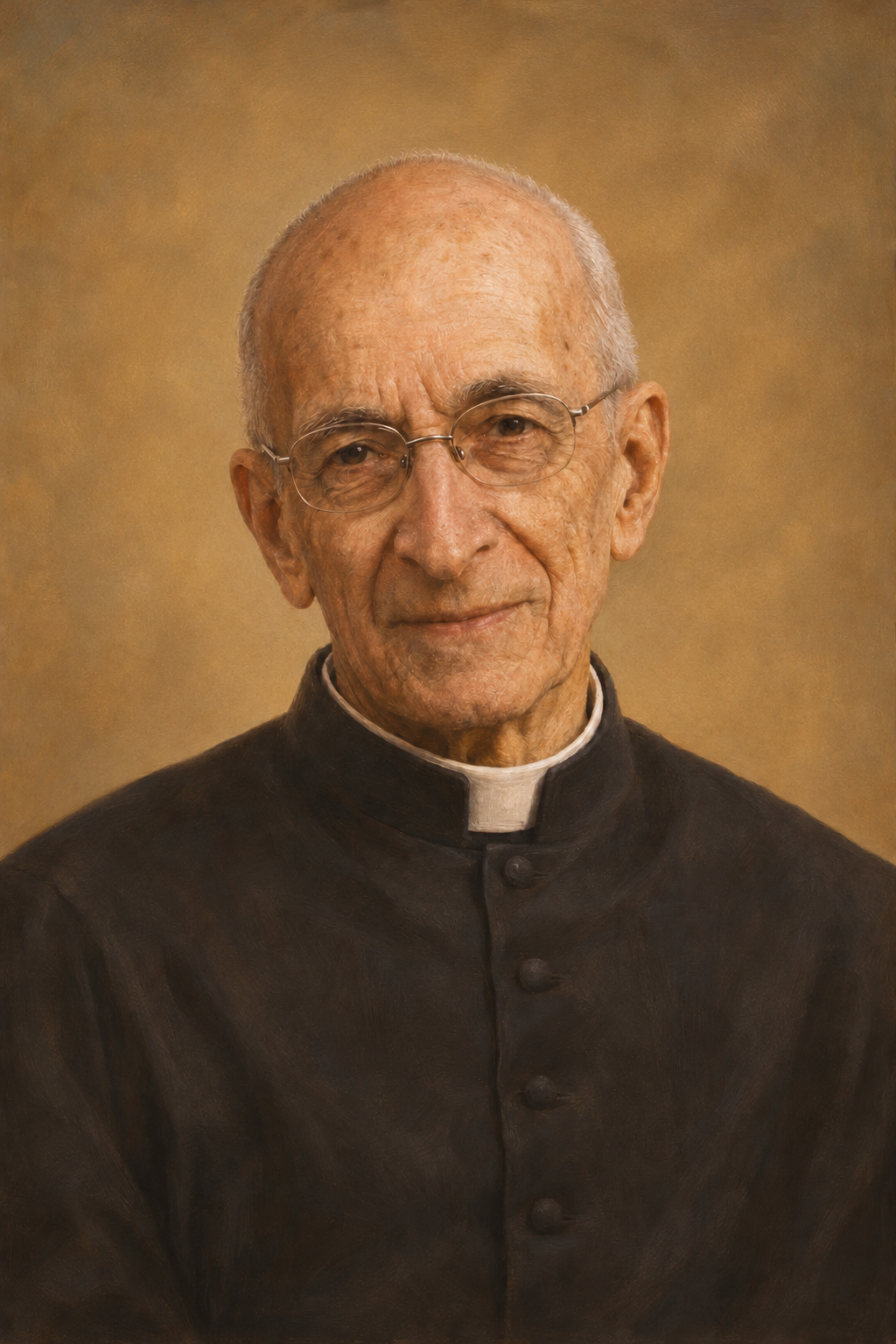
About Donizetti Tavares de Lima
Donizetti Tavares de Lima grew up with music before his work as a parish priest made him known across Brazil. Born at Cássia in Minas Gerais on January 3, 1882, he learned the piano with encouragement from his father. At the diocesan seminary in São Paulo, he taught music and played the organ to help meet the costs of his studies. When his older brother Rossini died, his father called him home. He contributed to the household through music lessons and parish work as an organist. His preparation for priesthood therefore included an interruption shaped by his family's practical needs.
He resumed his education at Sorocaba in 1897 and later returned to teaching music at the seminary. He began law studies in 1900 before undertaking philosophy in preparation for ordination. Bishop João Batista Corrêa Nery received him into the diocese of Pouso Alegre, where he was ordained on July 12, 1908. His first parish work was at São Caetano. When Nery became the first bishop of Campinas, Donizetti followed him and served at Jaguary. The sequence of schools and parishes preceded the long ministry for which he would be remembered.
At Vargem Grande do Sul, Donizetti built the parish church and chapels dedicated to Our Lady of Aparecida and Saint Benedict. His attention also turned to the conditions in which local people lived and worked. The decree on his virtues describes his engagement with Catholic social teaching and his defense of workers and poor people. It records that this brought conflict with wealthy people and employers. These concerns continued when he moved to Tambaú in 1926. There he developed institutions for children, elderly people, families and workers, making the parish a place of material assistance as well as religious worship.
His projects included a home for impoverished older people, an association supporting mothers and children, a nursery, food assistance and a workers' circle. He also organized football, a band and religious associations for young people. The same decree connects these activities with encouragement to continue education and learn trades. Donizetti lived simply while administering parish property and directing its income toward social works. He acquired land and housing for people who had none. His approach thus included both immediate help and institutions intended to keep providing care beyond a single encounter with someone in need.
Cardinal Orani João Tempesta's account gives a more personal picture of his attention to children. It recalls children stopping at his house for a blessing before school and describes his visits with them and the altar servers to the home for elderly people. It also reports that he sought public support for a school. In that remembrance, the priest's ministry linked generations and connected church activity with local educational needs. The account treats his affection for children alongside his work for mothers and older people, rather than separating these concerns into unrelated parts of his life.
The homily at his beatification interpreted this service through the image of the Good Shepherd. Cardinal Angelo Becciu emphasized that Donizetti did not restrict his attention according to skin color, culture or faith. He described assistance with medicine, food and clothing, and efforts to help children whose poverty prevented school attendance. Becciu also connected these public activities with prayer, Eucharistic adoration and devotion to Our Lady of Aparecida. This is the Church's interpretation of his spirituality, grounded in the testimony considered in his cause. It identifies practical service and religious devotion as connected features of his vocation.
Donizetti died in Tambaú on June 16, 1961, after thirty-five years there. Tempesta, who knew the region from his own upbringing, later described the continuing place of the priest's memory in local religious life. In 2014 he recalled praying near the institutions for children and older people during a pilgrimage. He also described the public procession and diocesan ceremonies accompanying the transfer of Donizetti's remains in 2009. These recollections show a remembrance attached to particular places of care and to the town where the priest had worked, rather than only to reports of extraordinary events.
Reports of healing also became part of his cause. The decree issued before his beatification concerned a child with congenital clubfeet whose mother invoked Donizetti's intercession in 2006. The account describes the improvement reported by the family and its subsequent examination by doctors and the Church's advisers. The Church accepted the recovery as a miracle attributed to his intercession. The mother reported noticing that the child's feet appeared normal the following morning. The decree records an orthopedic examination three days later, followed years afterward by the diocesan investigation and review in Rome.
He was beatified in Tambaú on November 23, 2019. Four days later, Pope Francis recalled the new blessed during his general audience and praised his dedication to his people and defense of poor people. That recognition brought national and international attention to a parish ministry expressed through schools, care for older people, assistance to families and support for workers.
Wondering how to weigh the stories and sources? Learn how to read a saint biography.