Biography
Elías del Socorro Nieves
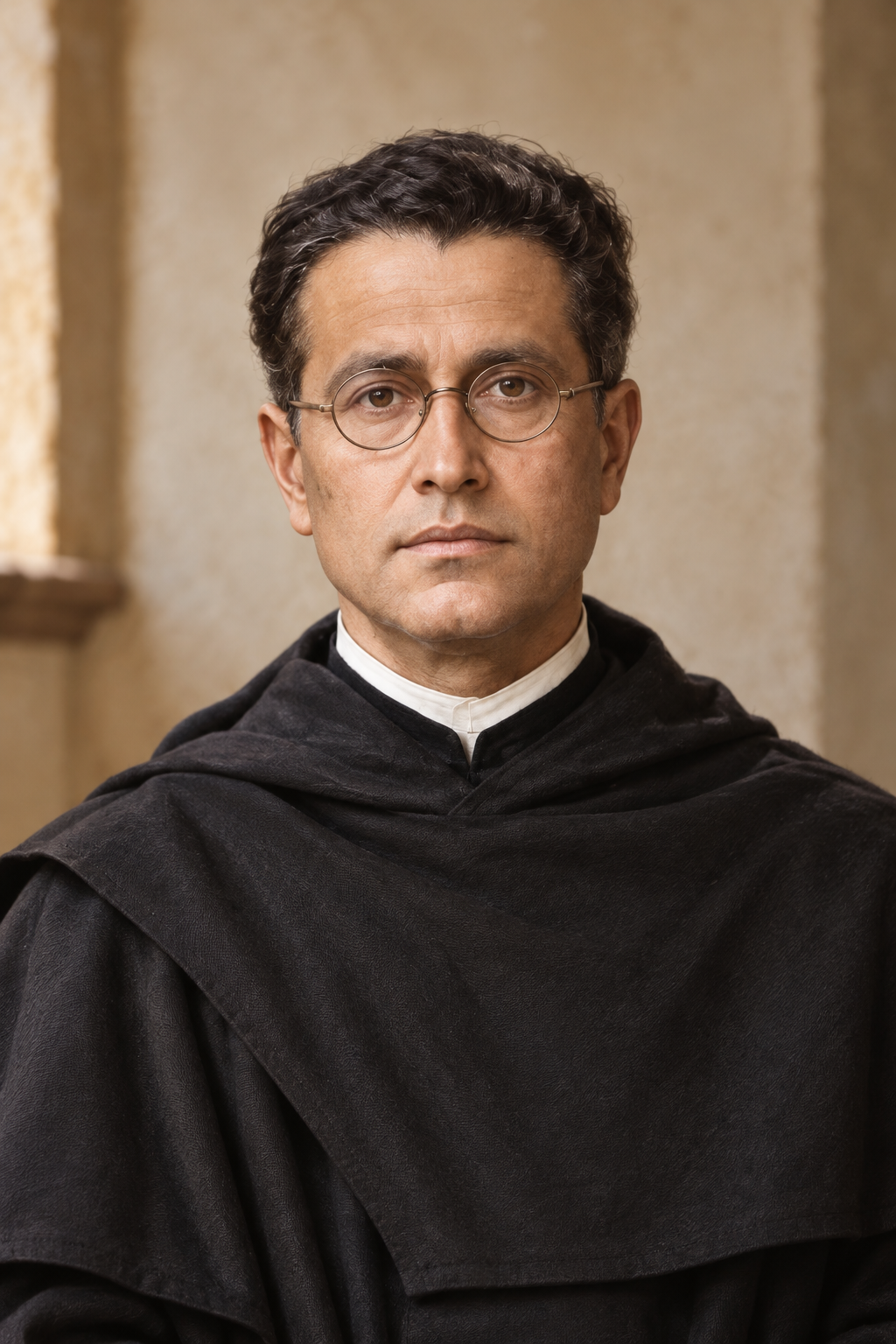
About Elías del Socorro Nieves
Elías del Socorro Nieves grew up in a farming family on San Pedro island in Lake Yuriría, Mexico. After his father was killed, he supported the family through farm work and other jobs. A relative opposed his wish to become a priest.
He eventually entered Augustinian schooling at Yuriría. Limited earlier education and poor eyesight made his studies difficult.
Assistance from members of the community helped him continue his education. The Augustinian bulletin’s account describes support from friars and local women who provided lodging and helped meet his expenses.
He professed religious vows in 1911 and adopted the name Elías del Socorro in devotion to Our Lady of Help. Ordained in 1916, he served in several places before becoming associate pastor at La Cañada de Caracheo in 1921.
Before the La Cañada appointment, he served at Santiago Maravatío: Eliseo Cuna López’s municipal history lists him among its Augustinian vicars in 1920. The local history of Cortazar by Rodolfo Mendoza Villagómez credits Nieves with completing the church at Cañada de Caracheo and bringing its clock.
His ministry continued during the conflict between the Mexican government and the Catholic Church. When restrictions threatened rural pastoral work, he stayed near his community, sheltered in a cave and visited people in their homes. He brought Communion to the sick and sometimes stayed overnight with local families.
A later interview gives a closer view of the households that sheltered him. In his 2005 anthropology thesis, Jorge Arturo Vásquez Mora recorded the recollections of Petronilo Almanza Jaramillo, whose father Ricardo accompanied Nieves. Petronilo remembered the priest staying with the Almanza family during the persecution and continuing to visit parishioners at night, often with Ricardo.
Soldiers arrested him with two local men, the brothers José de Jesús and José Dolores Sierra. The brothers were killed before Nieves, who was executed on March 10, 1928.
These memories require care. Vásquez Mora found that local recollections and published church biographies had influenced one another. He distinguished firsthand memories from stories passed down by others, including accounts of miracles and reconstructed conversations. His study cautions against treating the shared narrative as a set of independent witnesses.
John Paul II beatified him on October 12, 1997. In the ceremony’s homily, the pope presented his ministry as an expression of trust in God and devotion to Our Lady of Help. He highlighted Nieves’s refusal to abandon the people he served despite the danger.
The Catholic Church remembers his decision to remain with his parishioners as central to his witness. Addressing pilgrims after the beatification, John Paul II emphasized his service among ordinary people and his willingness to share their difficulties. The pope also recalled the account that Nieves forgave and blessed those who killed him.
The Order of Saint Augustine commemorates Nieves on October 11.
Wondering how to weigh the stories and sources? Learn how to read a saint biography.