Biography
Elizabeth of the Trinity
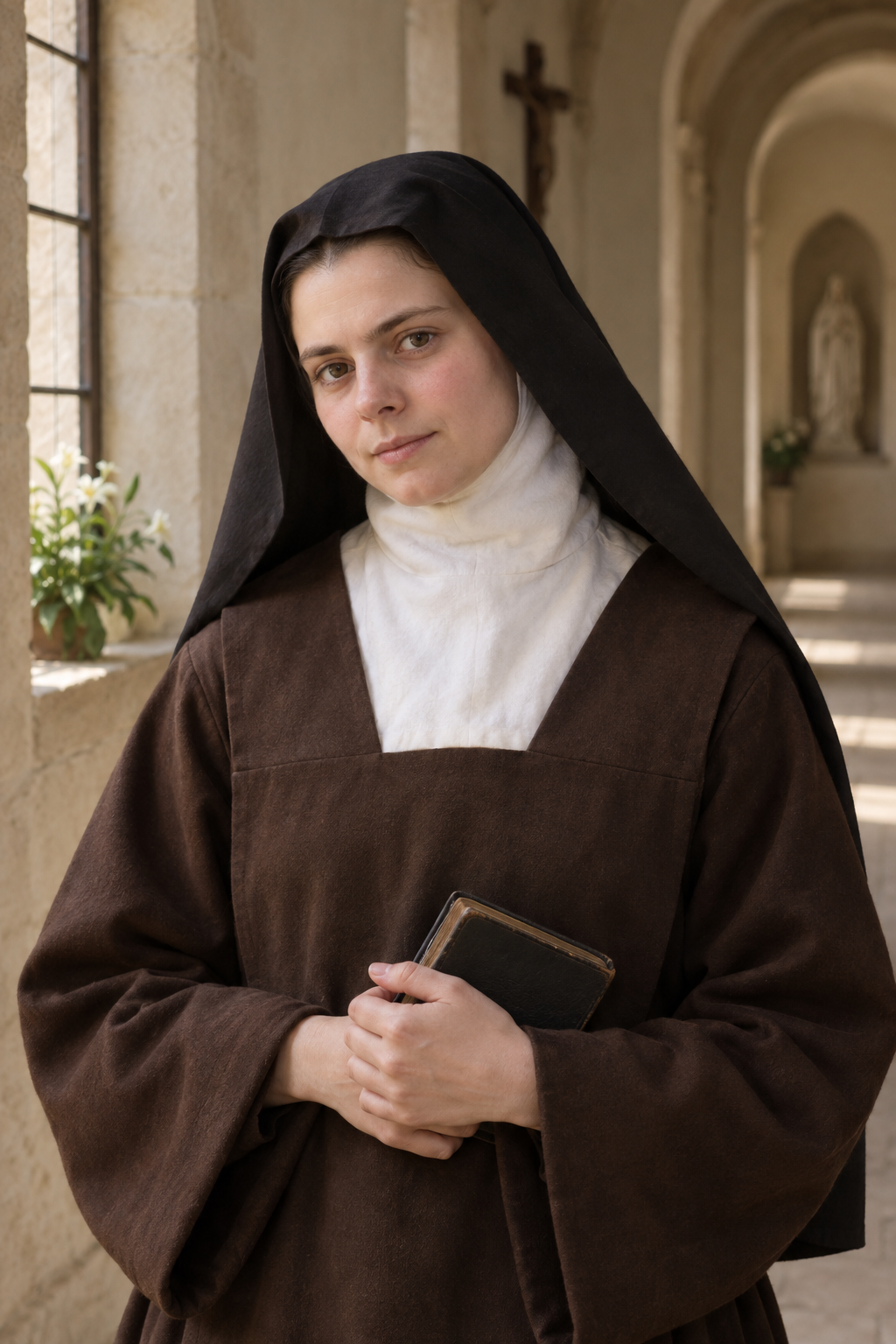
About Elizabeth of the Trinity
Elizabeth of the Trinity was born Elizabeth Catez at the military camp of Avord near Bourges, France, on July 18, 1880. Her father was an army officer. After the family moved to Dijon, he died while Elizabeth was still a child, leaving her mother to raise Elizabeth and her younger sister. The family story matters because her desire for Carmelite life developed inside ordinary home responsibilities, not apart from them. Church biographies remember a lively, sometimes quick-tempered girl who learned to practice self-control. They also record her growing attention to prayer. The account of her childhood is drawn from later religious biographies, so its description of her inner development should be read as reported memory rather than a transcript of a child's thoughts.
Music was a serious part of Elizabeth's youth. She studied at the Dijon conservatory and earned recognition as a pianist. She took part in family and social life, visited friends, and remained active in her parish. The Vatican's canonization booklet stresses that her religious vocation did not remove her from these activities before she entered the monastery. She believed she was called to Carmel, but her mother did not consent to an early entrance. Elizabeth therefore remained at home until she was twenty-one. This waiting period became part of her spiritual formation: she sought a contemplative life while living in the city, practicing music, and meeting other people. It resists a picture of her as someone who had never known a life outside the cloister.
Elizabeth entered the Discalced Carmelite monastery in Dijon on August 2, 1901. She received the habit that December and made religious profession on January 11, 1903. Her chosen name directed attention to the Trinity, a theme that would shape her prayer and writing. Life in the monastery followed a regular pattern of communal worship, work, silence, and shared obligations. The official Carmelite account explicitly describes her days as ordinary rather than a sequence of visions or unusual outward events. Elizabeth read Scripture closely, especially Paul's letters, and drew on the writings of John of the Cross. Her vocation was to attend to God's presence within daily life as her order understood it.
Her writings grew out of correspondence and prayer rather than a formal teaching office. She wrote letters to relatives and friends, kept notes and poems, and composed meditations for particular people. A prayer addressed to the Trinity became especially influential after her death. She also prepared texts for her sister, a wife and mother, showing that she did not reserve the possibility of prayerful life to nuns. In explaining the Christian life, Elizabeth often returned to the idea of a person becoming a dwelling place for God. That language belongs to her theological and devotional interpretation; it is not a claim that a physical event can be independently observed. The letters preserve a relationship between the cloister and the people she loved outside it.
Elizabeth's illness changed the final years of her life. The Vatican booklet identifies Addison's disease, with symptoms appearing after her profession. She moved increasingly into the monastery infirmary and experienced severe pain. Her later letters and prayers speak from within that condition. A careful account can describe her continuing religious trust without making suffering appear desirable in itself or suggesting that medical care was irrelevant. She continued to write while her strength allowed and relied on the community around her. The Dicastery dates her death to November 9, 1906, when she was twenty-six. Her short adult life had included only about five years in Carmel, but those years left a body of writing that reached readers far beyond Dijon.
The content of those writings helps explain their reach. Elizabeth returned to the language of praise in Paul's letter to the Ephesians and used it to describe her aim in religious life. The Carmelite account notes that she sometimes signed letters with a phrase meaning “praise of glory.” Her reflections drew together Scripture, contemplative prayer, and practical fidelity to ordinary tasks. The language is sometimes intense, but its setting was concrete: correspondence with a sister, counsel to friends, and reflection in a monastery infirmary. A reader need not treat every image in her writing as an historical event. Her significance for Carmelite spirituality lies in the form she gave to prayer amid work, friendship, and illness.
John Paul II beatified Elizabeth in 1984. Pope Francis canonized her on October 16, 2016, alongside six other people from different times and places. The Dicastery lists her liturgical memorial on November 9, the anniversary of her death. These recognitions came long after her life and should not be allowed to blur its scale: a young French woman, a musician, and a Carmelite nun who had relatively few years to write. She is remembered particularly for articulating Trinitarian prayer in a way that connected monastic contemplation with the lives of people outside the monastery. The surviving letters and meditations, rather than tales of spectacular events, remain the clearest access to her voice.
Wondering how to weigh the stories and sources? Learn how to read a saint biography.