Biography
Eugenios Giannoulis the Aitolos
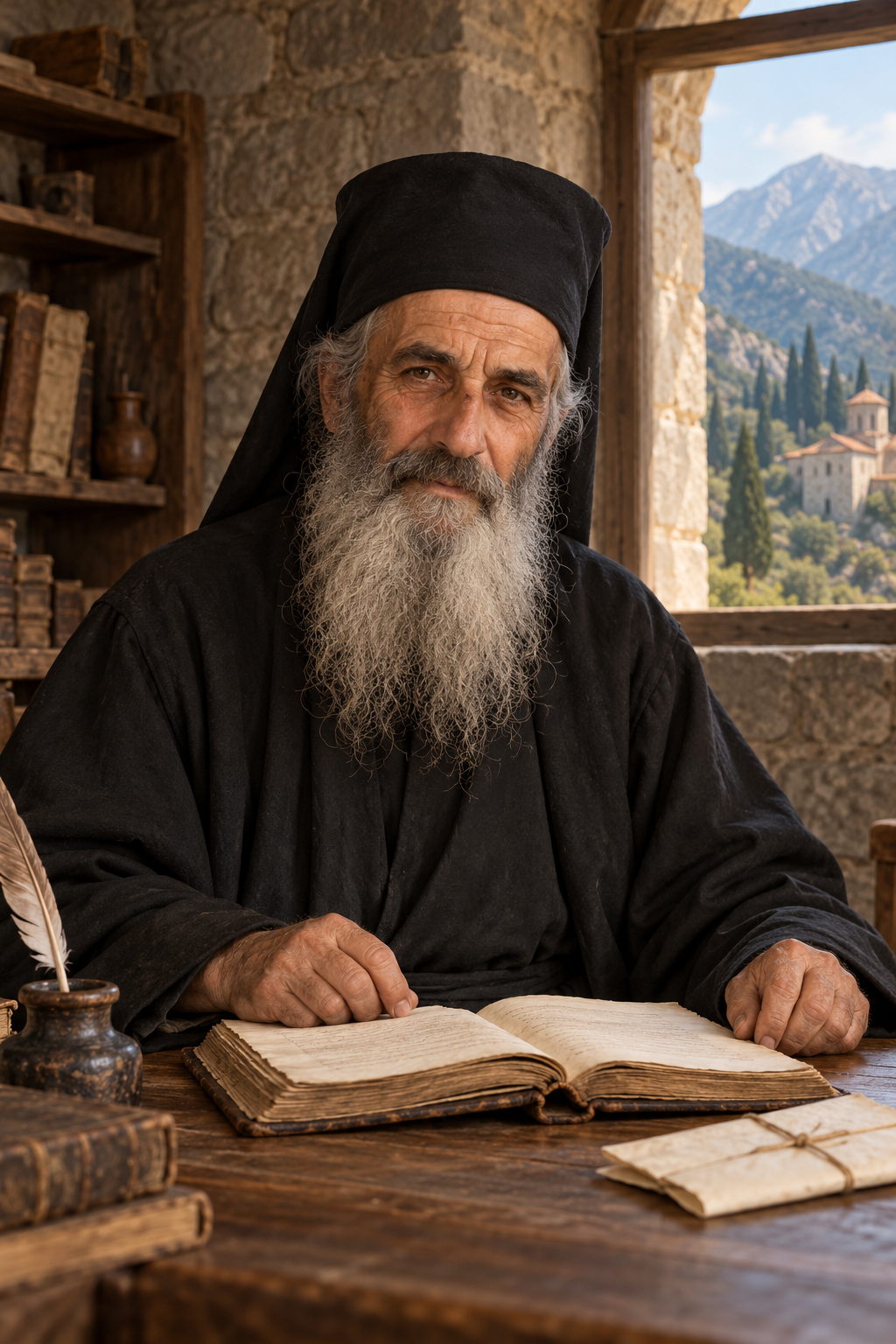
About Eugenios Giannoulis the Aitolos
Eugenios Giannoulis the Aitolos was a Greek monk, priest, and teacher whose work linked religious learning with the education of local communities. A church account places his birth at Mega Dendro in Apokouro and describes studies at several monasteries and centers of learning. Its account of his youth belongs to a much later commemoration, rather than a contemporary record.
At Karpenisi, his teaching became associated with the church of the Holy Trinity. The local metropolis dates the foundation of his school there to 1645 and connects it with the enlargement of the church. It describes an institution that survived long after its founder, continuing until the Greek uprising of 1821 before declining. The school’s later history should therefore be distinguished from the years of Eugenios’s own teaching.
He also established a school at the monastery of Saint Paraskevi in Gouva, near Vrangiana. The metropolis dates this foundation to 1662 and names Anastasios Gordios as his successor. The site still preserves his memory: a fountain rebuilt in 1987 carries a verse attributed to him.
Gordios was more than a later successor. Rudolf Stefec’s study follows the pupil and his teacher through their correspondence, placing them together during journeys in the 1670s. In 1676, Eugenios supplied a recommendation for Gordios’s further studies. Letters also show Gordios writing on his teacher’s behalf. Their relationship joined education with practical assistance over many years.
Eugenios’s correspondence also reveals disagreements within the learned church circles around him. Nikos Panou discusses an October 1663 letter to Dionysios Mouselimis in which Eugenios sharply criticized Kyrillos, the brother of Germanos Lokros, and Germanos’s handling of him. The letter is evidence of Eugenios’s judgment and expectations of clerical conduct; its hostile descriptions should not be treated as a neutral account of Kyrillos’s character.
A quieter glimpse of those connections comes from a letter sent to the goldsmith Eustathios on May 16, 1679. Eugenios reported receiving letters from Germanos and Kyrillos together, while a longer message carried by merchants from Ioannina had still not arrived. Panou cautions that the passage does not securely establish Kyrillos’s location. It nevertheless records the uneven arrival of correspondence through personal and commercial networks.
By 1680 Eugenios was increasingly frail. Stefec cites a letter describing him as almost unable to move his hands and feet. Gordios cared for him and remained nearby until his death in August 1682. The sources differ by one day: Stefec gives August 6, while the later church account gives August 5. The latter places his death at Saint Paraskevi in Vrangiana.
His formal recognition as a saint followed three centuries later. A contemporary church report records the patriarchal and synodal act of July 1, 1982, and the first commemorative liturgy at Holy Trinity in Karpenisi that August 5. The report distinguishes this observance from the larger celebration planned for 1983.
The Metropolis of Karpenisi includes Eugenios among the saints of Eurytania, whose collective feast falls on the last Sunday of August. That local remembrance brings the teacher into the religious life of the communities associated with his work.
Wondering how to weigh the stories and sources? Learn how to read a saint biography.