Biography
Eumenios Saridakis
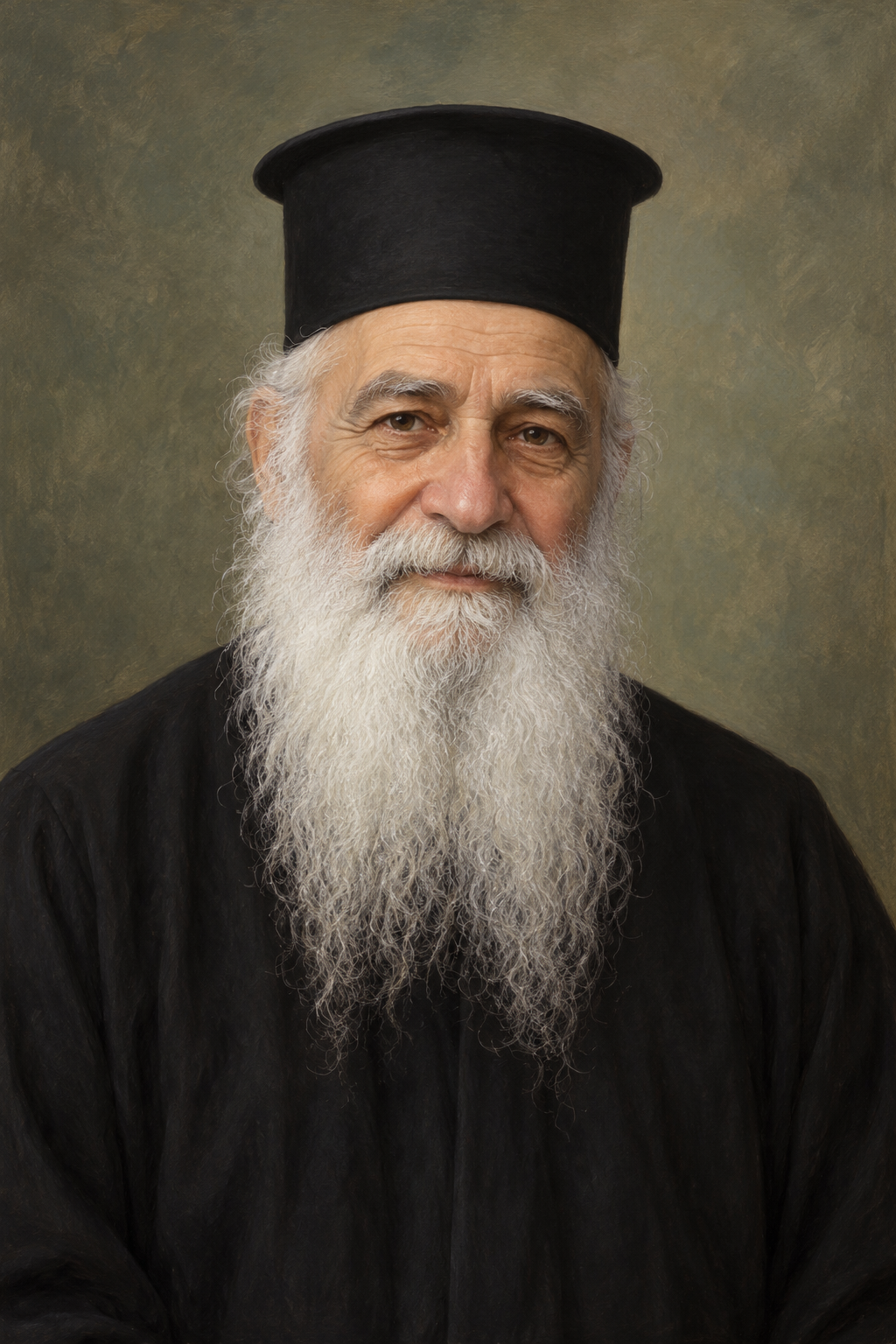
About Eumenios Saridakis
Eumenios Saridakis came from Ethia in Crete, where he was baptized Constantine. He entered the monastery of Saint Niketas and received the monastic name Sophronios. During military service, he developed Hansen’s disease and was sent to a hospital near Athens.
After recovering, he remained to care for other patients. Nicephorus the Leper became his spiritual guide, and Eumenios continued his service after Nicephorus’s death. Metropolitan Neophytos of Morphou, who knew him as a student, remembered his dedication to people who were isolated and often forgotten.
His connection with Koudoumas monastery continued alongside his hospital work. The monastery’s account identifies him as a member of its brotherhood and reproduces a church release letter concerning his appointment in the Metropolis of Nicaea. It also reproduces his ordination certificate. He was ordained deacon and then priest on April 18 and 19, 1975, by Metropolitan Timotheos of Gortyna and Arkadia at Kaliviani monastery. These records distinguish his monastic affiliation in Crete from the place where he exercised his priestly ministry.
His formal membership of the brotherhood continued until the end of his life. Neophytos later recalled conversations about the books Eumenios read. In earlier years, he had relied on the Psalter, the Gospel, service books, and biblical notes by Panagiotes Trembelas. Nicephorus had brought the Evergetinos, a collection of monastic teachings. Eumenios remembered discovering Isaac the Syrian’s Ascetical Homilies with particular joy. Yet when advising the younger Neophytos, he recommended Nikodemos the Hagiorite first, choosing reading suited to the student rather than simply prescribing his own favorite book.
Neophytos remembered joining him in lengthy services, reading psalms and supplicatory prayers, and learning monastic practice through the hospital community’s worship. The same witness remembered his humor during a visit to England. When Neophytos complained about London’s mist and described English people as cold, Eumenios repeatedly praised both the city and its people. Neophytos understood this as a practical lesson against habitual criticism. He also accompanied Eumenios to hear Porphyrios’s confession. On leaving, Eumenios noticed the construction work and handed over the money in his pocket to help. The recollection places a simple act of generosity beside the spiritual counsel for which visitors sought him.
His surviving letters offer his own voice alongside such memories. Writing from Athens to Antonios at Christmas in 1969, he prayed that Christ would be born in their hearts and that the coming year would bring spiritual growth. He signed with his earlier monastic name, Sophronios. Rather than claiming the gifts associated with admired ascetics, he stressed his unworthiness and the need for continued prayer and humility.
Letters written on Mount Athos in 1972 and 1973 also connect pilgrimage with practical guidance. In the earlier letter, Eumenios expressed joy at returning to the mountain’s holy places. He then answered Antonios’s anxiety about disturbing dreams, urging him not to believe or dwell on them. He warned against condemning either clergy or laypeople. In the later letter, he again discouraged reliance on dreams and visions, emphasizing the difficulty of judging them rightly. He asked instead for humility and help for other people according to one’s ability, even when their faults were evident. These passages preserve his advice without establishing the supernatural explanations he gave for dreams.
As a priest, Eumenios served the hospital church of Saints Cosmas and Damian. People sought his counsel and prayers. He died on May 23, 1999, and his body was brought to that church for the community’s farewell.
Visitors continued to gather during his final illness. The diocesan account remembers attentive doctors and nurses, and mourners keeping vigil after his death. Koudoumas also remembers material help from Eumenios. Its account says that money from his priestly earnings, given after his death, supported the construction of the monastery’s refectory and guest accommodation. It records smaller gifts of sacred objects during his lifetime, still kept by the community. The issue illustrates a New Testament associated with his stay there and shared with the monk Anastasios. Such objects and institutional records preserve another aspect of his relationship with the monastery, alongside the devotional recollections of those who knew him.
In April 2022, the Cretan synod announced his recognition as a saint and thanked the Ecumenical Patriarchate for accepting its request. The announcement established May 23 as his annual commemoration. It placed his memory within the continuing religious life of his native island.
The patriarchal and synodal act was read at a formal signing ceremony in Constantinople on August 31 that year. The ceremony also concerned two other newly recognized saints. A church dedicated to Eumenios was consecrated at Koudoumas monastery in May 2024. It occupied a former cell associated with monks who had lived with leprosy. Worshippers gathered for the consecration, the first liturgy, and a shared meal. The dedication links his memory with a place marked by illness and care.
Wondering how to weigh the stories and sources? Learn how to read a saint biography.