Biography
Fidelis of Sigmaringen
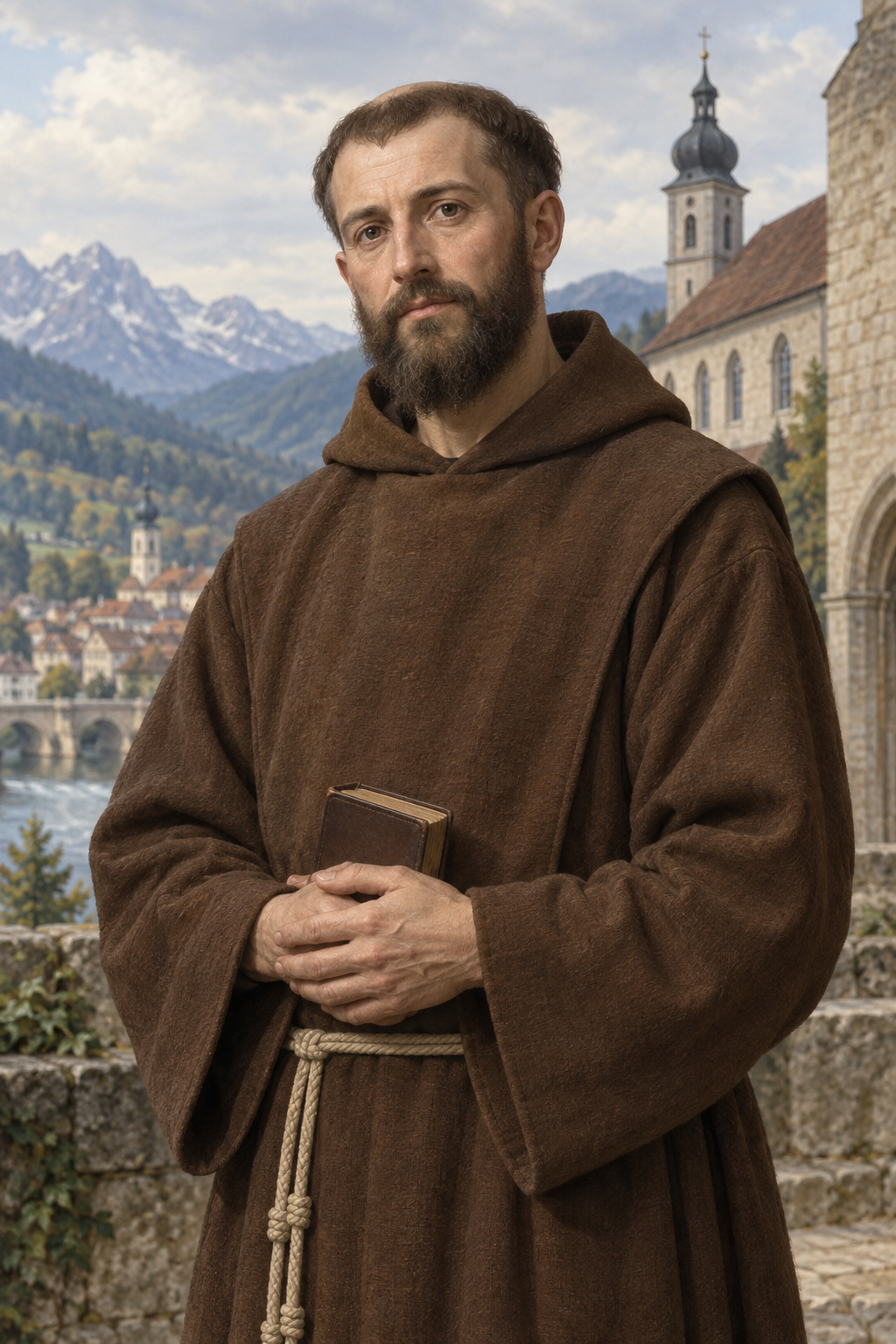
About Fidelis of Sigmaringen
Markus Roy, later known as Fidelis of Sigmaringen, was born on October 1, 1578, in Sigmaringen. His father served as a civic official, and Markus studied first locally, then at the Jesuit college and university in Freiburg im Breisgau. He studied philosophy and both civil and church law. These studies prepared him for work as a legal adviser in the Austrian territories, an unusual starting point for a Capuchin friar remembered chiefly as a preacher.
From 1604 to 1610 Markus accompanied young nobles on journeys through parts of Europe. He later worked in Ensisheim as a court official and advocate. The historical dictionary says disillusionment with the practices of his profession helped turn him toward religious life. The archdiocese remembers him as an advocate for poorer clients, but accounts of his personal motives should remain attributed to his biographers. He was ordained a priest on October 3, 1612, and entered the Capuchins at Freiburg the following day, receiving the name Fidelis.
After further study in Constance and Frauenfeld, Fidelis preached and helped people entering the Catholic Church. He served as guardian of Capuchin houses at Rheinfelden, Freiburg, and Feldkirch. The archdiocesan account describes his visits to people suffering from epidemic disease, while the Capuchin order also recalls his care for sick soldiers. These acts of service belong beside, rather than beneath, the preaching for which he became known.
His final mission took him into the Three Leagues, including the Prättigau, during a period of acute tension between Catholic and Reformed communities. Austrian troops occupied the region while the competing powers of Europe intervened in its politics. Fidelis ministered to soldiers and preached for a return to Catholic practice. The archdiocese notes that military force accompanied the mission, and the Capuchin account describes coercive orders against Protestant worship. A biography that leaves out this setting would make the conflict seem simpler than it was. These circumstances do not erase the violence of his death, but they matter to understanding the people and fears around him.
On April 24, 1622, Fidelis preached at Seewis and was killed amid the upheaval that followed. The sources agree on the place, date, and violent death. The archdiocese says the sequence of events is no longer clear: fighting nearby and panic in Seewis formed the immediate setting. The Capuchin retelling gives a precise invitation, gunshot, conversation, and final words, but these details cannot be presented with the same certainty. The Roman Martyrology honors Fidelis as a priest and martyr killed because of his Catholic faith. Historical narration can report that ecclesial judgment while remaining candid about the political violence surrounding the attack.
Fidelis was beatified in 1729 and canonized in 1746. His memorial on April 24 recalls a lawyer who became a friar, served the sick, and died in the course of a dangerous mission. His story also bears the marks of a divided society in which religion and state power were closely entwined. The sources support both his pastoral work and the need for care when retelling the final hours.
Wondering how to weigh the stories and sources? Learn how to read a saint biography.