Biography
Francesco Spoto
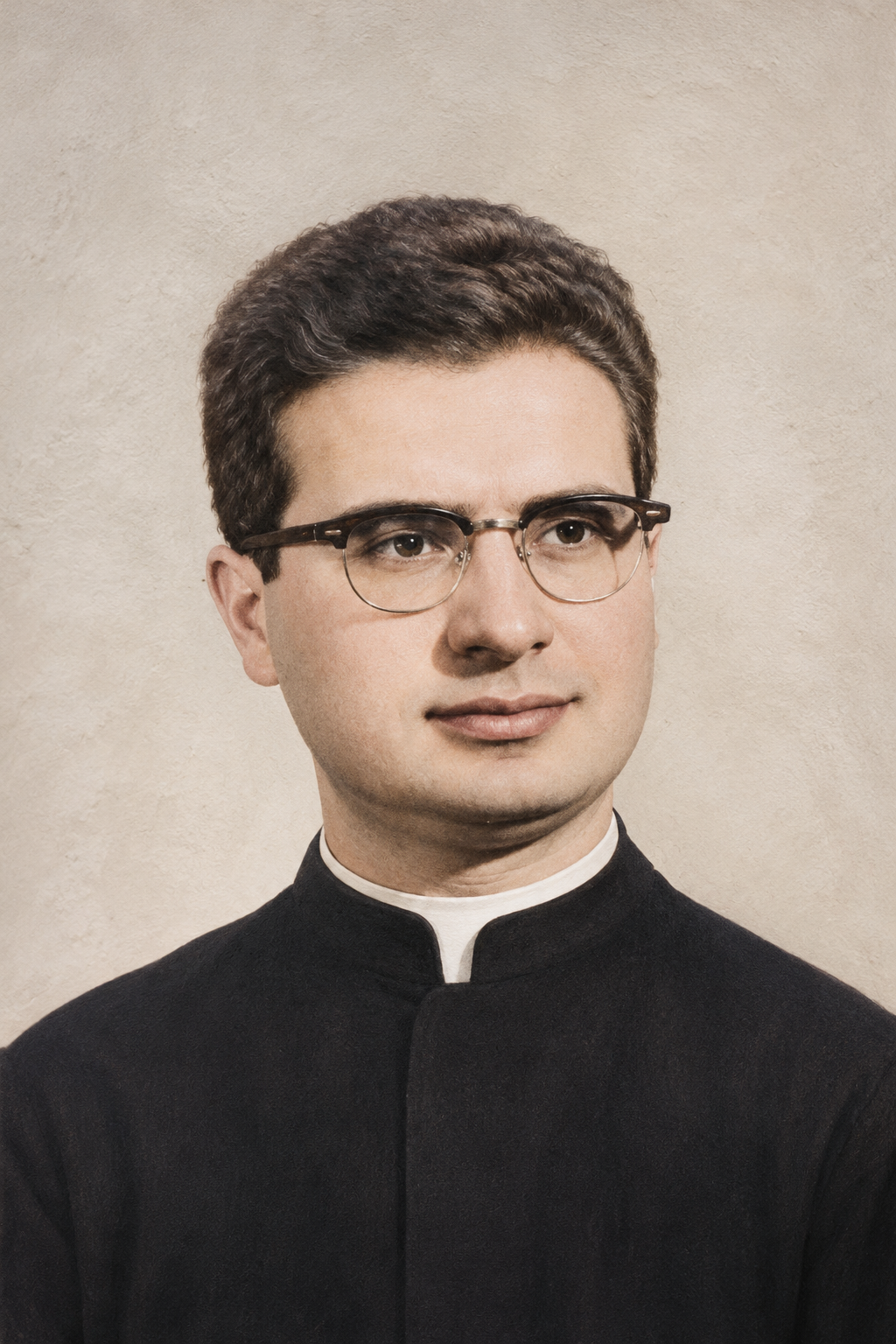
About Francesco Spoto
Francesco Spoto was an Italian priest whose last months were spent with a small missionary community in Congo. Born in Raffadali on 8 July 1924, he entered the Palermo seminary of the Missionary Servants of the Poor in 1936. He made his first religious profession in 1940 and was ordained a priest on 22 July 1951. In 1959 his congregation elected him superior general. He was thirty-five, young enough to require a dispensation for the office. The responsibility eventually took him from Sicily to Biringi, where his congregation had established a mission. His congregation followed the work begun by Giacomo Cusmano.
The congregation belonged to the religious family founded by Giacomo Cusmano. Its service joined practical care for people in poverty with a distinctly Christian understanding of charity. Giuseppe Civiletto, who knew Spoto and later became superior general, remembered him as a serious student and a determined, helpful priest. His leadership included encouraging vocations, opening houses and supporting the congregation’s developing African mission. Civiletto also recalled a quieter encounter before the journey to Congo. Spoto visited the novices at their college in Rome and walked outdoors with them, speaking companionably. During that walk, he used the cypress trees beside the path as a simple illustration of a life directed toward God. Civiletto’s recollection, given in a 2007 interview, preserves a teacher working through an ordinary conversation rather than a formal address.
Another former student, Giovanni Avena, remembered both Spoto’s reserve and his attentive friendship. Avena described a superior who could initially seem austere but remained close to young men facing difficult choices about their futures. In the recollections reproduced by the congregation, Spoto joined discussions about the Second Vatican Council and its implications for the Church. He read contemporary theologians and shared that interest with students. Avena also recalled a visit when Spoto attended a lecture without having himself introduced as superior general. These are personal memories, recorded after his death, rather than a transcript of daily life. They nevertheless give a particular view of his leadership: intellectual curiosity and willingness to listen existed alongside an outwardly restrained manner. The account makes room for the person behind an office that could otherwise dominate his story.
Spoto’s surviving words also place faith and practical service together. In a sermon to priests dated 16 January 1962, he described Christian belief as giving meaning to religious gestures, charitable work, suffering and death. His regulations for lay collaborators directed their activity toward works of mercy and witness to faith. In notes for the congregation’s bulletin, he criticized the separation of wealth from responsibility toward people experiencing hunger and abandonment. These excerpts, reproduced by Vincenzo Bertolone, show how he understood the congregation’s purpose. Charity was part of the religious life itself, and the needs of other people required a response expressed in action. His language came from the spiritual tradition in which he had been formed, with a strong connection between love of God and obligations toward one’s neighbors.
He left for Congo in August 1964, during violent unrest. His visit became a prolonged stay with three confreres. Lorenzo Cappelletti’s account, drawing on Spoto’s letters and diary, describes an early period of enthusiasm followed by fear and displacement. The missionaries left Biringi and moved between hiding places as danger increased. Spoto’s diary did not present the experience as effortless courage. It recorded exhaustion, hunger, anxiety for his companions and moments of deep distress. On 11 December he suffered a severe beating. Injured and increasingly weak, he depended on others to carry him. Congolese Christians were central to his care: Adeodato sought the holy oils for him, while Agatone provided shelter. Spoto died on 27 December 1964 and was buried near the shelter. His story therefore includes the courage and assistance of local people as well as the suffering of a visiting missionary.
Vincenzo Manzella later described visiting the mission as a young priest and learning about those final days from Prospero Sanfilippo. In a 2024 anniversary homily, he recalled seeing the places associated with Spoto’s last journey and meeting Agatone, who had offered him shelter. Manzella had also known Spoto personally and remembered his discretion, courtesy and modest manner. His account is a later recollection of people and places, not an eyewitness report of the assault. That distinction matters when reading the story of his death. The testimony also records that the three confreres survived and returned to Italy. In the community’s memory, Spoto’s final journey remained connected to his responsibility for them and to the people who helped him when he could no longer travel unaided.
The Catholic Church beatified Spoto on 21 April 2007, recognizing him as a martyr. His liturgical memorial is observed on 27 December. He is honored as a blessed, and his religious community remembers both his work of formation and his final service in Congo.
Wondering how to weigh the stories and sources? Learn how to read a saint biography.