Biography
Francis Anthony Fasani
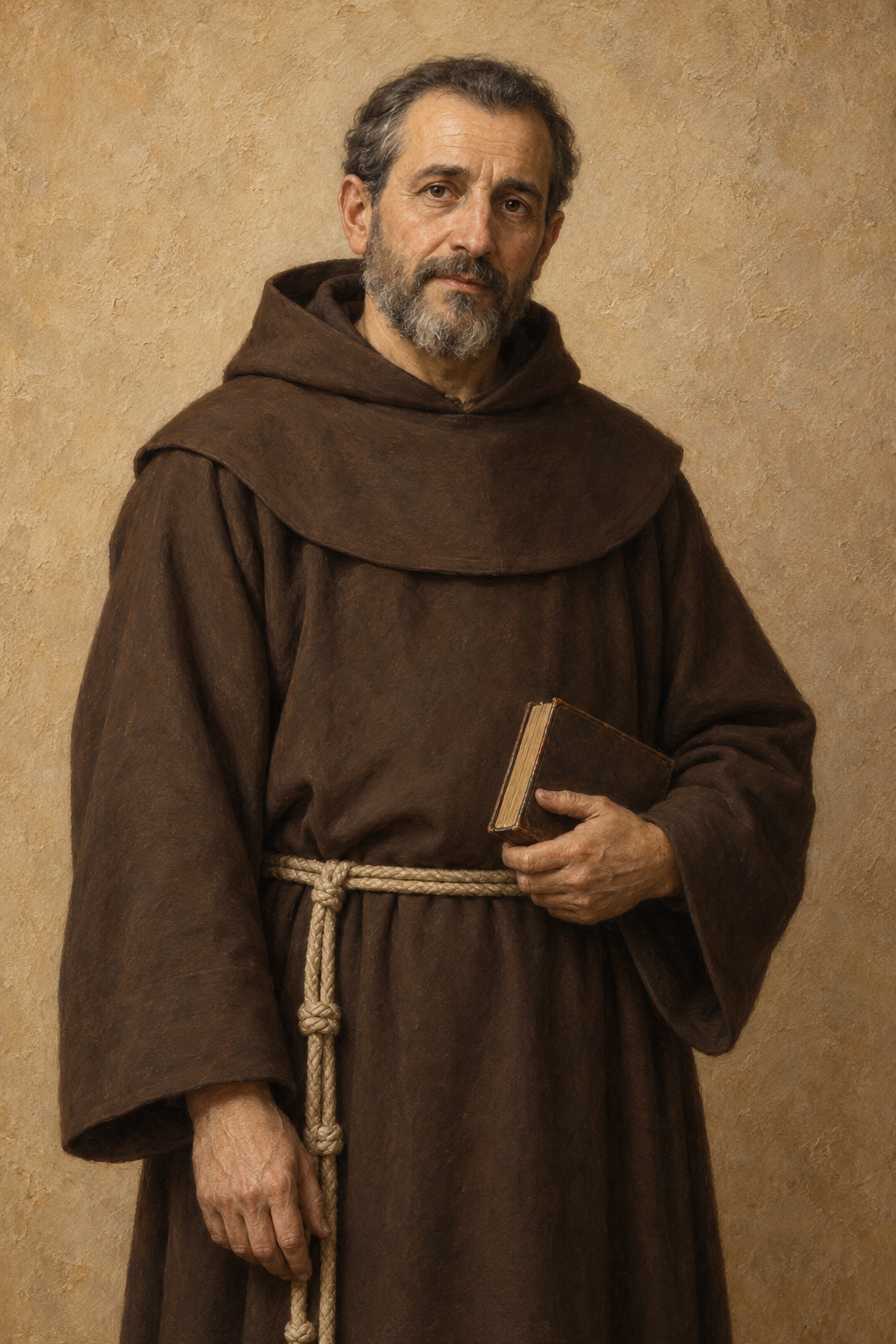
About Francis Anthony Fasani
Francis Anthony Fasani was born in Lucera on 6 August 1681. The Vatican biography names his parents as Giuseppe Fasani and Isabella Della Monaca and says his family called him Giovanniello. He studied first at a local Franciscan friary before entering the Conventual Friars Minor. The sanctuary in Lucera records his religious profession in 1696 and his choice of the names Francis Anthony. The details tie his life closely to Lucera, though his education also led him to other Franciscan houses.
His studies took him through philosophy and theology, including work at Agnone and Assisi. He was ordained a priest at Assisi in 1705. After completing theological studies he returned to Lucera, where teaching became one part of his ministry. In 1709 he earned an advanced theology degree and became known as Padre Maestro, a title that the local community continues to use. The records show a person who prepared to teach as well as to preach, rather than a figure remembered only for spontaneous inspiration.
Within the order he taught philosophy, guided novices and held offices as a local superior and provincial minister. The New Catholic Encyclopedia dates his provincial service to 1720–23 and also describes later years as guardian of the Lucera community. He preached missions, retreats and seasonal devotions, often in his home region. Witnesses in the canonization record praised the accessible, scriptural character of his preaching. Such testimony preserves how his hearers remembered him; it does not require every enthusiastic assessment to be treated as an independently measured fact.
His work reached people who needed practical and spiritual care. The Vatican biography describes him distributing alms, visiting the sick and making daily visits to prisoners after receiving that responsibility from Lucera’s bishop. It says he also accompanied people condemned to death. The sanctuary remembers the same groups in its account of his charity. Those forms of service help explain why his pastoral reputation extended beyond the classroom and pulpit. His devotion to the Eucharist and to Mary belonged to the same religious life.
Francis died at Lucera in 1742 and was buried at the church of Saint Francis. The Lucera sanctuary gives 29 November as the day, as does the New Catholic Encyclopedia. An English Vatican biography appears to contain a conflicting “November 2” sentence near the end despite its other 1742 chronology; the day requires editorial review. He was beatified in 1951 and canonized by John Paul II on 13 April 1986. The sanctuary says his remains are now beneath the church’s main altar.
Franciscan communities commemorate him on 27 November, while he died on the 29th. The Conventual Franciscan calendar places his memorial on the earlier date. Keeping the feast separate from the death date avoids a false correction to either one. The Lucera community has maintained a shrine and continues to remember him as Padre Maestro. His story is that of a scholar-priest whose teaching, preaching and care for people in poverty or confinement formed a single local vocation.
Wondering how to weigh the stories and sources? Learn how to read a saint biography.