Biography
Francis Borgia
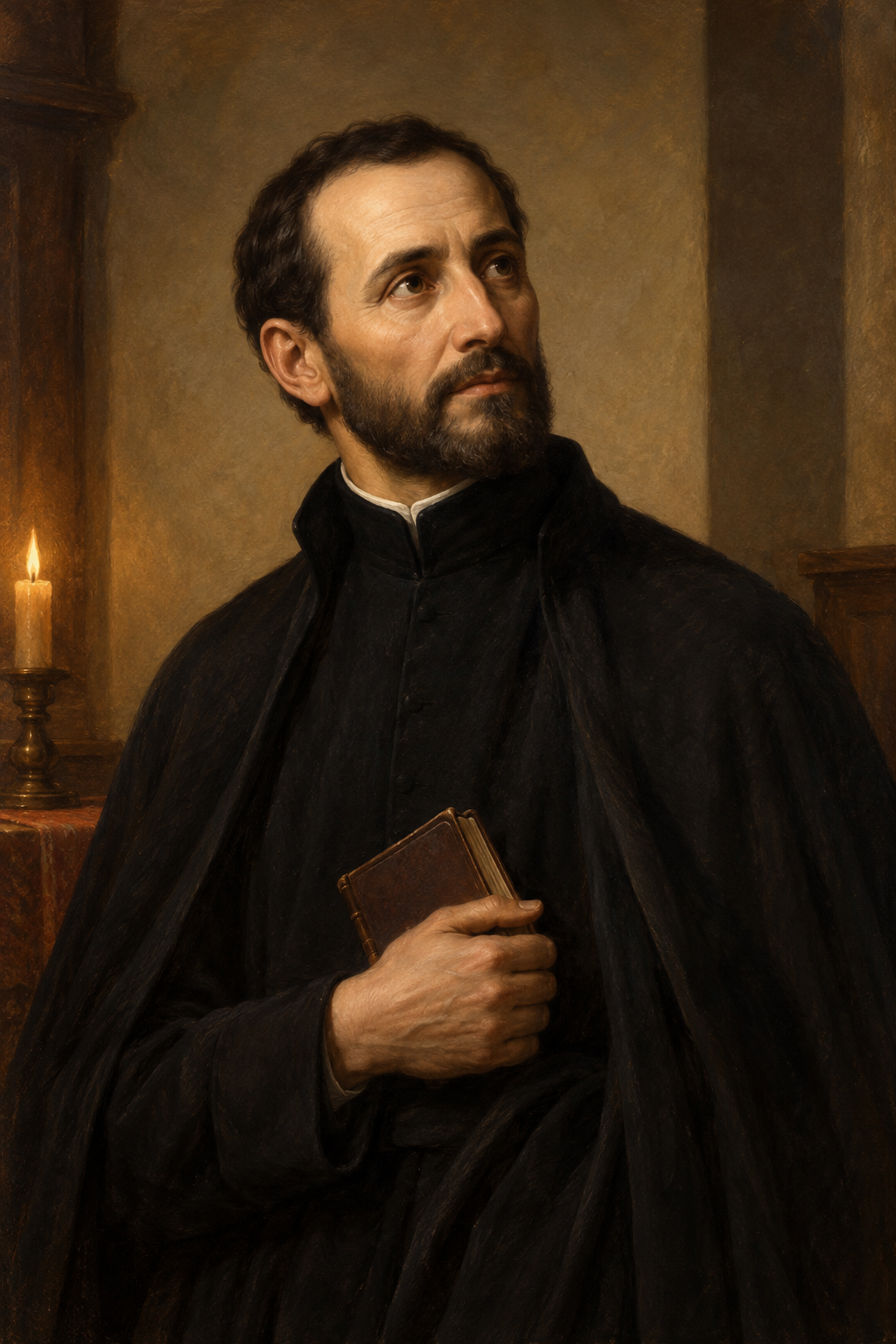
About Francis Borgia
Francis Borgia was a Spanish nobleman who became a Jesuit priest and, eventually, the Society of Jesus's third superior general. State archive records place his birth at Gandía on October 28, 1510. He grew up within an influential family and entered imperial service as a young man. In 1529 he married Leonor de Castro. The Society of Jesus records that they had eight children and that he later governed Catalonia as viceroy. His public responsibilities, marriage, and care for his children belong to the first part of his life, before he entered religious life.
After Leonor died in 1546, Borgia prepared to join the Society of Jesus. Ignatius of Loyola advised him to settle his children's affairs and complete theological study before making the change public. He professed vows in 1548, later resigned his ducal title in favor of his son, and was ordained a priest. His path was gradual: the Jesuit account describes years in which family obligations, study, and a new religious vocation overlapped.
Borgia held responsibilities for the Jesuits in Spain and Portugal, supported a novitiate and schools, and was elected superior general in 1565. During his seven years in that office, he worked on the Society's rules and supported its missions. His experience in government served a different community than the court he had once known. These institutional roles are better documented than the private feelings often attributed to him in devotional retellings.
Illness overtook Borgia after a diplomatic journey. He returned to Rome and died there on September 30, 1572. The Society of Jesus commemorates him on October 3, a date distinct from his death anniversary and the older September 30 martyrology entry from which this index record came. His remembered life spans family, civil government, priesthood, and leadership within a growing religious order.
Wondering how to weigh the stories and sources? Learn how to read a saint biography.