Biography
Francis Caracciolo
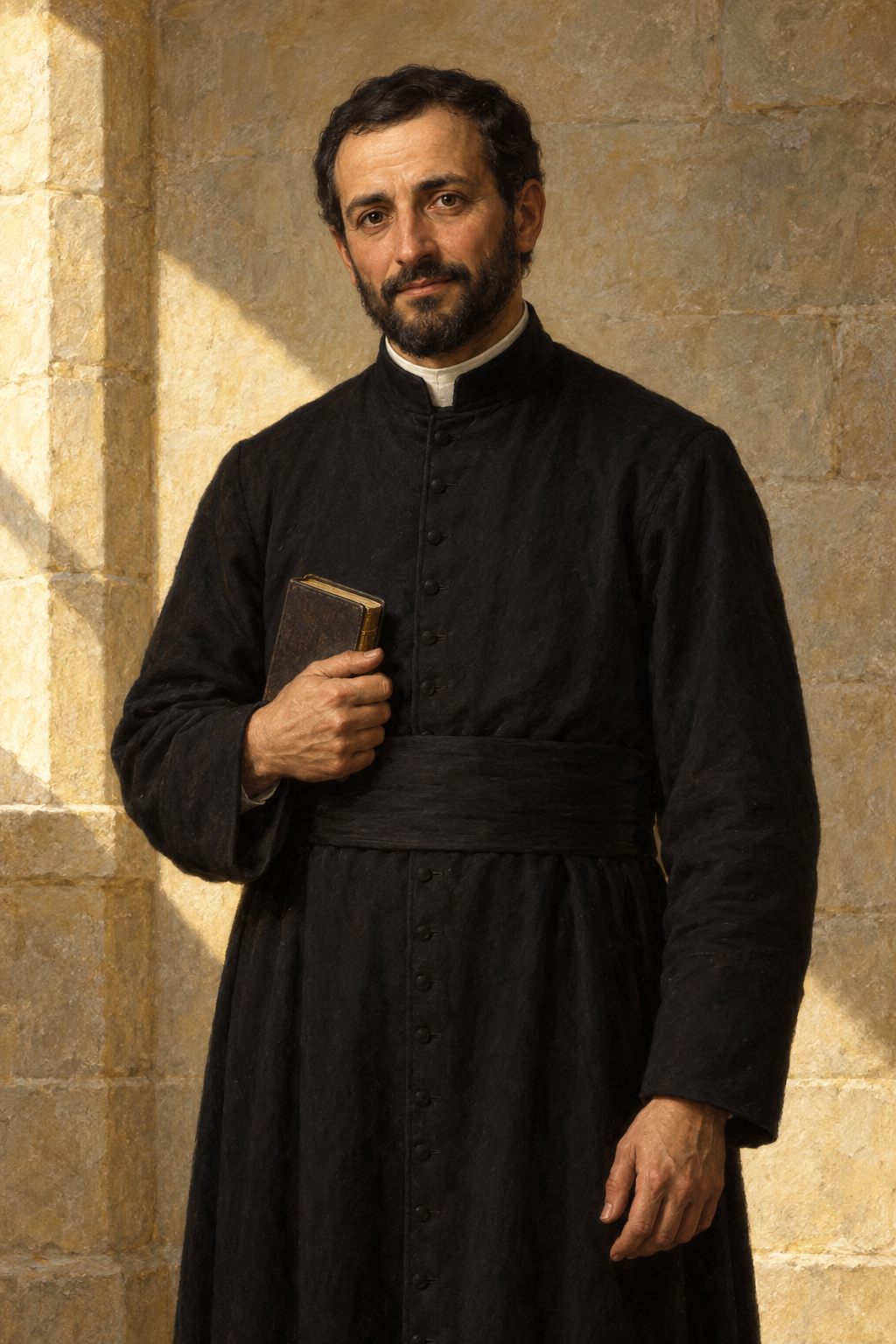
About Francis Caracciolo
Francis Caracciolo was born Ascanio Caracciolo on 13 October 1563 in Villa Santa Maria in the Kingdom of Naples. He later became a priest and one of the founders of the Clerics Regular Minor. The Archdiocese of Naples identifies his parents as Ferrante Caracciolo and Isabella Baratucci. His noble family supplied social standing, but the accounts of his adulthood emphasize service among people with little power in Naples. The record gives exact dates for his birth and death, unlike the disputed dates of many earlier saints in this batch.
At about twenty-two he experienced a serious illness. The Naples biography says the diagnosis was not certain, noting both leprosy and elephantiasis in later descriptions. A vowed turn toward priestly life is part of the devotional account of his recovery; it should not become a modern medical diagnosis. He studied in Naples and was ordained in 1587. He then joined the Bianchi della Giustizia, a confraternity that supported prisoners and people condemned to death.
The proposed religious order reached him through a confusion of names. A letter meant for another Ascanio Caracciolo asked for help with the new foundation, and he accepted the invitation. Alongside Giovanni Agostino Adorno and Fabrizio Caracciolo, he helped draw up a rule for the Clerics Regular Minor. Pope Sixtus V approved the institute on 1 July 1588. Its members added to the usual vows a commitment not to seek high ecclesiastical office. The misdirected letter is a memorable element of the founding tradition; the institution itself and its papal recognition are clearer historical anchors.
Ascanio took the religious name Francis when he professed vows. The Naples profile dates that profession to 9 April 1589; a Vatican City State summary places the name change with the 1588 approval. This draft uses the more specific profession date while retaining the disagreement for review. The order combined common religious life with charity and sustained prayer before the Eucharist. Vatican News describes his collecting support for girls’ education, hearing confessions, teaching children and caring for those in need.
The community extended beyond Naples. Francis travelled to Spain and helped establish houses there, while Rome became another centre of the institute. The New Catholic Encyclopedia describes him as rector general after Adorno’s death in 1591 and traces later offices within the congregation. Those responsibilities accompanied a devotion to Eucharistic adoration that later Catholic accounts see as distinctive to him. His leadership was institutional as well as personal: he helped other priests adopt regular practices of worship and service.
In his last year he withdrew from some responsibilities, then travelled to Agnone to discuss a possible house for the order. He became ill there and died on 4 June 1608. The Archdiocese of Naples and New Catholic Encyclopedia both place his death in Agnone. A Vatican News notice links the final journey with Loreto, where he had prayed, and compresses the account in a way that can sound as though he died there. Keeping travel and death location separate avoids that error.
Pope Clement XIV beatified Francis in 1769 and Pope Pius VII canonized him in 1807. His feast is kept on 4 June. The Catholic Encyclopedia also records his later designation as a patron of Naples. This profile does not assign patronage categories until the directory topic mapping is reviewed; historical civic patronage and a modern topical filter are separate data decisions. He is remembered above all for an order that joined prayer with direct care for prisoners, the poor and others who depended on help.
Wondering how to weigh the stories and sources? Learn how to read a saint biography.