Biography
Francis of Paola
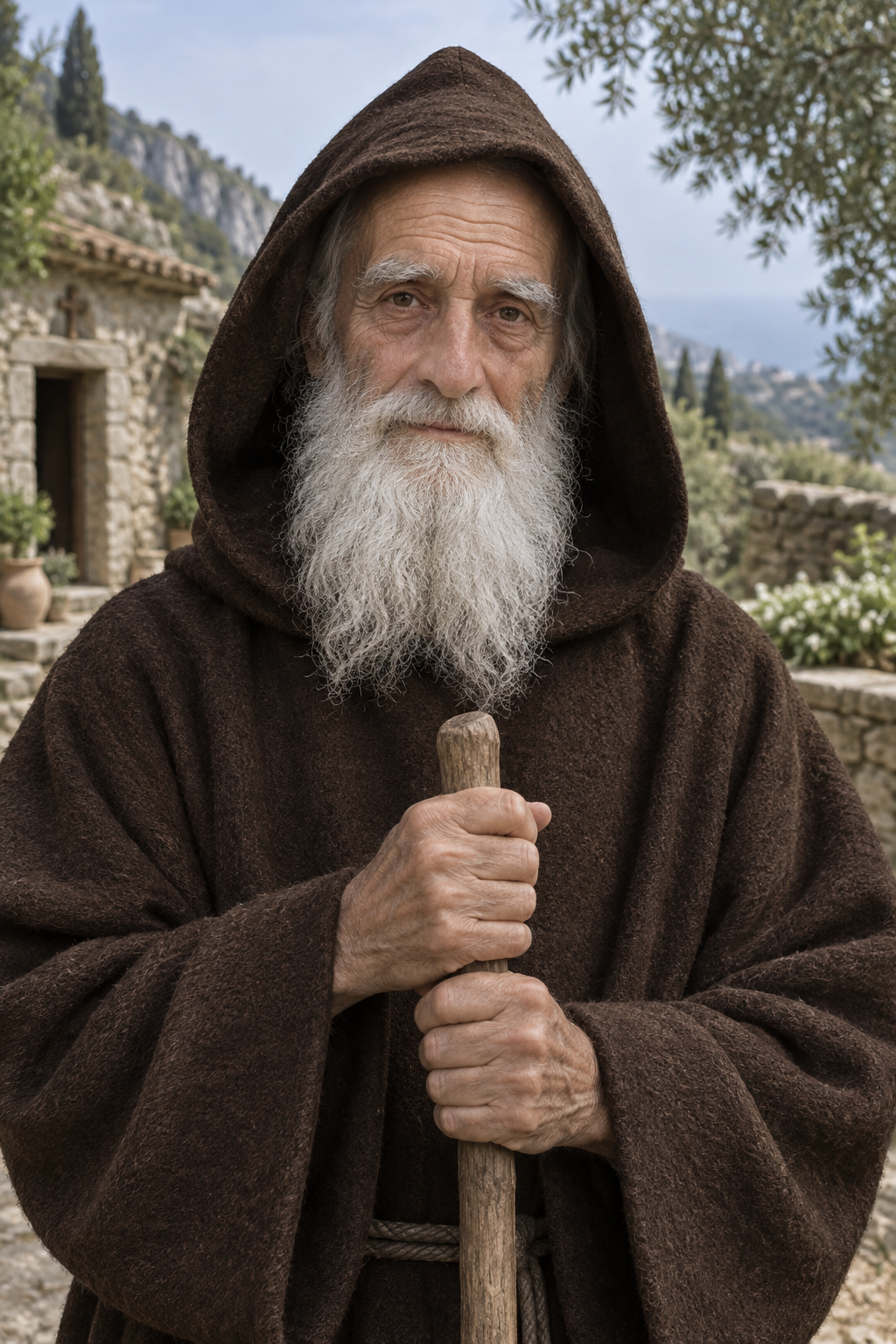
About Francis of Paola
Francis of Paola was born in the Calabrian town of Paola on March 27, 1416, to a family of small farmers. As an adolescent he spent a year with the Conventual Franciscans at San Marco Argentano, then traveled with his parents on pilgrimage. After returning home, he withdrew to a cave near the Isca stream and later sought greater solitude in the woods. Prayer, penance, and manual work shaped this early life; the community that would become the Minims grew out of an eremitical beginning.
Solitude did not remain an exclusively private vocation. People came to Francis's hermitage, and some asked to share his way of life. He accepted companions and began building accommodation for them, with assistance from local people. An ascetic practice that he had followed himself became a pattern he asked others to undertake: sustained abstinence associated with Lent. Requests for new foundations took him beyond Paola to other Calabrian communities, including Paterno Calabro and Corigliano. He also established a community at Milazzo in Sicily. These journeys required him to respond to people seeking both spiritual guidance and an enduring local religious presence.
Francis's reputation brought him into contact with rulers whose interests differed sharply from those of a hermit. He spoke against the mistreatment of ordinary people by powerful lords. Louis XI of France, gravely ill and hoping for recovery, sought his presence. Francis went at the command of Sixtus IV and helped the king prepare for death. He remained in France afterward, where royal assistance supported the spread of his communities. His support for the marriage of Charles VIII and Anne of Brittany belongs to this political setting: a proposed means of peace was also connected with the expansion of French royal power.
The journey to the French court was not something Francis eagerly sought. The papacy and the Neapolitan king saw political opportunities in the invitation, while he was reluctant to leave his hermitage. Louis did not receive the cure he wanted. Francis nevertheless continued offering spiritual guidance in France, where visitors included ordinary people and learned men. He also continued working the land, carrying a familiar occupation into an unfamiliar courtly environment. The contrast between royal expectations and his own habits is important: he arrived as a man famous for extraordinary powers, but his enduring work included counsel, cultivation, and the organization of religious life.
The Minims' rule made a lasting Lenten discipline an additional vow alongside poverty, chastity, and obedience. It required a full year of probation before a candidate could make profession. Its food restrictions were severe, but they were not an instruction to ignore serious illness. When suitable Lenten food proved insufficient for a sick brother, medical advice and a superior's direction could permit other food in a separate infirmary. The rule also instructed that brothers with chronic weakness should receive relief from fasting, vigils, and other burdens. Care for the sick was therefore written into the same text that demanded rigorous penance. Brothers receiving guests were instructed to welcome them cheerfully, joining hospitality to the community's demanding discipline.
A letter dated 1486 shows another side of Francis's teaching. He urged his readers to abandon hostility and take care over words that could injure another person. If they had spoken harshly, they should use speech to repair the harm, not merely regret it silently. He connected mutual forgiveness with refusing to keep an injury alive in memory. His appeal to repentance included an assurance that God awaited their return, rather than only a warning about judgment. In this text, penance reaches beyond food and bodily discipline into the difficult work of ending resentment and restoring peace between people.
Prayer was central to the spiritual tradition Francis handed on. Benedict XVI's account emphasizes his meditation on Christ's Passion and devotion to the Eucharist and Mary. It also links his penitential life with reconciliation and a willingness to confront powerful people about injustice. These themes explain why later church remembrance joins the solitary hermit to the counselor of rulers, rather than treating them as two unrelated lives. The same commemoration recalls obedience to the pope as a practical commitment that could draw Francis into difficult public questions.
The order's legislation developed through successive revisions, and its final approval in 1506 recognized friars, nuns, and tertiaries. Francis died in his convent at Tours on April 2, 1507, after arranging a successor.
His later reception reached people whose work took them far from a hermitage. In 1957, Pius XII addressed Italian seafarers under Francis's patronage, including fishermen, merchant crews, and port workers. The pope recalled an invocation placed with the saint's image aboard ships, asking to be guided to the homeland's shore. This maritime devotion preserves the memory of a protector invoked amid dangerous journeys. It is a later history of devotion, distinct from the traditional story that Francis crossed the Strait of Messina on his cloak.
Wondering how to weigh the stories and sources? Learn how to read a saint biography.
Explore similar vocations
Prayers for Francis of Paola
Francis of Paola: sourced prayer excerpt
Ad litus educ Patriae