Biography
Francis Xavier
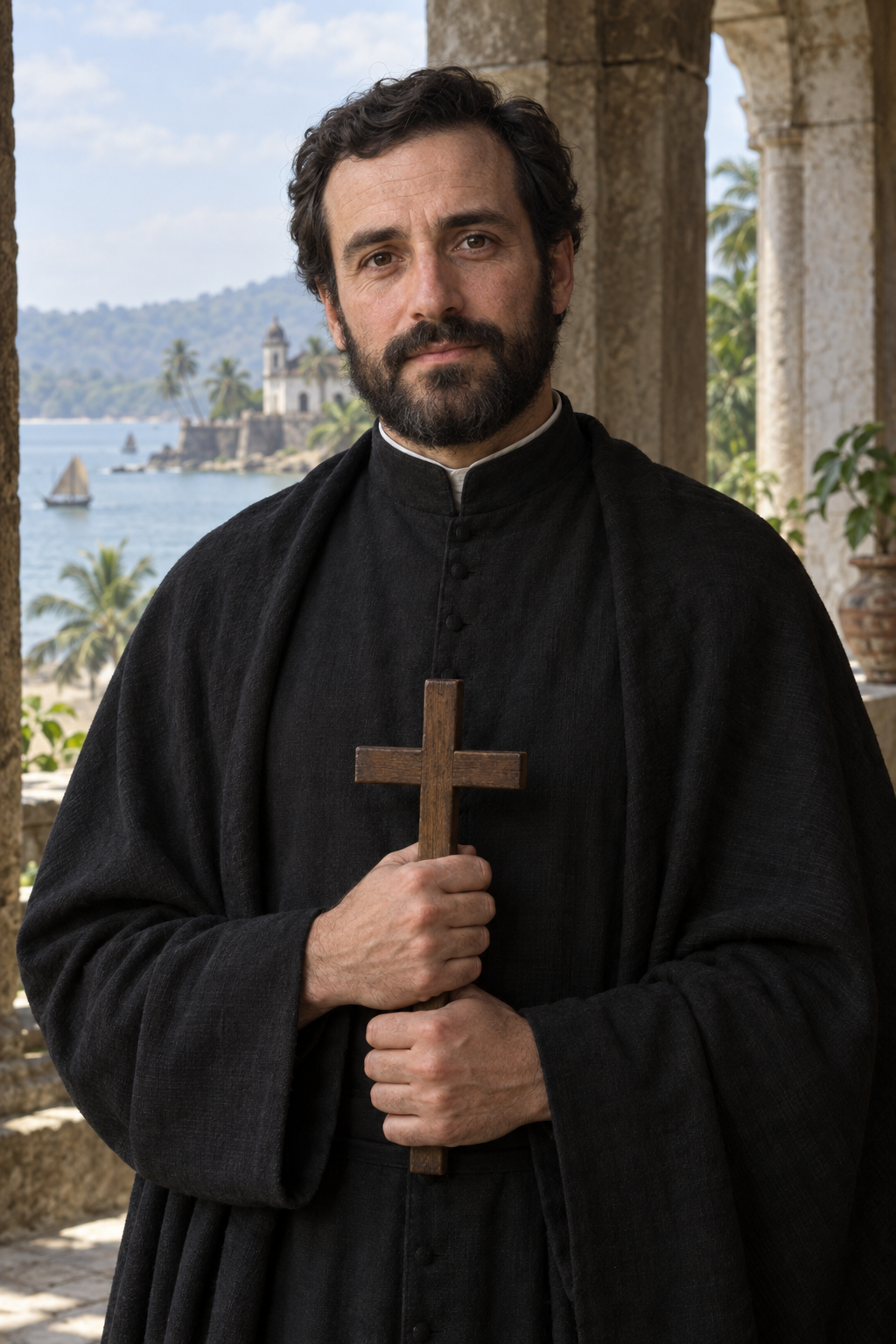
About Francis Xavier
Francis Xavier was a Jesuit priest whose missionary journeys carried him from Europe to India, island Southeast Asia, and Japan. His family knew him as Francisco. He was born at Javier in Navarre on 7 April 1506, the youngest child of María de Azpilicueta and Juan de Jasso. His father's service to the Navarrese monarchy placed the family within the kingdom's governing world. When Francisco left for Paris in 1525, his family hoped that his education would restore its prospects. He never returned home.
In Paris he shared lodgings with Peter Faber and later Ignatius of Loyola. At first Xavier wanted an academic career; he taught philosophy before accepting the religious vocation Ignatius proposed. In 1534 he joined the companions' vows at Montmartre. They hoped to travel to the Holy Land, but war prevented the voyage from Venice. Hospital service and preparations for ordination filled the waiting. Xavier became a priest in 1537. The companions eventually offered themselves for service at the pope's disposal and deliberated about forming a religious order. When the Portuguese crown requested missionaries for India, illness prevented another companion from going. Ignatius asked Xavier to take his place.
His departure belonged to a world of kingdoms and overseas expansion. Castile had conquered Navarre during his childhood; the kingdom's incorporation into the Castilian crown followed in 1515. Now he traveled under different royal sponsorship. He sailed from Lisbon on 7 April 1541 as a papal representative bound for Portugal's colonies in India and reached Goa on 6 May 1542. Goa became the base from which his work extended outward. His journeys subsequently reached Malacca and the islands of the Malay archipelago before he turned toward Japan.
Xavier's Indian correspondence describes how dependent teaching was on local help. Among Christians near Cape Comorin, he could not make himself understood without interpreters. People who knew the local language and Portuguese helped prepare explanations of prayers and doctrine; he memorized them and summoned children and adults with a bell. He also visited the sick and organized local instructors to continue work between his visits. These communities were not simply his creation: he was often teaching people who had already been baptized. The same letter records religious aggression. Xavier praised children who reported images used in worship and described going with them to destroy those images. His missionary zeal could take the form of assistance and teaching, but also of attacks on other people's sacred objects.
That coercive dimension also appears in his appeal to the Portuguese king. Historians José Eduardo Franco and Célia Tavares discuss Xavier's May 1546 request that João III send an Inquisition to India. He presented it as a means of securing Christian belief, complaining of people observing Jewish and Muslim religion. This was an appeal for religious policing through royal and ecclesiastical power, not merely a request for more teachers. The tribunal at Goa was established in 1560, after Xavier's death. He did not personally operate it, but the surviving request is part of his responsibility within the colonial missionary enterprise.
The work also demanded repeated beginnings in unfamiliar places. In the Maluku Islands he taught prayers and catechism through song. Pope Francis, recalling that work, draws on a letter in which Xavier describes spiritual consolation amid danger and discomfort. Travel and hardship were not simply obstacles to be listed; in his own account, they became occasions for attachment to Christ. His desire to go farther was sustained by prayer even when language, illness, and the practical difficulties of a voyage made each new undertaking uncertain.
Letters kept him connected to the companions he had left. Ismael Zuloaga's study of his correspondence shows Xavier repeatedly asking Europe for more Jesuits and planning where colleagues could carry on the work. In letters from Malacca in 1545 he asked for detailed news and described rereading messages with joy. To travel onward did not mean that a mission could thrive without anyone remaining behind. He needed fellow workers, continuing communication, and local cooperation. The letters move between those practical arrangements and requests for prayer. They reveal a man separated from friends by long distances who still understood his vocation as shared work rather than a solitary achievement.
In Japan, Xavier encountered audiences who questioned him closely. His 1551 account describes the difficult journey to war-torn Kyoto and his failure to gain access to the ruler. Back in Yamaguchi, letters and gifts from the governor of India and bishop of Goa helped him obtain permission to preach. He refused an offer of money and accepted a place to stay. Teaching brought extended religious discussions, not automatic assent. Japanese Christians helped him understand the beliefs he was trying to challenge. His account credits their indispensable assistance even while speaking contemptuously of rival traditions. Listeners also asked why China, whose learning they respected, knew nothing of Christianity if his teaching was true. Their questions helped turn his attention toward China.
The hoped-for entry to mainland China never came. Xavier died on Shangchuan Island on 3 December 1552, aged forty-six, while waiting for a way across. A Chinese companion remained with him. The Church later honored him as a patron of missions, alongside Thérèse of the Child Jesus.
Wondering how to weigh the stories and sources? Learn how to read a saint biography.
Explore similar vocations
Prayers for Francis Xavier
Prayer opening Xavier's Indian letter
May the grace and charity of Christ our Lord always help and favor us!