Biography
Francis Xavier Seelos
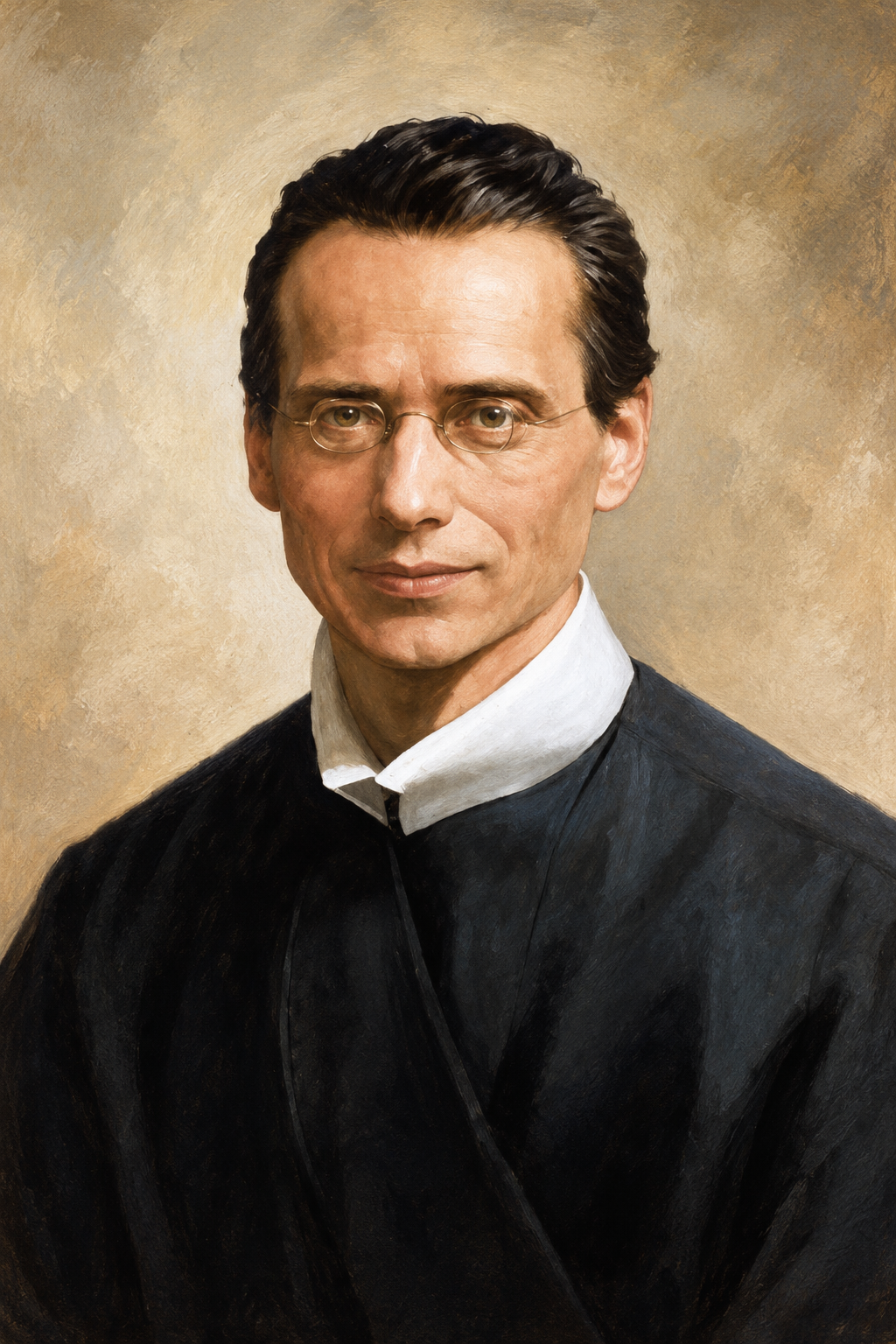
About Francis Xavier Seelos
Francis Xavier Seelos grew up in Füssen, Bavaria, in a large Catholic family. He attended school in Augsburg and then studied at the University of Munich. His education included music, and he retained a love of singing throughout his life.
While preparing for the priesthood, he learned about the Redemptorists’ work among German-speaking immigrants in the United States. He decided to join the congregation and serve in America. He arrived in 1843 and was ordained in Baltimore the following year.
The move separated him from his family and the friends he had made during his studies. His letters home remained a means of sharing his new life with them. Learning English was difficult, and he hesitated before beginning to hear confessions in the language.
In Pittsburgh, he worked at Saint Philomena’s with John Neumann, who became his spiritual director and confessor. Seelos later led the community and helped train novices. His ministry included preaching and teaching children as well as hearing confessions. Further assignments took him to Baltimore, Cumberland and Annapolis.
The Civil War brought sick and wounded soldiers into the communities where he worked. Historian Edward Day describes Cumberland in early 1862 as a center for military hospital care, where the commanding officer permitted Redemptorists to visit patients. One encounter joined Seelos’s earlier parish work to this wartime ministry. In January he attended a dying young officer from Pittsburgh whose first Communion he had given at Saint Philomena’s. He brought the officer Communion, remained with him until his death and arranged for the body to be sent home for burial. Day traces the account to Seelos’s letter to his sister Damiana and the congregation’s annals.
The community’s own buildings were also at risk. In that January letter, Seelos worried that the military might occupy the college because of its position on a hill. A doctor and an officer subsequently inspected the house as a possible hospital. They found the rooms too small and poorly ventilated for the purpose, and the proposed occupation did not proceed. The priests continued visiting military hospitals, so their efforts to preserve their house accompanied ongoing care for soldiers.
His responsibilities combined parish leadership with the formation of future Redemptorists. After losing his position as prefect of students, he continued as rector and pastor in Annapolis. During the Civil War he traveled to Washington to seek protection for the community’s students from military conscription. In 1863 he began leading a traveling mission band.
His visit to Lincoln did not produce the clear presidential exemption sometimes claimed in later biographies. In a 2024 interview with the Catholic Review, parish historian Robert Worden described the limited documentation of the meeting. The report cites a later Seelos letter recalling a friendly reception but no settled outcome. This leaves a distinction between the documented appeal for help and claims that Lincoln personally exempted the seminarians.
His wartime correspondence also contains racist judgments about slavery. The same report reproduces a passage from an 1863 letter to his sister in which he portrayed enslaved people as needing control by masters and minimized their material suffering. Although he criticized slaveholders for immorality and denying education, he defended their position in other respects. Worden suggested that Seelos’s views later changed, but the article does not supply a later letter establishing that change. The surviving passage complicates an account focused only on his pastoral care.
He preached in English and German across several states before serving in Detroit and New Orleans. While caring for people suffering from yellow fever in New Orleans, he contracted the disease himself.
He died there on October 4, 1867.
His fellow Redemptorists began preserving memories of him soon after his death. Brother Louis Kenning, who had cared for him during his illness, recorded an account of his final days. Benedict Neithart described the funeral and the parishioners’ grief in a letter to the community in Annapolis. The historian Carl Hoegerl explains that the original letter has not survived, but printed copies preserve its account. In 1869 Kenning urged the congregation’s leadership to collect material about Seelos’s life. These efforts helped preserve evidence for the later cause of beatification.
Other colleagues continued collecting evidence. Bernard Beck gathered letters and copied them into notebooks, beginning in the early 1870s. Hoegerl notes that many originals were subsequently lost or not preserved. Beck also prepared a short biography for a lecture to Pittsburgh parishioners in 1875. These copies and recollections helped transmit Seelos’s words, while leaving historians dependent on documents with differing histories of preservation.
John Paul II beatified Seelos on April 9, 2000.
The accounts gathered after his death show how strongly parishioners and fellow religious remembered his ministry. They also make it possible to trace that remembrance through named witnesses rather than anonymous stories. The Redemptorists commemorate him as a blessed priest on October 5.
Wondering how to weigh the stories and sources? Learn how to read a saint biography.