Biography
Francisco de Paula Victor
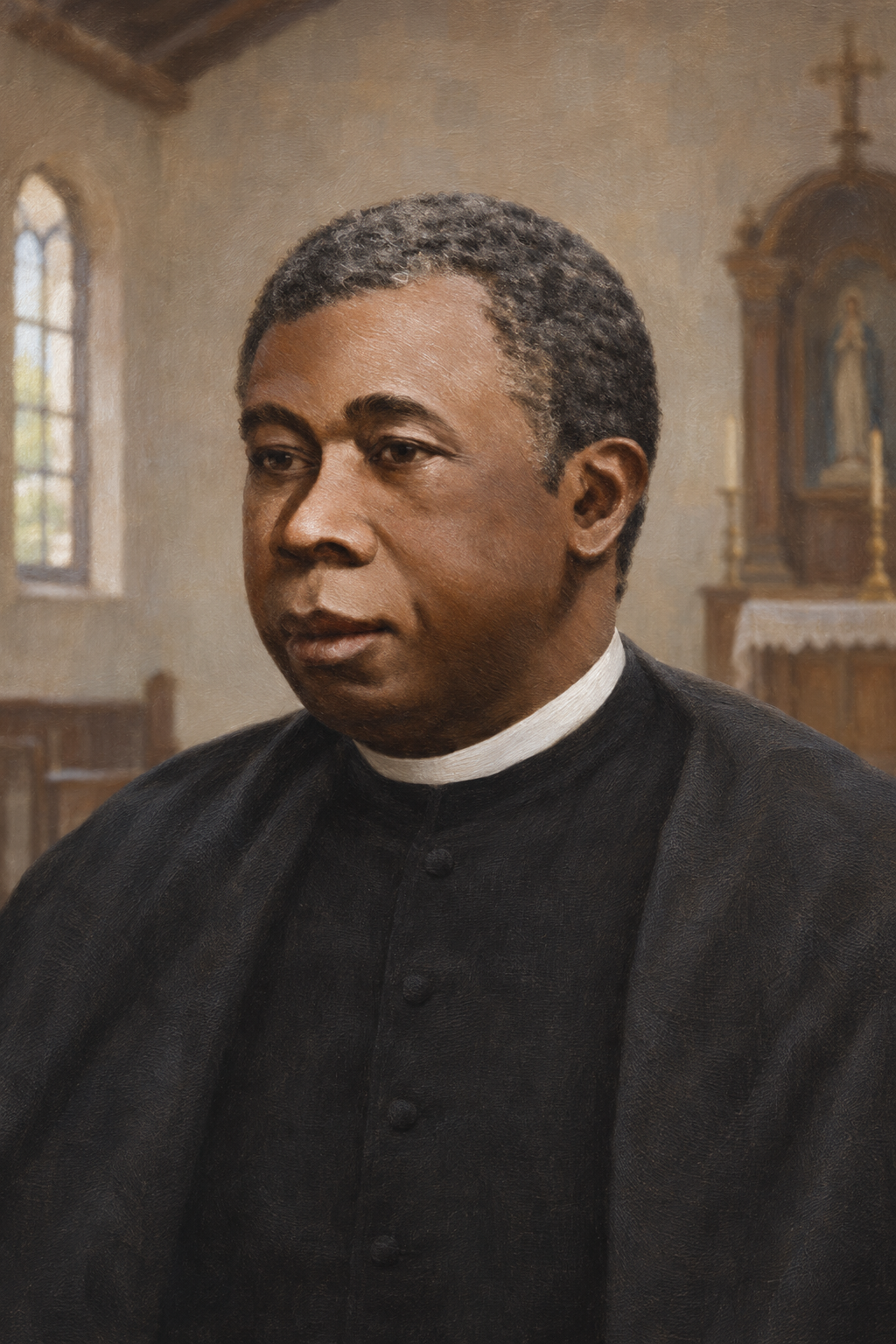
About Francisco de Paula Victor
Francisco de Paula Victor served Três Pontas as a priest and teacher for more than fifty years. He was a Black Brazilian whose path into the priesthood encountered racial opposition, and whose work became closely connected with the life of the town. The Dicastery’s biography records his birth on 12 April 1827 in Vila da Campanha da Princesa, Minas Gerais. As a young man he learned tailoring before pursuing the studies that led him toward ordination. His later ministry joined parish responsibilities with the education of young people.
His family history differs from the familiar account of a former slave becoming a priest. Historian Marcus Vinícius Fonseca found Francisco, his mother Lourença and his brother recorded as free people in the 1831 provincial census. He also identified the godmother who supported Francisco’s education as a woman of African descent, rather than the white benefactor of later retellings. This documentary research does not remove the racial barriers Francisco faced. It does show why Black identity and enslavement should not simply be treated as interchangeable in his biography.
Support for his vocation came from several people. The archdiocese of Rio de Janeiro’s historical account remembers the assistance of his mother and godmother, as well as gifts collected in Campanha. It cites the contemporary chronicler Ferreira Rezende on the financial difficulties facing his godmother and the appeal made to other residents. Francisco’s preparation therefore depended on a wider circle of support, bringing together family, townspeople and the bishop in a society that placed serious obstacles before a Black candidate.
Bishop Antônio Ferreira Viçoso supported his preparation for the priesthood. After initial instruction in Campanha, Francisco studied at the seminary in Mariana, where the church’s biography records hostility and discrimination from fellow students. He was ordained on 14 June 1851. The same account remembers continuing opposition from white people unwilling to accept a Black priest. His subsequent appointment in Três Pontas therefore brought more than the ordinary demands of a new parish assignment: his authority was challenged because of his race.
The same account explains one practical obstacle: candidates were expected to possess property that could support them if they could no longer minister. Francisco received the Conquista farm through a donation from his godmother, authorized by her son. This arrangement connected the possibility of ordination with material resources as well as studies and personal commitment. It also helps readers understand why the encouragement of a bishop alone did not settle every difficulty involved in entering the priesthood at that time.
Education became a major part of his service. In a signed remembrance, Cardinal Orani Tempesta recalled Francisco teaching music, French and religious instruction at the Colégio Sagrada Família. Pupils later included João de Almeida Ferrão, the first bishop of Campanha, and the physician Samuel Libânio. The cardinal emphasized the school’s welcome for poor students. Its significance therefore extended beyond distinguished former pupils: the school offered learning and cultural opportunities to young people whose families lacked the means available to wealthier neighbors.
School records examined by Fonseca identify Francisco as a public teacher of French and Latin between 1864 and 1885. Examination records also show his participation in pupils’ examinations later in the 1880s. Such records give substance to the title of educator: teaching involved appointments, assessment and the work of instruction. His connection with pupils extended across decades, alongside the baptisms, marriages and other parish occasions through which townspeople also knew him.
Tempesta also preserved recollections from Bishop Diamantino Prata de Carvalho about the priest’s generosity. People who came seeking help encountered someone willing to share what he had received. Such memories belong to the community’s religious remembrance, and the cardinal presented them in that setting. They explain the personal dimension of Francisco’s reputation alongside the documented work of teaching: neighbors remembered availability to sick and poor people as well as the education provided through the school he had established in Três Pontas.
Francisco died in Três Pontas on 23 September 1905. The apostolic letter recording his beatification remembers the crowds who came to the funeral and his burial in the parish church. It also traces the later inquiry into his life and the Catholic Church’s recognition of his virtues. Beatified on 14 November 2015, he was authorized to be called blessed, with his feast permitted on 23 September. The formal recognition honors a diocesan priest and educator whose memory had remained closely linked with the town he served.
The following day Pope Francis spoke of the beatification after the Angelus. He emphasized Francisco’s generosity as a parish priest, work in catechesis and administration of the sacraments, and particular humility. He proposed him as an example for priests called to serve their people. That remembrance gathers together the pastoral work and patient availability for which the community honored him, alongside the educational service preserved in records of the school.
Wondering how to weigh the stories and sources? Learn how to read a saint biography.