Biography
Frédéric Janssoone
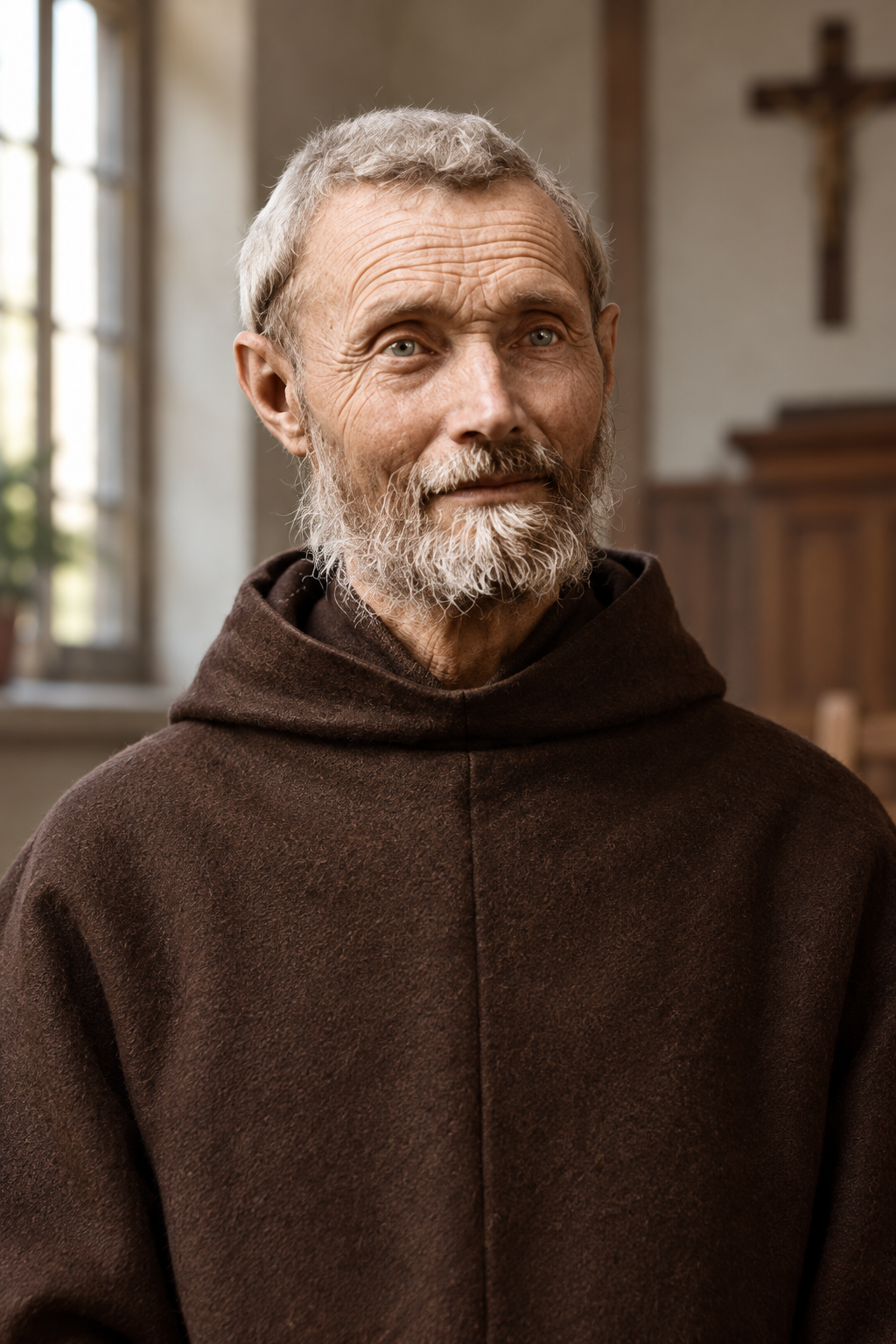
About Frédéric Janssoone
Frédéric Janssoone left school as a young man to help support his family and worked as a travelling salesman. He later resumed his studies and entered the Franciscan novitiate at Amiens in 1864. Ordained a priest in 1870, he served as a military chaplain during the Franco-Prussian War. His subsequent responsibilities included assisting with the formation of novices, library work, and leadership of the community at Bordeaux.
His own correspondence shows that he did not welcome every responsibility equally. In a letter of April 26, 1876, preserved in a later transcription, he asked his superior for permission to leave for the Holy Land with another friar. He described a longstanding desire to serve there, but also admitted that the prospect of becoming a superior in France frightened him. He offered to accept whatever work the custodian in Jerusalem assigned him.
In 1876, Janssoone began work in the Holy Land. He helped restore the practice of praying the Stations of the Cross along the Via Dolorosa in Jerusalem. His work as a builder included the parish church of Saint Catherine in Bethlehem, beside the basilica of the Nativity. Preaching, pilgrimage and the practical needs of the holy places remained central to his ministry when his work later took him to Canada.
His first Canadian visit, in 1881, was a fundraising mission for the Bethlehem church. It also brought him into a controversy he had not anticipated: a speech against liberalism entered an already divisive Canadian political and ecclesiastical debate. Archbishop Elzéar-Alexandre Taschereau asked him to leave the Québec diocese temporarily. In March 1882, however, the archbishop established an annual Good Friday collection for the Holy Land throughout the ecclesiastical province. Janssoone returned to Jerusalem that spring.
Janssoone’s account of that first journey, published several years after the visit, gives a closer view of the work behind his public preaching. Before reaching Québec, he stayed with Franciscans in New York to discuss the interests of the Holy Land with their American commissary. He admitted that he had expected an almost entirely Protestant city and was surprised by the extent of Catholic parish and religious life. He described attending services and joining an excursion with schoolchildren, their families and the sisters who taught them.
In Québec, his retreat for Franciscan laypeople used a chapel made available by the clergy of Saint-Roch. Newspaper announcements and public access brought a much larger audience than he had expected. His narrative describes days filled with confessions, Mass, sermons and visits from sick people. It also recounts a woman’s report of healing after venerating relics that he had brought from the Holy Land. When journalists asked whether this was a miracle, he said that such a judgment belonged to the Church. His account is a witness to the devotion surrounding his mission, not independent medical verification of the reported healing.
An excerpt from his July 8, 1884 letter to Léon Provancher shows him discussing a possible return to Canada. He asked Provancher to encourage Bishop Laflèche’s support and offered to reduce the proposed group if its size caused concern. He assured Provancher that the proposed arrival need not impose financial costs on the bishop. He presented the proposed Franciscan mission as one of charity, penitence and peace. His own return still depended on release from his existing office; he did not expect that before the following spring.
He settled in Trois-Rivières in 1888 and established the Canadian Commissariat for the Holy Land. For fourteen years he directed pilgrimages at the nearby shrine of Notre-Dame-du-Cap. He also travelled through parishes preaching and selling his books. The proceeds supported charitable and religious work in Québec as well as churches in the Holy Land. The shrine’s history includes the Saint Anthony chapel in Trois-Rivières among the projects supported by his fundraising.
Publishing helped sustain his ministry beyond the people who heard him preach. The Franciscan biographical leaflet dates the beginning of his Annales du Très-Saint-Rosaire to 1892. It also describes his proposal that the Oblates of Mary Immaculate take responsibility for the Cape shrine, a transfer completed in 1902. He continued preaching missions, leading pilgrimages, and visiting or establishing fraternities of the Secular Franciscan Order. His outdoor Stations of the Cross included sites at Cap-de-la-Madeleine, Pointe-aux-Trembles and Saint-Élie-de-Caxton.
Janssoone died in Montréal on August 4, 1916, after twenty-eight years of Canadian ministry. His body was brought to Trois-Rivières. Pope John Paul II beatified him on September 25, 1988.
At the beatification, John Paul II emphasized the connection between Janssoone’s prayer and his public ministry. The pope described a contemplative life attentive to creation, daily events and personal encounters. He presented this prayer as a source of energy for apostolic work. In the homily’s account, Janssoone encouraged laypeople to live their faith within family and professional responsibilities, and showed particular attention to people of little social standing.
Wondering how to weigh the stories and sources? Learn how to read a saint biography.