Biography
Frederick Bingham Howden Jr.
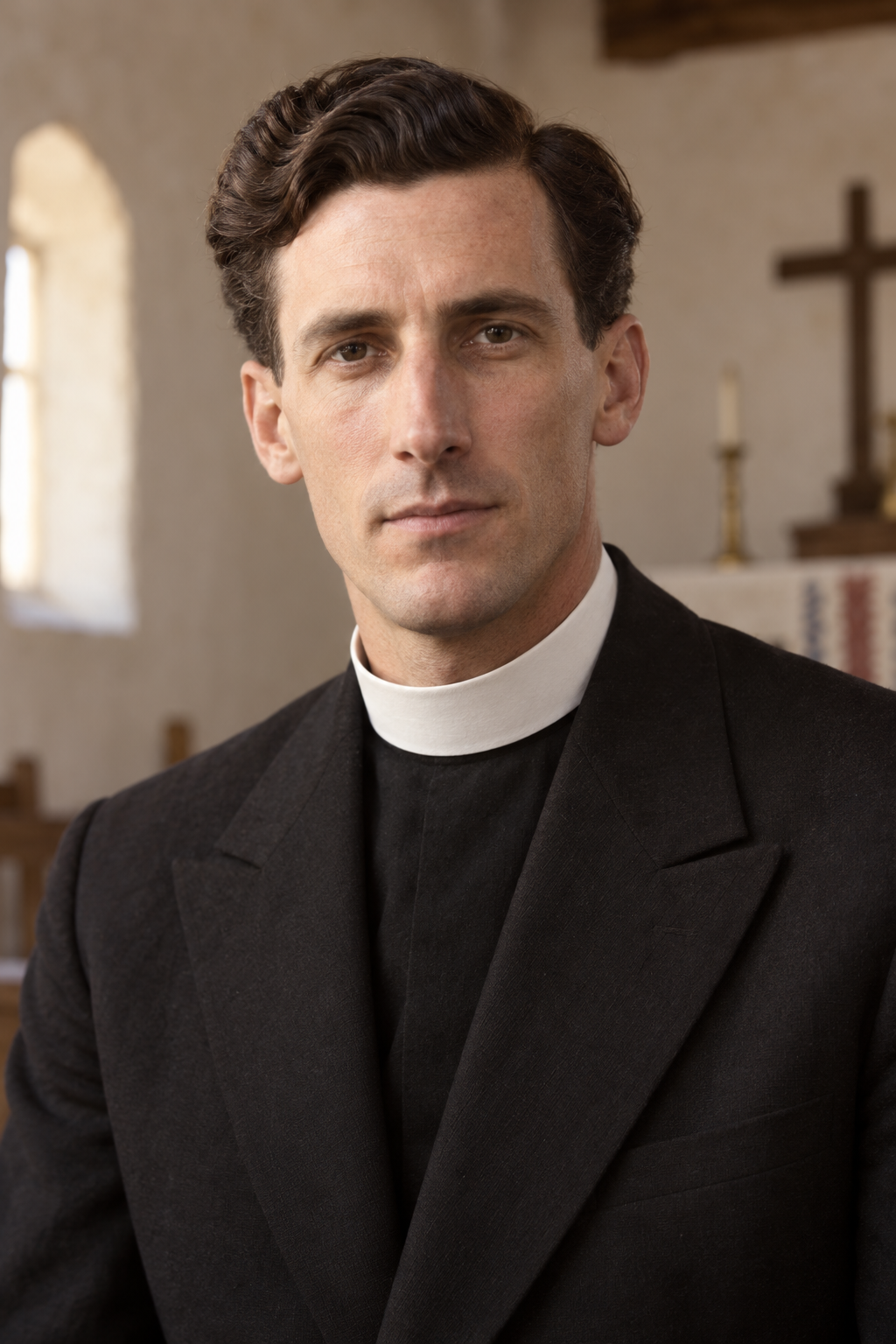
About Frederick Bingham Howden Jr.
Frederick Bingham Howden Jr., known as Ted, was an Episcopal priest whose parish work in New Mexico preceded his service as an army chaplain. Born in Cumberland, Maryland, he grew up in a clerical family and graduated from Yale in 1925. After training at General Theological Seminary, he was ordained by his father, Bishop Frederick Howden. As rector of Saint Andrew’s in Roswell, he also served congregations across the surrounding region and the New Mexico Military Institute. He helped establish Saint Anne’s Chapel in Glencoe, consecrated in 1934.
He joined the New Mexico National Guard as a chaplain in 1938 and went to the Philippines with the rank of captain. Wartime reports preserve practical details of his ministry before captivity. Transportation was scarce, so he walked to scattered positions to reach the officers and enlisted men in his care, sometimes visiting neighboring units as well. He described cooperation among chaplains as helpful. A September 1942 report in The Living Church placed him among twenty-four army chaplains believed to have become Japanese prisoners.
An earlier notice in The Witness quoted his concern about the absence of news and communication with home. He recognized its effect on morale while reporting that the regiment’s spirits remained good. The brief account also described walking or hitchhiking to field positions. These reports show a chaplain concerned with the everyday isolation of the men, as well as with holding religious services.
After surviving the Bataan Death March, Howden continued caring for other prisoners. The account submitted by his diocese for church commemoration describes him sharing his food with men he believed needed it more.
Historic Fairview Cemetery’s account names the Catholic priest Albert Braun as a friend who ministered to Howden during his final illness at Davao Penal Colony on Mindanao. Howden suffered from pellagra and dysentery. His remains were returned to New Mexico after the war and reinterred in the family plot in Albuquerque in 1948.
His grave marker records his death in December 1942 without specifying a day.
A Yale alumni history likewise places his death in a Japanese prison camp on Mindanao in December of that year. It identifies him as a member of the college’s class of 1925, distinct from other Yale-trained chaplains who died during the war.
News of his death also appeared in The Witness on August 5, 1943. Its brief clergy notice attributed the information to Douglas Matthews, dean of Saint John’s Cathedral in Albuquerque. It identified Howden as chaplain of the New Mexico 200th Coast Artillery and as the late bishop’s son, but supplied no precise date of death.
His death left a family as well as a regiment to remember him. His granddaughter Melissa Howden records that he had left his wife, Elizabeth, and three young sons when he went overseas. She grew up with stories about him and a strong awareness of his absence. Much later, she used the cards and letters sent home during his service to structure her documentary, Be Home Soon: Letters from My Grandfather. In her account of making the film, she describes research in family papers, the National Archives and the Bataan Memorial War Museum, together with visits to locations in the Philippines. The project explored inherited grief and family memory alongside his wartime service. Her perspective preserves the cost of his absence to people who knew him through both affection and loss.
His home diocese remembers him on December 11. Its account records the establishment of the observance by the diocesan convention in 2000 and the introduction of services across the diocese in 2012. Congregations had already preserved his memory, particularly Saint Andrew’s in Roswell. This commemoration honors a priest whose remembered care for fellow prisoners grew out of years of local ministry. The record presented here documents Anglican diocesan recognition; proposals for a wider church observance are distinct from the earlier local practice.
A later diocesan sermon also placed his wartime conduct in the context of his earlier work. Preaching in 2019, Bishop Michael Buerkel Hunn emphasized the connection between the priest who traveled to scattered congregations and the chaplain who stayed close to his men. He interpreted Howden’s care for hungry and wounded prisoners as a continuation of habits formed through years of ministry. In this reading, the remembered sacrifice was rooted in ordinary service, prayer and practical help. Hunn’s sermon explains why the diocese held Howden up as an example of discipleship; it is a later religious interpretation of his life rather than a new eyewitness account of captivity.
The wider Episcopal Church subsequently authorized his commemoration for trial use in 2022. In 2024, General Convention gave final authorization for December 11 through Resolution A121. The adopted text places the observance in the Calendar of the Church Year and future revisions of Lesser Feasts and Fasts. This later decision extends the recognition beyond the diocesan observance that had preserved his memory.
Wondering how to weigh the stories and sources? Learn how to read a saint biography.