Biography
Fridianus of Lucca
About Fridianus of Lucca
Fridianus was bishop of Lucca in the sixth century. Local tradition places his birth in Ireland and tells of a pilgrimage to Rome, followed by a period as a hermit in the mountains near Lucca. The archdiocese remembers his pastoral work in the city and countryside and his efforts to reconcile the established population with newcomers.
His Irish origins remain uncertain. Aidan Breen notes that they are widely accepted as tradition but lack documentary proof; another interpretation sees him as a Tuscan saint later adopted by Irish pilgrims. His supposed royal parentage therefore cannot be treated as established family history.
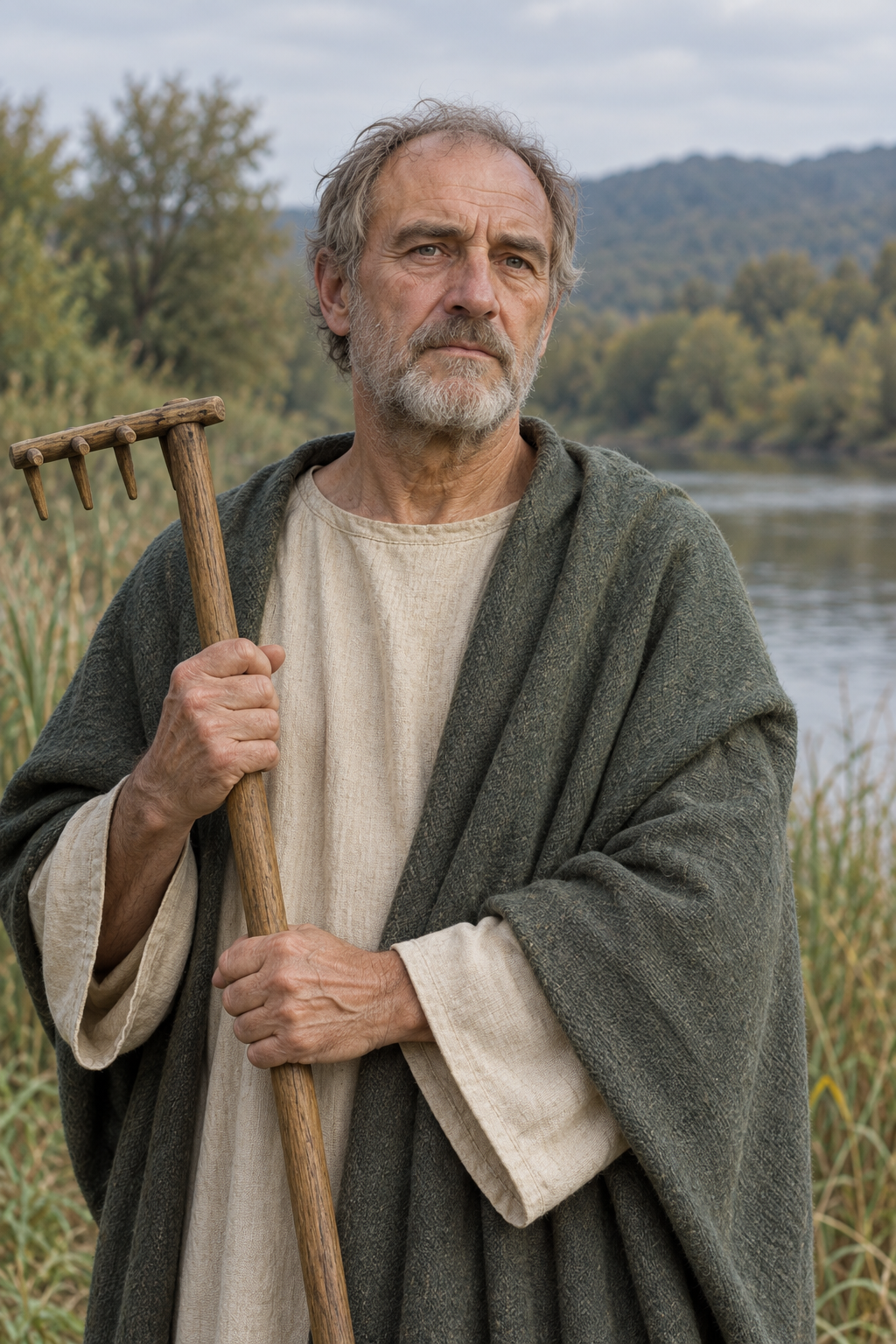
Gregory the Great relates a story he heard from Venantius, bishop of Luni. After repeated flooding and unsuccessful efforts to divert the river, Fridianus prayed and drew a route with a rake. The water followed him, sparing the crops. Gregory presents this as a miracle; the passage does not establish a technical engineering project or its date.
Later biographies developed this brief account. Francesca Luzzati Laganà dates the first version before the late eighth century, with Irish origins appearing in later versions. Still later writers combined his story with that of Finnian of Moville. Reports that Fridianus studied hydraulic engineering in Rome belong to this confused tradition; the two saints should remain distinct.
Luzzati Laganà also describes a lost inscription recording that an altar was made at the bishop’s direction. It survives through descriptions by later scholars, rather than as an object that can now be examined. She treats the matching totals of twenty-eight years as bishop and twenty-eight churches as a literary construction, not a secure count of his foundations.
His death is traditionally placed around 588. At Lucca, the archdiocese celebrates him on November 18 and records a 1952 decree naming him secondary patron of both the city and archdiocese. His remains are kept in the church that bears his name.
Breen describes several transfers of the remains and their eventual placement beneath the church’s high altar. He also notes the later presence of Irish travelers at Lucca and Irish influence on its manuscripts. Those connections form part of the history of the place, while the bishop’s own origins remain unresolved.
Wondering how to weigh the stories and sources? Learn how to read a saint biography.