Biography
Gaetano Catanoso
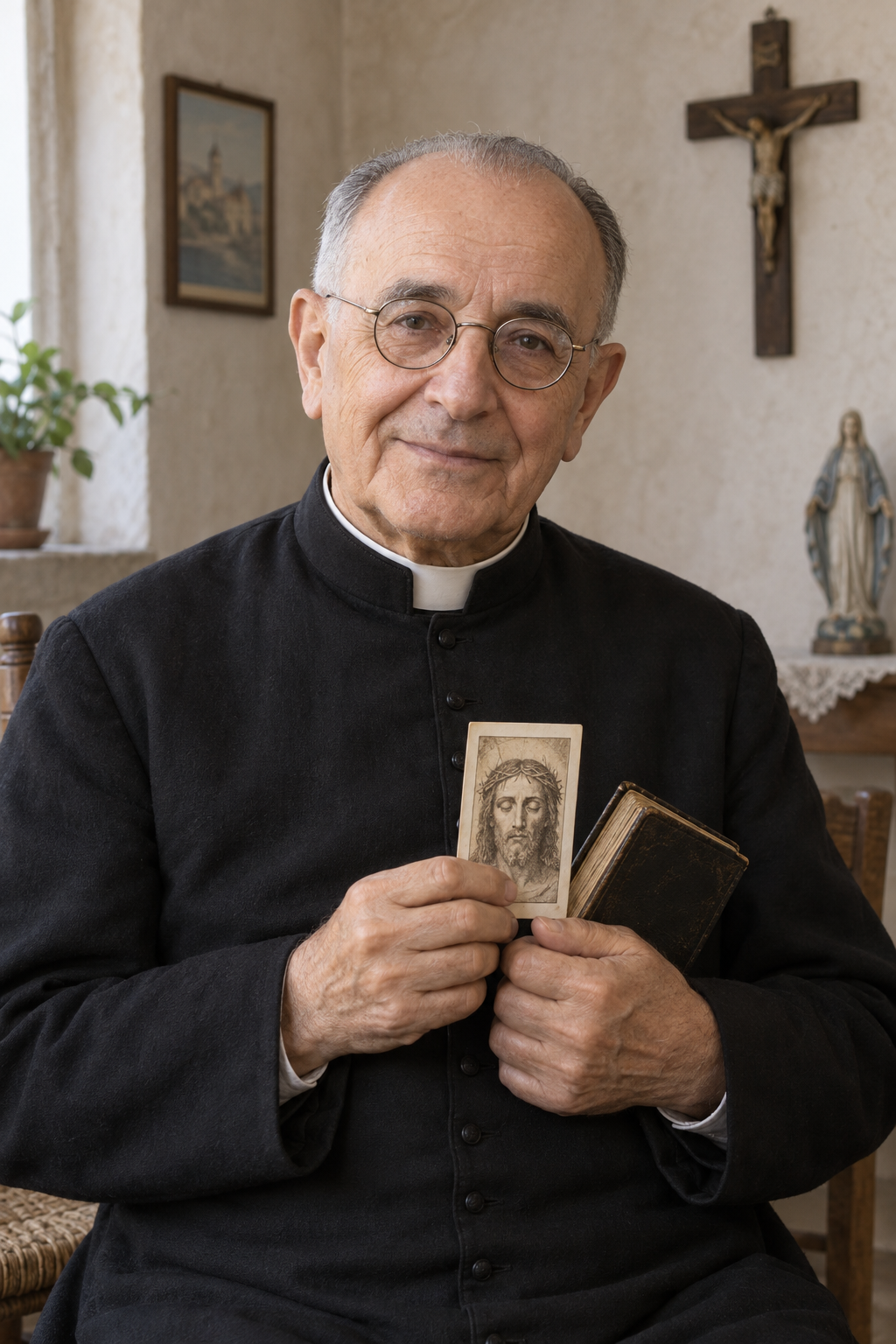
About Gaetano Catanoso
Gaetano Catanoso was born on 14 February 1879 at Chorio di San Lorenzo, a village in the countryside of Reggio Calabria at the southern tip of mainland Italy, and he was baptized on the same day. He was confirmed in 1882.
His parents were landowners of some means. The Vatican biography published for his canonization describes them as people who gave their children a living example of Christian faith.
He was ordained a priest on 20 September 1902 by Cardinal Gennaro Portanova, and the anniversary of that day later became his liturgical memorial. For roughly two years after ordination he served as a prefect in the seminary, helping to guide younger students.
In March 1904 he was sent to Pentidattilo, a small rural parish in the hinterland of Reggio. The Orionine account records his appointment there on 6 March 1904, and the Vatican biography places his ministry in the village from 1904 until 1921.
It was in the Pentidattilo years, according to the archdiocesan newspaper of Reggio, that his devotion to the suffering face of Christ took deep root. He understood that devotion as a call to make reparation for blasphemy and for the neglect and profanation of religious feasts.
He gave that devotion an organized form. He established a Confraternity of the Holy Face and launched a bulletin called Il Volto Santo, which the Orionine account says he directed until 1943. He also promoted a league against blasphemy that encouraged Eucharistic reparation.
For Catanoso the Holy Face was never a devotion apart from the sacraments. The Dicastery's biography records his conviction that anyone who wished to adore the true Face of Jesus would find it in the Eucharist. Benedict XVI, at his canonization, recalled his words: "The Holy Face is my life. He is my strength."
In 1921 he was transferred to Reggio Calabria itself, becoming parish priest of Santa Maria della Purificazione, known locally as the Candelora. He led that city parish until 1940.
As pastor he renewed Eucharistic and Marian devotion, widened the parish's catechetical teaching and campaigned against blasphemy. He also opened works for abandoned children, for the elderly and for priests who were isolated or in difficulty.
His parish was only part of his ministry. He was spiritual director of the archdiocesan seminary from 1922 to 1949, a hospital chaplain from 1922 to 1933, and from 1921 to 1950 confessor to prisoners and to several religious communities.
Those who remembered him in Reggio spoke of an austere and simple manner of life. His chosen motto, In Domino Deo gratias, expressed thanksgiving to God in all circumstances.
He cared especially for the formation of priests. He founded the Opera dei Chierici Poveri to help young men of limited means pursue studies for the priesthood, and Benedict XVI would later name the care of priestly vocations among the marks of his pastoral charity.
From about 1918 he developed a close friendship with the priest and founder Luigi Orione, which deepened after his move to Reggio. With Orione's help the Opera Antoniana delle Calabrie was established on a site called the Hill of the Angels and inaugurated on 13 June 1924. The two corresponded, Catanoso sought Orione's counsel about his works, and he directed some promising young men toward Orione's congregation.
In 1934 Catanoso founded the congregation that carries his spirit today, the Daughters of Saint Veronica, Missionaries of the Holy Face, also called the Veronica Sisters of the Holy Face. The sisters were dedicated to prayer of reparation and to serving the poorest and most vulnerable, and the first house opened at Riparo, in Reggio Calabria.
Catanoso described a letter from Orione as the magna charta of his congregation. The institute received archdiocesan approval under Archbishop Giovanni Ferro and later the approval of the Holy See.
In 1940 he left parish office and was named canon penitentiary of the cathedral of Reggio, a post he held until his death. In these final decades the confessional became the center of his ministry, and the diocese still remembers him as the confessor of the people of Reggio.
Gaetano Catanoso died in Reggio Calabria on 4 April 1963, at the age of 84.
Pope John Paul II beatified him on 4 May 1997. Benedict XVI canonized him in Saint Peter's Square on 23 October 2005, together with Józef Bilczewski, Zygmunt Gorazdowski, Alberto Hurtado Cruchaga and Felix of Nicosia, at the close of the Synod of Bishops on the Eucharist.
In his homily the pope described daily Mass and frequent adoration of the Blessed Sacrament as the soul of Catanoso's priesthood, and he pointed to his tireless preaching, catechesis, hearing of confessions and care for the poor and the sick.
He was the first priest of Calabria to be canonized. His memorial is kept on 20 September, and his remains are venerated at the Sanctuary of the Holy Face in Reggio Calabria, where pilgrims come to pray.
His sisters continue the work he began. Besides houses in Rome, Salerno and several Calabrian towns, the congregation has served in Manila since 1989 and also works in Tanzania, carrying his devotion to the Holy Face and his care for the poor well beyond Calabria.
Wondering how to weigh the stories and sources? Learn how to read a saint biography.