Biography
Gerasimus of Cephalonia
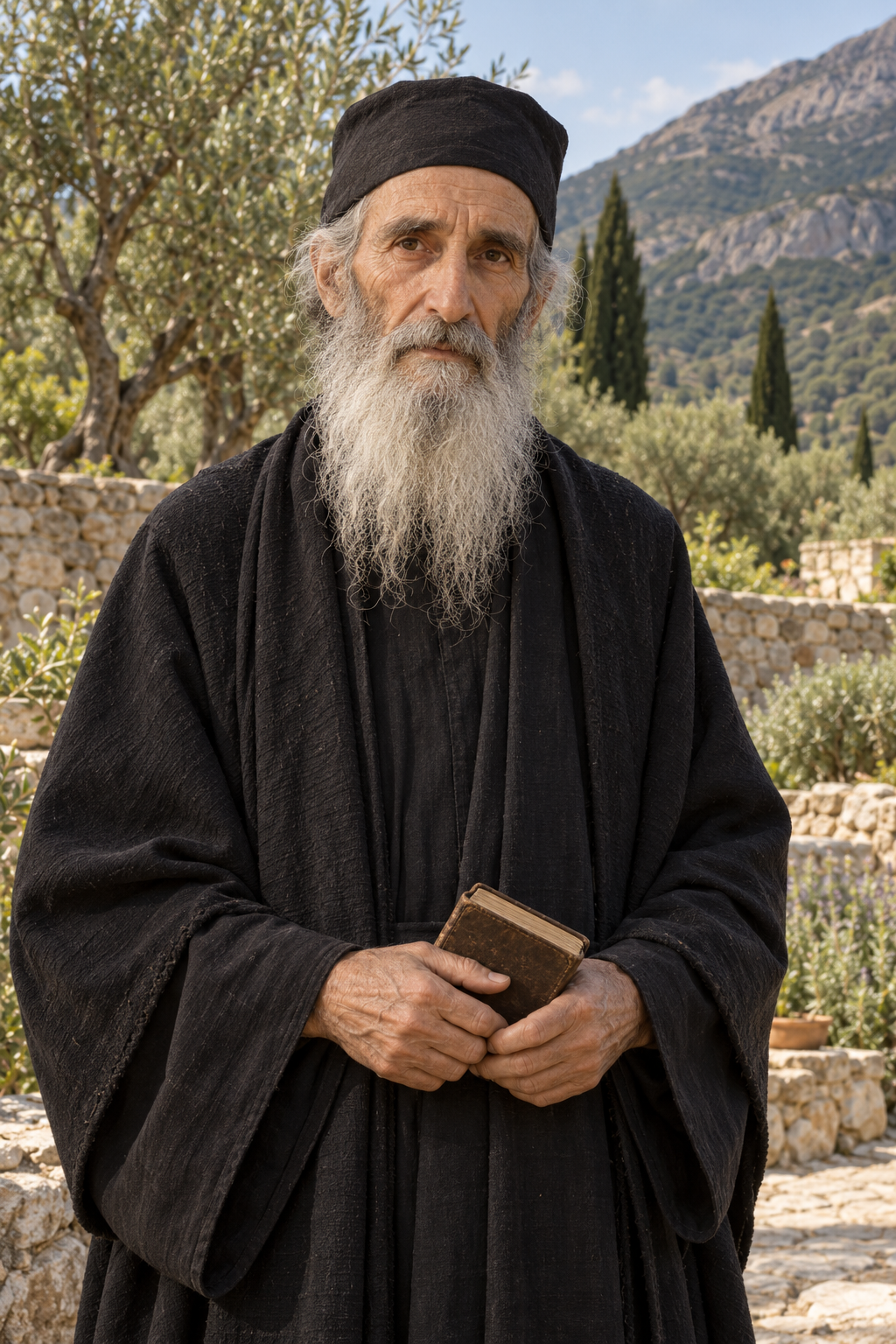
About Gerasimus of Cephalonia
Gerasimus of Cephalonia was a monk and priest whose years of solitude led to the foundation of a community for women at Omala. He came from Trikala in Corinthia and belonged to the Notaras family. The parish dedicated to him in Leichhardt gives his birth year as 1506.
Other accounts give 1509. The historian Chrysostomos Papadopoulos explains that this date is calculated from his reported age at death, rather than established by a birth record.
Church tradition remembers extensive travels before his settlement on Cephalonia. He visited Mount Athos and Jerusalem, where Patriarch Germanus ordained him. He also lived on Zakynthos. On Cephalonia he first lived in a cave, then established the monastery known as New Jerusalem at Omala.
Papadopoulos distinguishes nineteen years at the monastery from a petition’s broader reference to thirty years of ministry there and elsewhere. The petition was later submitted by islanders seeking his recognition as a saint.
Gerasimus died on August 15, 1579. His commemoration falls on the following day, while October 20 recalls the opening of his tomb in 1581. Church accounts describe his remains as incorrupt and attribute healings to his intercession.
His formal recognition followed in July 1622. Papadopoulos reproduces the act and compares it with later printings: a third patriarch’s signature was added in print but is absent from the original. The act names Omala and Cephalonia and provides for his veneration throughout the Church.
His monastery remains a center of pilgrimage. The Metropolis of Kifissia explicitly honors him as Cephalonia’s patron and as a patron of people described in its tradition as possessed. These are religious patronage designations, not medical descriptions. The same account describes islanders carrying his relics in procession at his annual celebrations. His continuing place in Cephalonian religious life is closely tied to the community he founded and the shrine that preserves his memory.
Wondering how to weigh the stories and sources? Learn how to read a saint biography.