Biography
Gerold of Vorarlberg
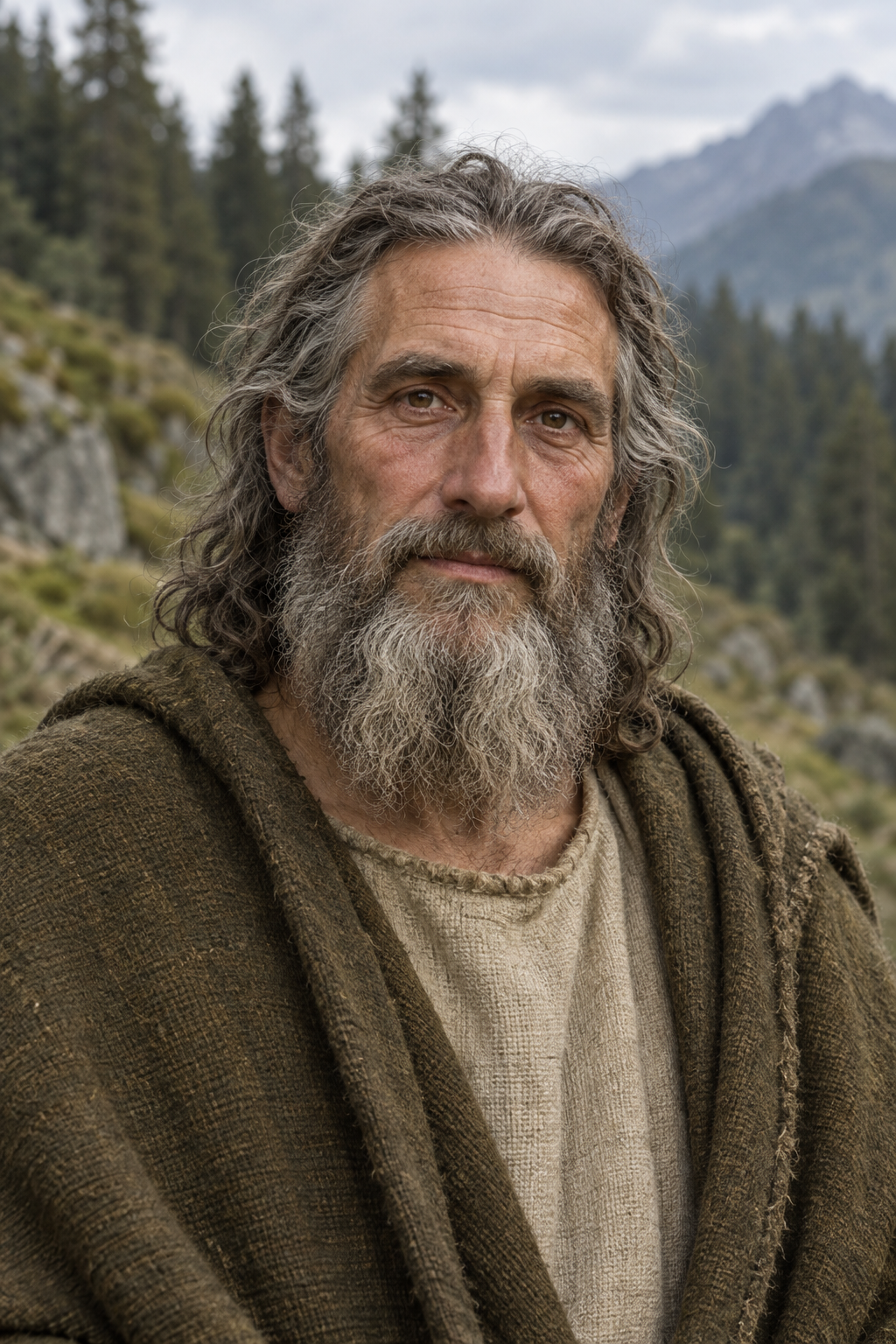
About Gerold of Vorarlberg
Gerold is remembered as a hermit who sought God in the solitude of the Alpine valley now associated with the priory of St. Gerold in Vorarlberg. The surviving account of his life is chiefly legendary. A church history of the priory notes the absence of foundation documents and identifies a legend recorded in 1484 among the sources for its beginnings.
In the story retold by the priory, a nobleman named Adam fled a conflict with Otto and took the name Gerold. He settled as a hermit and lived a penitential life. One day a hunted bear sought refuge beside him; when the hunters arrived, they found the bear and their dogs resting peacefully together. The tale presents his hermitage as a place where violence gave way to peace.
The same legend tells of reconciliation with the ruler and the restoration of Gerold’s property. Rather than leave his retreat, he gave land to Einsiedeln, where his sons were said to be monks. These episodes belong to the foundation tradition; they should not be read as a contemporary record of his family, political troubles or donation.
Historian Veronika Feller-Vest cautions that Gerold’s identification with the Rhaetian nobleman Adam is unproved. Her account records the name Saint-Gérold for the priory of Frisen from 1340 and later veneration at Einsiedeln following a transfer of relics around 1662. These are traces of his cult, rather than proof of the legend’s account of his identity.
His dates remain uncertain. Nominis places his death around 978 and commemorates him on April 19. That is a received chronology, not a securely established year.
Cavanaugh also gives a birth around 920 and death at Friesen, without establishing a birthplace. Those traditional details remain uncertain beside the church history’s eleventh-century hypothesis.
The church history offers a different possibility: a Romanesque stone church and a centrally placed tomb suggest a revered hermit living here in the eleventh century. It identifies documentary evidence from 1227 and 1285, and a provost demonstrably from Einsiedeln serving in 1285–1290. The later monastery is better documented than the life attributed to its founder.
Material remains also preserve the history of his veneration. Archaeologist Laura Holzer describes a richly decorated monument erected for Gerold in the fifteenth or sixteenth century. Its surviving slab is now displayed as a cenotaph, a memorial without the associated body, in the modern crypt. It witnesses later devotion rather than supplying a contemporary portrait or a verified account of his death.
Wondering how to weigh the stories and sources? Learn how to read a saint biography.