Biography
Giovanni Antonio Solinas
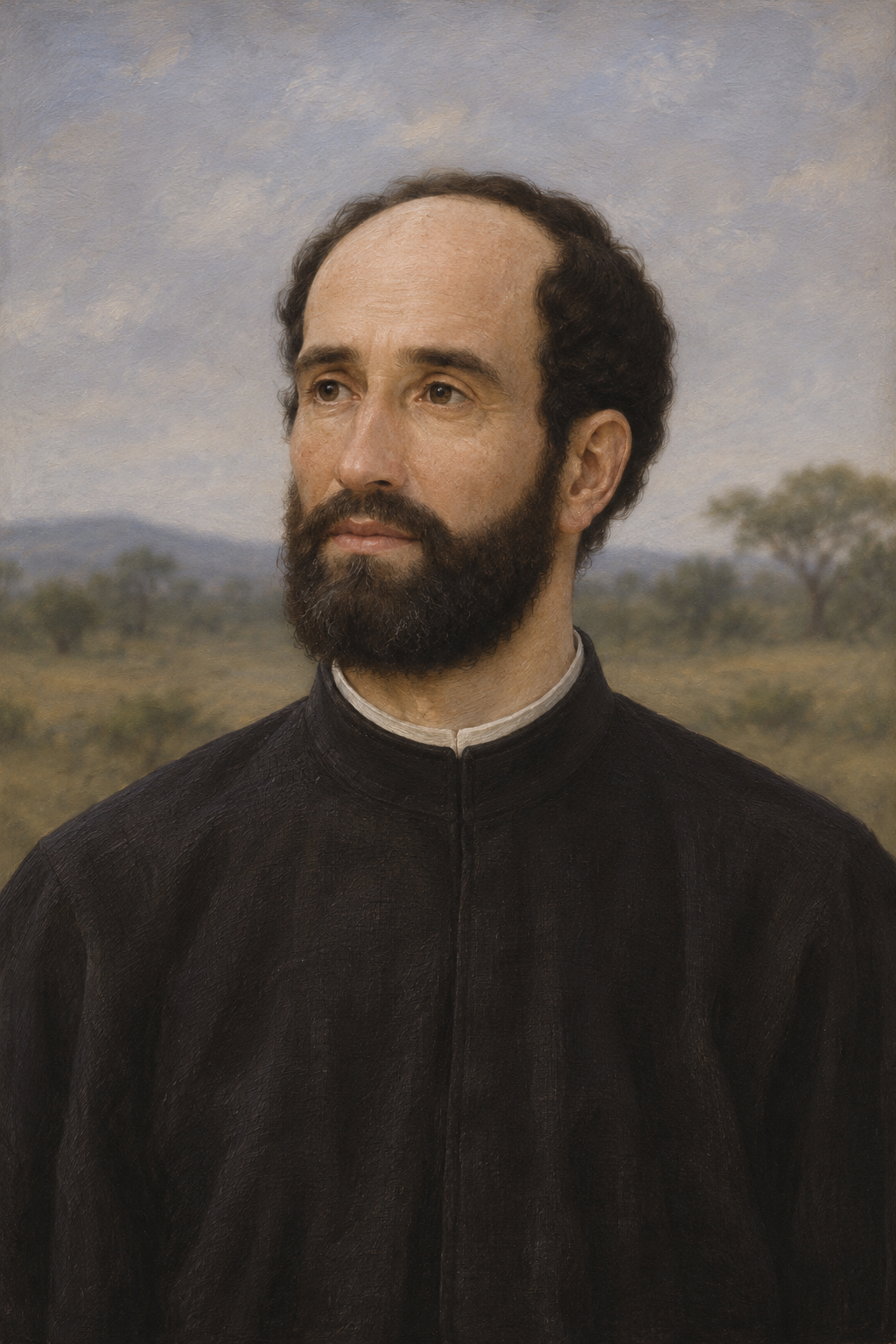
About Giovanni Antonio Solinas
Giovanni Antonio Solinas was born at Oliena in Sardinia in 1643. He entered the Society of Jesus as a young man and, after years of formation and teaching, sought a mission in South America. His journey took him through Spain, where he completed theological studies and was ordained at Seville in 1673. He sailed the following year for the Jesuit province of Paraguay, a mission territory extending across several present-day national borders. His later life belonged to the communities he served there rather than to a return to his native island.
The published historical summary by Miguel Antonio Barriola describes his early education among the Jesuits of Oliena and his further formation in Cagliari. Study and teaching prepared him for ministry before he left Europe. In South America he learned Guaraní and worked in the mission settlements of Itapúa and Santa Ana. These assignments required more than travel to a new country: they involved learning a language and entering communities with histories and expectations different from those of the places where he had been formed.
A letter written by Father Jiménez from Corrientes in 1679 gives a contemporary glimpse of his work. Jiménez praised his preaching, hearing of confessions and conversations about Christian teaching. He specifically mentioned teaching children and people from different sections of the population. The published excerpt describes sustained daily ministry rather than one exceptional public event. It also places Solinas within a network of Jesuit colleagues who reported to their provincial about the practical demands of the mission. The original letter has not been inspected here; the account rests on its published transcription excerpt.
An instruction from the Jesuit superior general Giovanni Paolo Oliva provides another contemporary perspective. The published excerpt identifies Solinas as capable in preaching and teaching and concerns an opportunity for further theological study. It shows that his abilities were valued within the order as well as in the communities where he worked.
His responsibilities included military chaplaincy in 1680, an assignment described in Maccioni’s early history. Other responsibilities belonged to the mission settlements themselves. Benedetta Capelli’s report on the Catholic cause identifies Itapúa as his first field of service and emphasizes his religious teaching and care for Indigenous people. These different assignments place him within the colonial frontier’s overlapping religious and military institutions, rather than in a setting isolated from struggles over territory and authority.
The final expedition developed through the plans of Pedro Ortiz de Zárate, a diocesan priest from Jujuy. Solinas joined him and other companions in 1683 for a mission to the Chaco.
The official decree records the participation of Diego Ruiz and a larger group of laypeople. Ortiz de Zárate and Solinas were killed in the Zenta valley on 27 October 1683. Their deaths eventually became the subject of a joint Catholic cause, linking a Sardinian Jesuit with a priest whose family and earlier ministry belonged to northern Argentina.
The Jesuit superior general Arturo Sosa recalled Solinas as a man concerned with food, clothing and care for people who were ill, drawing on testimony from his own period. His 2022 letter interprets such attention as part of a mission directed toward the whole person. It also emphasizes reconciliation in a region marked by conflict between different peoples and between Indigenous communities and Spanish colonists. This account joins material help and Christian preaching without presenting the conditions of the frontier as simple or peaceful.
The lay companions matter to that history. In a message published before the beatification, the bishop of Nueva Orán described the expedition as a missionary community with people of different origins, including Indigenous Christians. He asked that the two priests be remembered within this wider company. His reflection also named the colonial setting and called the present church to listen to the cultures and histories of its own territory. The community’s memory thus extends beyond a story of a European missionary acting alone.
Solinas and Ortiz de Zárate were beatified in Orán on 2 July 2022. Their permitted Catholic memory is 27 October.
The event also had particular significance in the Diocese of Nuoro, which includes Oliena. Bishop Antonello Mura’s pastoral letter connected the local church’s gratitude with that of Orán, where Solinas had died. He recalled the work of earlier bishops who had hoped for this recognition. The letter presented the missionary’s life as a reminder that faith asks for concrete service in the circumstances in which people find themselves, rather than remaining only an inherited identity.
Mura’s reflection addressed parents, priests, religious and young people, giving particular attention to the ordinary gift of time and effort for others. That interpretation connects Solinas’s distant journey with responsibilities closer to home. The remembered missionary is honored for perseverance and service; the same letter asks present communities to discover those commitments in daily life. His Catholic legacy remains joined to both shores of his story, the Sardinian community from which he came and the South American people among whom he lived.
Wondering how to weigh the stories and sources? Learn how to read a saint biography.