Biography
Giovanni Schiavo
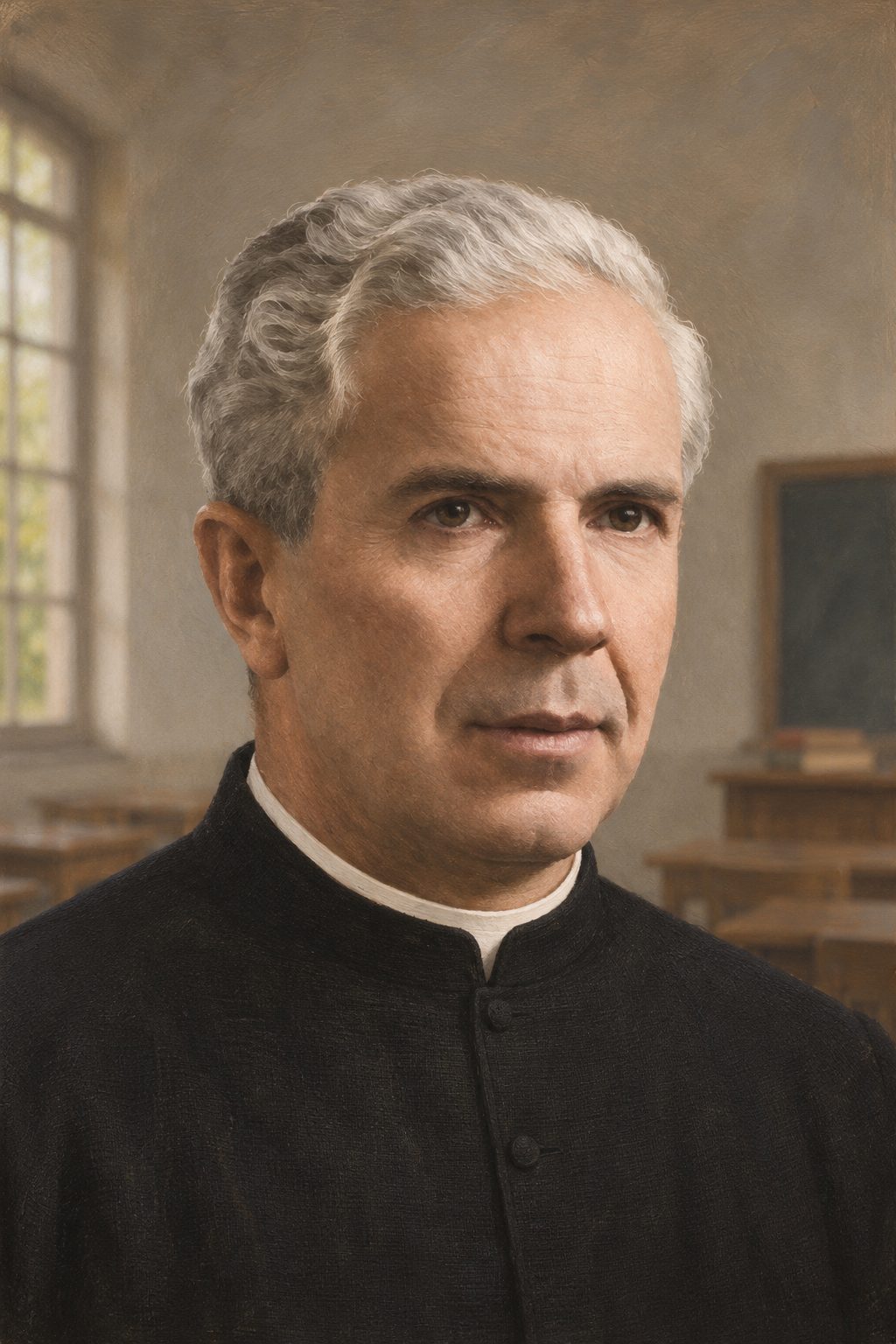
About Giovanni Schiavo
Giovanni Schiavo, known in Brazil as Padre João, made the education of young people a central part of his missionary life. He was born at Sant’Urbano, near Montecchio Maggiore in Italy, on 8 July 1903. After studying with the Josephites of Murialdo, he entered their congregation and prepared for religious life and priesthood. He was ordained in 1927. His formation placed him within a community whose service to young people would shape the responsibilities he later undertook in Brazil.
He arrived in Brazil in 1931 and settled in the Caxias do Sul region. The congregation’s published timeline remembers his work with seminarians and novices in Ana Rech, followed by a period in Porto Alegre that included improving his Portuguese. These first years involved learning the language as well as teaching and religious formation. His later responsibilities did not begin with a ready-made network of institutions; they grew through assignments in several communities and collaboration with other Josephites.
At Galópolis he served as school director and parish priest. The Dicastery’s account connects the Josephites’ departure from the town in 1937 with their denunciation of injustices toward workers. Schiavo returned to Ana Rech and later became novice master at Fazenda Souza, where a novitiate and minor seminary were established. In 1946 he became the first superior of the autonomous Brazilian province. His service thus joined direct work with young people to the demands of leading a growing religious community.
Educational work also took forms beyond the seminary. The congregation’s timeline records the rural normal school at Ana Rech, intended to train teachers in intellectual and practical subjects, including agriculture and fruit growing. It later remembers institutions for poor children in Pelotas, Caxias do Sul and Rio Grande. Schiavo helped organize and sustain these projects through partnerships. Their range reflects an understanding of education that included preparation for work and the material needs of children who lacked reliable support. The teacher-training initiative was developed in partnership with the state.
His beatification brought these communities together in Caxias do Sul. Reporting from the celebration in the Festa da Uva pavilions, Julia Beck named the organizers: the diocese, the Josephites, the Murialdine sisters and the association of his friends. Cardinal Angelo Amato presided and recalled Schiavo’s creative social work and gentleness toward poor people. The gathering thus connected the priest’s memory with institutions and relationships that had grown from his Brazilian missionary ministry.
The ceremony included the diocesan bishop’s request, a short biography presented by the postulator, the apostolic letter and the unveiling of Schiavo’s portrait. A relic was displayed, and a hymn accompanied the rite. Beck’s account also preserved Amato’s closing appeal for goodness in families and society, expressed through love, forgiveness, joy, friendship and sharing. His pastoral example was presented as a call to practical relationships, alongside the public declaration of his new place in Catholic worship.
Schiavo died in Caxias do Sul on 27 January 1967. The Josephites’ memorial account records a funeral celebration in the cathedral, followed by his transfer to Fazenda Souza and burial in the cemetery of the Murialdine sisters. Many people attended the services. The same account remembers continuing prayer at his grave, rooted in the esteem people had for his care of those needing help. His burial kept his memory close to a community he had accompanied during his life.
Fazenda Souza later developed places specifically devoted to that memory. A historical study by Caroline Andreolla and Cristine Lia records the opening of a memorial with personal belongings and photographs in 2007, and a chapel over the grave in 2015. These physical settings help explain how the community preserved his story between his death and beatification. They also distinguish the older burial site from the later spaces built to receive people seeking information, prayer and a connection with his life.
Local public authorities also took an interest. In 2016 a Caxias do Sul city-council report described a proposal for a route linking places associated with Schiavo’s ministry, including Galópolis, Ana Rech and Fazenda Souza. The discussion concerned tourism, cultural memory and preparation for visitors. It shows how remembrance of the priest entered the civic life of the region as well as its churches. The report describes a proposal under discussion, rather than establishing that every part of the planned route had already been completed.
He was beatified in Caxias do Sul on 28 October 2017. The Catholic Church lists his liturgical memory on 27 January.
The continuing local remembrance includes ordinary community participation. In October 2025 the diocese reported music by the municipal school band bearing his name, a gathering at the chapel and a Mass marking the anniversary of his beatification. Children, musicians, families and religious communities thus continued to share in the memory of a priest whose work had joined education, formation and personal care.
Wondering how to weigh the stories and sources? Learn how to read a saint biography.